


Can a rock drilling bit be used in frozen ground? That's a question I've been getting a lot lately, and as a rock drilling bit supplier, I'm more than happy to dive into this topic.
First off, let's talk about what frozen ground is all about. Frozen ground, also known as permafrost in some cases, is soil or rock that has been at or below the freezing point of water (0°C or 32°F) for two or more years. It can be found in polar regions, high - altitude areas, and even in some temperate regions during the winter months. The characteristics of frozen ground are quite different from regular soil or rock. It's extremely hard due to the ice within it, and the ice can also make the ground more brittle in some areas and more cohesive in others.
Now, when it comes to using a rock drilling bit in frozen ground, it's definitely possible, but it's not without its challenges.
The Challenges of Drilling in Frozen Ground
One of the biggest challenges is the hardness of the frozen ground. Ice is a tough material to break through, and when it's mixed with soil or rock particles, it forms a composite that can be even more difficult to drill. Our regular Hard Rock Drilling Bit might work well in normal hard rock conditions, but in frozen ground, it might face some extra resistance. The ice can cause the bit to wear out faster because it can be very abrasive. Also, the brittleness of the frozen ground can lead to sudden fractures. If the bit hits a large ice - filled crack or a layer of very brittle frozen material, it can cause the bit to chip or even break.
Another challenge is the temperature. Drilling generates heat, and in frozen ground, this heat can cause the ice to melt around the bit. This might seem like a good thing at first, as it could potentially make the drilling easier. However, the melted ice can turn into mud or slush, which can clog the flutes of the bit. When the flutes are clogged, the cuttings can't be effectively removed from the hole, and this can slow down the drilling process or even cause the bit to overheat.
Types of Rock Drilling Bits Suitable for Frozen Ground
Not all rock drilling bits are created equal when it comes to frozen ground. Some bits are better suited for this challenging environment.
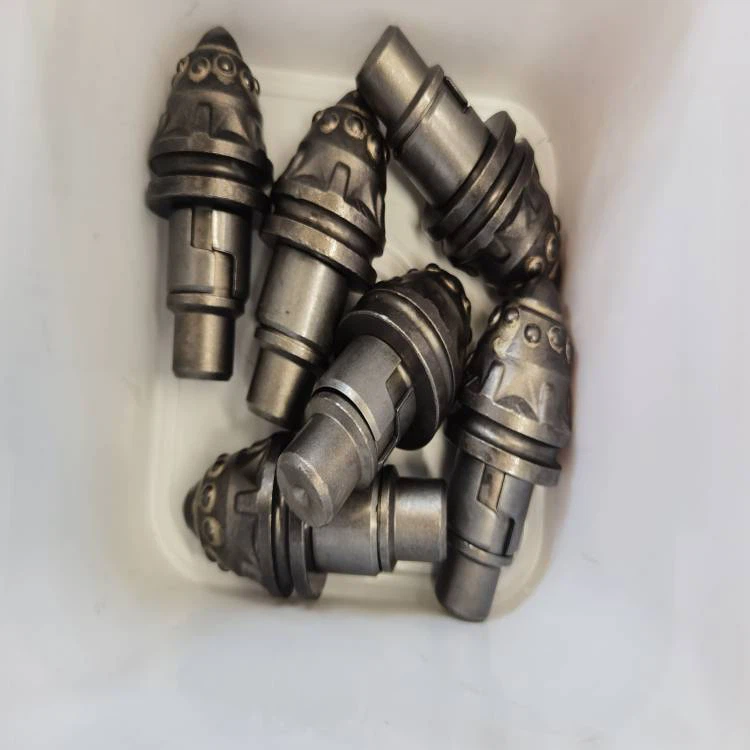
The B47K22H Rock Drilling Bit is one of our products that has shown good performance in frozen ground. It has a special carbide tip design that can withstand the high - impact forces generated when drilling through hard, frozen material. The carbide used in this bit is of high quality, which gives it excellent wear resistance. The shape of the bit is also optimized to help with the removal of cuttings, even in the presence of mud or slush.
The Bullet Rock Drilling Bit is another option. Its bullet - shaped design allows it to penetrate the frozen ground more easily. The smooth surface of the bullet shape reduces the friction between the bit and the frozen ground, which can help to prevent overheating. Also, the way it breaks up the material is more efficient, which can save time and energy during the drilling process.
Tips for Using Rock Drilling Bits in Frozen Ground
If you're planning to use a rock drilling bit in frozen ground, here are some tips that can help you get the best results.
First, make sure you choose the right bit for the job. As I mentioned earlier, not all bits are suitable for frozen ground. Consider the type of frozen ground you'll be drilling in, whether it's mostly ice, a mixture of ice and soil, or ice - filled rock.
Second, adjust your drilling parameters. You might need to reduce the rotational speed and increase the feed pressure. A lower rotational speed can prevent the bit from overheating, and a higher feed pressure can help the bit break through the hard frozen material.
Third, keep an eye on the bit's condition. Check it regularly for signs of wear, such as chipping or dulling. If you notice any problems, replace the bit as soon as possible to avoid further damage to the drilling equipment.
Real - World Applications
There are many real - world applications where drilling in frozen ground is necessary. In the construction industry, for example, when building foundations in cold regions, it's often required to drill into the frozen ground. Oil and gas exploration companies also need to drill in frozen ground in some Arctic or high - altitude areas to access underground resources.
In mining operations, frozen ground can be encountered in open - pit mines or underground mines in cold climates. Drilling is essential for blasting and extracting minerals, and using the right rock drilling bit can make the process more efficient and cost - effective.
Conclusion
So, can a rock drilling bit be used in frozen ground? The answer is yes, but it comes with its own set of challenges. As a rock drilling bit supplier, we've developed products like the B47K22H Rock Drilling Bit and the Bullet Rock Drilling Bit to help you overcome these challenges.

If you're in need of high - quality rock drilling bits for your frozen ground projects, don't hesitate to get in touch. We're here to provide you with the best products and advice to ensure your drilling operations are a success. Whether you're a construction company, an oil and gas explorer, or a mining operator, we have the right solutions for you.
References
- "Geotechnical Engineering in Cold Regions" by John T. Van Nostrand
- "Drilling Technology Handbook" by William C. Lyons