

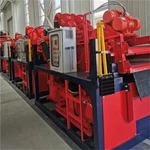

What are the control methods of a pile breaker?
As a leading supplier of pile breakers, I've witnessed firsthand the evolution and importance of effective control methods in the construction industry. Pile breakers are essential tools for removing the excess concrete from the top of piles, ensuring a proper and smooth foundation for construction projects. In this blog, I'll delve into the various control methods of a pile breaker, highlighting their significance and how they contribute to the overall efficiency and quality of pile - breaking operations.
Manual Control
Manual control is perhaps the most traditional method of operating a pile breaker. It involves an operator physically manipulating the pile breaker using levers, buttons, or other control mechanisms. This method offers a high level of precision, as the operator can directly respond to the conditions of the pile. For example, when dealing with a pile that has an irregular shape or inconsistent concrete density, the operator can adjust the force and position of the pile breaker in real - time.
However, manual control also has its limitations. It is labor - intensive and can be physically demanding for the operator, especially during long - term operations. Moreover, the efficiency of manual control is relatively low compared to automated methods. In large - scale construction projects where time is of the essence, relying solely on manual control may not be the most practical solution.
Hydraulic Control
Hydraulic control is one of the most widely used methods in modern pile breakers. It utilizes hydraulic systems to generate the force required for breaking piles. The hydraulic system is powered by a hydraulic pump, which pressurizes the hydraulic fluid and transfers the energy to the pile breaker's working components.
One of the key advantages of hydraulic control is its high power and precision. Hydraulic systems can generate a large amount of force, allowing the pile breaker to break through even the toughest concrete piles. Additionally, hydraulic control enables smooth and accurate movement of the pile breaker, reducing the risk of damage to the surrounding structures.


Another benefit is the flexibility it offers. The hydraulic system can be easily adjusted to vary the force and speed of the pile breaker according to the specific requirements of the project. For instance, when breaking smaller piles, the operator can reduce the hydraulic pressure to avoid over - breaking, while for larger and stronger piles, a higher pressure can be applied.
Our company offers a range of pile breakers with advanced hydraulic control systems. For example, our 1000mm Foundation Pile Breaker is equipped with a state - of - the - art hydraulic system that provides reliable and efficient pile - breaking performance.
Electronic Control
Electronic control is a more advanced and sophisticated method that is increasingly being adopted in the pile - breaker industry. It uses electronic sensors and controllers to monitor and regulate the operation of the pile breaker. These sensors can detect various parameters such as force, position, and speed, and transmit the data to the controller.
The controller then processes the data and adjusts the operation of the pile breaker accordingly. For example, if the sensor detects that the pile breaker is applying too much force, the controller can automatically reduce the power to prevent damage to the pile or the equipment.
Electronic control offers several advantages. Firstly, it enhances the safety of the operation. By continuously monitoring the working conditions, it can prevent potential accidents caused by over - loading or improper operation. Secondly, it improves the accuracy and repeatability of the pile - breaking process. The electronic system can ensure that each pile is broken to the same specifications, resulting in a more consistent and high - quality foundation.
Our Excavator Pile Breaker is integrated with an advanced electronic control system. This system allows for seamless integration with the excavator's control panel, providing the operator with intuitive and precise control over the pile - breaking process.
Remote Control
Remote control is a convenient and efficient control method, especially for pile - breaking operations in hazardous or hard - to - reach areas. It enables the operator to control the pile breaker from a safe distance using a remote control device.
The remote control device is wirelessly connected to the pile breaker and can transmit control signals to operate the equipment. This method not only enhances the safety of the operator but also increases the flexibility of the operation. For example, in a construction site with limited space or in a contaminated environment, the operator can control the pile breaker without being physically present near the equipment.
Our 8 Module Round Pile Breaker can be equipped with a remote control option, allowing for easy and safe operation in various challenging environments.
Automation and Programmable Logic Control (PLC)
Automation and PLC are the future of pile - breaker control. PLC systems use programmable logic controllers to automate the pile - breaking process. The operator can program the PLC to perform a series of pre - determined operations, such as setting the breaking force, the number of strokes, and the sequence of operation.
Automation offers significant advantages in terms of efficiency and productivity. It can perform repetitive tasks with high precision and consistency, reducing the need for manual intervention. Moreover, it can operate continuously without fatigue, resulting in faster completion of the pile - breaking work.
In addition, PLC systems can be integrated with other construction equipment and management systems, enabling seamless coordination and optimization of the overall construction process.
Conclusion
In conclusion, there are several control methods available for pile breakers, each with its own advantages and limitations. Manual control offers precision but is labor - intensive; hydraulic control provides high power and flexibility; electronic control enhances safety and accuracy; remote control offers convenience and safety in challenging environments; and automation and PLC systems are the future of efficient and productive pile - breaking operations.
As a pile - breaker supplier, we are committed to providing our customers with the latest and most advanced control technologies. Our products are designed to meet the diverse needs of the construction industry, whether it's a small - scale project or a large - scale infrastructure development.
If you are interested in our pile breakers or have any questions about the control methods, we invite you to contact us for a detailed discussion. Our team of experts is ready to assist you in selecting the most suitable pile breaker and control method for your specific project requirements. Let's work together to achieve efficient and high - quality pile - breaking operations.
References
- Construction Equipment Handbook. 2023 Edition.
- Journal of Construction Technology and Management, Vol. 15, No. 3, 2022.
- Hydraulic Systems in Heavy Machinery: Principles and Applications, 2021.