

In the realm of construction and civil engineering, tremie racks play a crucial role in the process of placing concrete underwater, especially in the construction of foundations, piers, and other submerged structures. As a tremie rack supplier, I often encounter inquiries about the existence of international standards for these essential pieces of equipment. This blog post aims to explore the current landscape of international standards for tremie racks, shedding light on the regulatory frameworks, industry best practices, and the importance of adhering to these guidelines.
Understanding Tremie Racks and Their Function
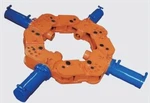
Before delving into the topic of international standards, it is essential to understand what tremie racks are and how they function. A tremie rack is a support structure designed to hold and guide a tremie pipe during the concrete placement process. The tremie pipe, which can be a Threaded Tremie Pipe, is a long, vertical tube that allows concrete to be placed underwater without being affected by the surrounding water. The tremie rack ensures that the tremie pipe remains stable and in the correct position, preventing it from shifting or collapsing during the concrete pouring process.
Tremie racks are typically made of steel or other durable materials and are designed to withstand the weight of the tremie pipe and the concrete being poured. They are often adjustable to accommodate different depths and angles, making them versatile for various construction projects. In addition to supporting the tremie pipe, some tremie racks may also include features such as a Tremie Hopper to facilitate the loading of concrete into the pipe and a Tremie Coupling Cable to connect multiple sections of the tremie pipe.
The Need for International Standards
The construction industry is a global one, with projects taking place in various countries and regions around the world. As such, there is a need for international standards to ensure the safety, quality, and consistency of construction materials and equipment, including tremie racks. International standards provide a common framework for manufacturers, suppliers, and users to follow, helping to minimize risks and ensure that tremie racks meet the necessary requirements for their intended use.
One of the primary reasons for the need for international standards is safety. Tremie racks are used in potentially hazardous environments, such as underwater construction sites, where any failure or malfunction could have serious consequences. By adhering to international standards, manufacturers can ensure that their tremie racks are designed and built to withstand the rigors of these environments and meet the highest safety standards. This helps to protect the lives of workers and the integrity of the construction project.
In addition to safety, international standards also play a crucial role in ensuring the quality and performance of tremie racks. Standards define the specific requirements for materials, design, manufacturing processes, and testing procedures, ensuring that tremie racks are of consistent quality and meet the expected performance criteria. This helps to reduce the likelihood of defects and failures, improving the overall efficiency and reliability of the construction process.
Existing International Standards for Tremie Racks
While there is no single, comprehensive international standard specifically for tremie racks, there are several relevant standards and guidelines that can be applied to their design, manufacture, and use. These standards are developed by international organizations, such as the International Organization for Standardization (ISO) and the American Society of Civil Engineers (ASCE), as well as national standards bodies in different countries.
One of the key standards that is relevant to tremie racks is ISO 9001, which is an international standard for quality management systems. ISO 9001 provides a framework for organizations to establish, implement, and maintain a quality management system that ensures the consistent delivery of products and services that meet customer requirements and regulatory standards. By obtaining ISO 9001 certification, manufacturers of tremie racks can demonstrate their commitment to quality and continuous improvement.


Another important standard is ASCE 7, which is the American Society of Civil Engineers' standard for minimum design loads for buildings and other structures. ASCE 7 provides guidelines for the design of structures, including the loads and forces that they must be able to withstand. While ASCE 7 is not specifically focused on tremie racks, it can be used as a reference for the design of the support structures and components of tremie racks to ensure that they are able to withstand the expected loads and forces during the concrete placement process.
In addition to these general standards, there are also specific standards and guidelines for the design and use of concrete placement equipment, such as the American Concrete Institute (ACI) 304R-00, which provides recommendations for the selection, design, and construction of concrete placement equipment, including tremie pipes and tremie racks. These standards and guidelines provide detailed information on the design, installation, and operation of tremie racks, helping to ensure that they are used safely and effectively.
Challenges in Implementing International Standards
While international standards provide a valuable framework for the design, manufacture, and use of tremie racks, there are several challenges that can make it difficult to implement these standards in practice. One of the main challenges is the lack of awareness and understanding of international standards among manufacturers, suppliers, and users of tremie racks. Many small and medium-sized enterprises may not be familiar with the requirements of international standards or may not have the resources to implement them.
Another challenge is the cost of compliance with international standards. Implementing a quality management system, such as ISO 9001, requires significant investment in terms of time, money, and resources. This can be a barrier for some manufacturers, especially those in developing countries or with limited financial resources. In addition, the cost of testing and certification to meet international standards can also be high, making it difficult for some manufacturers to justify the investment.
Finally, there may be differences in national regulations and standards in different countries, which can make it challenging to implement international standards consistently. Some countries may have their own specific requirements for the design, manufacture, and use of tremie racks, which may not be fully aligned with international standards. This can create confusion and complexity for manufacturers and users, especially those operating in multiple countries.
The Role of the Supplier in Ensuring Compliance
As a tremie rack supplier, it is our responsibility to ensure that the products we supply meet the relevant international standards and regulations. We work closely with our manufacturers to ensure that they are aware of the requirements of international standards and are implementing appropriate quality management systems to ensure the consistent delivery of high-quality tremie racks.
We also provide our customers with detailed information about the standards and regulations that apply to our products, helping them to understand the importance of compliance and to make informed decisions about the selection and use of tremie racks. In addition, we offer technical support and guidance to our customers to ensure that they are using our products safely and effectively.
By taking these steps, we aim to not only meet the expectations of our customers but also contribute to the overall safety and quality of the construction industry. We believe that by adhering to international standards, we can help to build a more sustainable and reliable construction industry, where tremie racks are used safely and effectively to deliver high-quality construction projects.
Conclusion
In conclusion, while there is no single, comprehensive international standard specifically for tremie racks, there are several relevant standards and guidelines that can be applied to their design, manufacture, and use. These standards provide a valuable framework for ensuring the safety, quality, and consistency of tremie racks, helping to protect the lives of workers and the integrity of construction projects.
However, there are also several challenges in implementing international standards, including the lack of awareness and understanding, the cost of compliance, and the differences in national regulations. As a tremie rack supplier, we are committed to working with our manufacturers and customers to overcome these challenges and to ensure that our products meet the highest standards of quality and safety.
If you are in the market for tremie racks, we encourage you to contact us to discuss your specific requirements. Our team of experts can provide you with detailed information about our products, including their compliance with international standards, and can help you to select the right tremie rack for your project. We look forward to working with you to ensure the success of your construction project.
References
- American Concrete Institute (ACI) 304R-00. Recommendations for Measuring, Mixing, Transporting, and Placing Concrete.
- American Society of Civil Engineers (ASCE) 7. Minimum Design Loads for Buildings and Other Structures.
- International Organization for Standardization (ISO) 9001. Quality management systems - Requirements.