

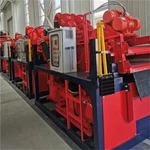

When it comes to oil and gas drilling operations, the efficiency and longevity of equipment are of paramount importance. One piece of equipment that often comes into discussion is the Mud Desander. As a supplier of Mud Desanders, I am frequently asked whether a Mud Desander can indeed be used in oil and gas drilling. In this blog post, I will delve into this question, exploring the functionality, suitability, and benefits of using a Mud Desander in the context of oil and gas drilling.
What is a Mud Desander?
A Mud Desander is a crucial component in the solids control system of drilling operations. It is designed to remove sand and other large solid particles from the drilling mud. The process of oil and gas drilling involves circulating drilling mud down the wellbore and back to the surface. This mud serves multiple purposes, including cooling and lubricating the drill bit, carrying cuttings to the surface, and maintaining wellbore stability. However, during the drilling process, the mud picks up various solid particles, such as sand, silt, and rock cuttings. If these particles are not removed, they can cause significant damage to the drilling equipment, reduce the efficiency of the drilling process, and even lead to wellbore instability.
The Mud Desander operates on the principle of hydrocyclone separation. The drilling mud is pumped into the hydrocyclone at high pressure, creating a centrifugal force. This force causes the heavier solid particles to move towards the outer wall of the hydrocyclone and be discharged through the underflow, while the cleaner mud exits through the overflow and is recirculated back into the drilling system.
Suitability of Mud Desanders in Oil and Gas Drilling
Particle Size Separation
One of the primary reasons why Mud Desanders are suitable for oil and gas drilling is their ability to effectively separate large solid particles from the drilling mud. In oil and gas wells, the size of the cuttings and sand particles can vary widely. Mud Desanders are typically designed to remove particles in the range of 40 - 100 microns. These larger particles are the most likely to cause wear and tear on the drilling equipment, such as the drill bit, pumps, and valves. By removing these particles, the Mud Desander helps to extend the lifespan of the equipment and reduces the frequency of maintenance and replacement.
Drilling Fluid Properties
The properties of the drilling fluid are crucial for the success of oil and gas drilling operations. The presence of large solid particles can alter the density, viscosity, and other rheological properties of the drilling mud. This can lead to problems such as poor hole cleaning, lost circulation, and differential sticking. A Mud Desander helps to maintain the proper properties of the drilling fluid by removing the unwanted solid particles. This ensures that the drilling mud can perform its functions effectively, such as carrying the cuttings to the surface and providing wellbore support.
Wellbore Stability
Wellbore stability is a major concern in oil and gas drilling. The presence of large solid particles in the drilling mud can cause erosion of the wellbore wall, leading to instability and potential collapse. By removing these particles, the Mud Desander helps to protect the wellbore wall and maintain its integrity. This is particularly important in deep - water and high - pressure drilling operations, where wellbore stability is critical.
Benefits of Using a Mud Desander in Oil and Gas Drilling
Reduced Equipment Wear
As mentioned earlier, the presence of large solid particles in the drilling mud can cause significant wear and tear on the drilling equipment. By using a Mud Desander to remove these particles, the amount of abrasion on the drill bit, pumps, and other equipment is reduced. This results in lower equipment maintenance costs and longer equipment lifespan. For example, a drill bit that is exposed to a higher concentration of sand particles may need to be replaced more frequently, increasing the overall drilling cost. With a Mud Desander in place, the drill bit can last longer, leading to cost savings.
Improved Drilling Efficiency
The efficiency of the drilling process is directly related to the quality of the drilling mud. When the drilling mud is free of large solid particles, it can flow more easily through the drilling system, reducing the resistance and pressure drop. This allows the drill bit to penetrate the rock more effectively, increasing the rate of penetration. Additionally, the cleaner drilling mud can carry the cuttings to the surface more efficiently, reducing the time and energy required for hole cleaning.
Environmental Benefits
In addition to the operational benefits, using a Mud Desander in oil and gas drilling also has environmental benefits. By removing the solid particles from the drilling mud, the amount of waste generated during the drilling process is reduced. This waste can be properly disposed of, minimizing the environmental impact. Moreover, the reuse of the cleaner drilling mud reduces the need for fresh water and chemicals, further conserving resources.
Comparison with Other Desanding Equipment
In the solids control system of oil and gas drilling, there are other types of desanding equipment available, such as the Slurry Desander. While both Mud Desanders and Slurry Desanders are designed to remove solid particles from a fluid, there are some differences in their applications and performance.
Slurry Desanders are generally used in applications where the flow rate is higher and the solid particles are coarser. They are often used in the mining and construction industries, where the slurry contains a large amount of sand and gravel. In contrast, Mud Desanders are more suitable for oil and gas drilling, where the focus is on removing the finer sand particles from the drilling mud while maintaining the properties of the fluid.


Conclusion and Call to Action
In conclusion, a Mud Desander is an essential piece of equipment in oil and gas drilling operations. Its ability to effectively remove large solid particles from the drilling mud offers numerous benefits, including reduced equipment wear, improved drilling efficiency, and environmental protection. Whether you are involved in on - shore or off - shore oil and gas drilling, a high - quality Mud Desander can significantly enhance the performance and cost - effectiveness of your operations.
If you are looking for a reliable and efficient Mud Desander for your oil and gas drilling projects, I invite you to contact us. Our team of experts can provide you with detailed information about our products, help you choose the right Mud Desander for your specific needs, and discuss the purchasing options. Let's work together to ensure the success of your oil and gas drilling operations.
References
- API Recommended Practice 13C, “Specification for Drilling Fluids Processing Equipment”.
- Bourgoyne, A. T., et al. “Applied Drilling Engineering”. Society of Petroleum Engineers, 1986.
- Chenevert, M. E., and Sharma, M. M. “Fundamentals of Drilling Engineering”. Society of Petroleum Engineers, 2003.