

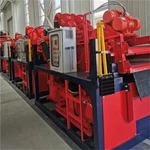

Hey there! I'm a supplier of Slurry Desanders, and today I wanna have a chat with you about whether a slurry desander can be used in the ceramic industry.
Let's first understand what a slurry desander is. For those who are new to it, you can check out this Slurry Desander link to get a better idea of its basic features. A slurry desander is primarily a device designed to separate particles from a liquid - solid mixture. It works by using centrifugal force to get rid of the coarser particles from the slurry. This process helps purify the slurry and makes it more suitable for further processing.
Ceramics are widely used in our daily lives, from beautiful vases and tableware to tiles and industrial components. The production of ceramics involves multiple steps, and the quality of the raw materials, especially the clay slurry, has a huge impact on the final product. In ceramic production, clay is often mixed with water to form a slurry. This slurry contains various impurities, including sand particles and other large - sized debris. If these impurities are not removed, they can cause many problems during the ceramic - making process.
One of the main issues caused by impurities in the clay slurry is the appearance of defects in the finished ceramic products. When there are large sand particles in the slurry, they can lead to uneven surfaces, pitting, or even cracking during firing. Imagine spending a lot of time and effort making a ceramic piece, only to find these flaws on the final product. It's super frustrating! That's where a slurry desander comes in handy.
A slurry desander can effectively remove those unwanted sand particles and other large debris from the clay slurry. By doing so, it helps in achieving a more homogeneous and high - quality slurry. This, in turn, leads to better - looking and more durable ceramic products. The desander creates a strong centrifugal force inside its cyclone structure. As the slurry enters the desander, the centrifugal force pushes the heavier sand particles to the outer wall of the cyclone and then down into the underflow, while the relatively clean slurry with finer particles exits from the overflow.


Let's talk about the economic benefits of using a slurry desander in the ceramic industry. First of all, by improving the quality of the ceramic products, manufacturers can command higher prices in the market. Customers are always willing to pay more for high - quality, defect - free ceramics. Additionally, the reduced rate of defective products means less waste. You know, making ceramics is an expensive process with costs involved in raw materials, labor, and firing. When there are fewer defective products, the overall production cost per piece goes down. This can significantly boost the profitability of ceramic manufacturers.
Another advantage of using a slurry desander is its flexibility. It can handle different types of clay slurries with various viscosities and solid - content levels. Whether you're working with high - plasticity clay or a more abrasive type of clay, a well - designed slurry desander can adjust to the specific properties of your slurry. This adaptability makes it a valuable tool in ceramic production lines.
There are also some practical aspects to consider. The maintenance of a slurry desander is relatively easy. As a supplier, I know that most desanders have a simple and robust design, which means less downtime for maintenance. You won't have to shut down your production line for long periods just to keep the desander in good condition. And in the ceramic industry, where time is money, this is a big plus.
Now, if you're familiar with the oil and gas industry, you might have heard of Mud Desander. While the basic principle of separation is similar between a mud desander and a slurry desander used in the ceramic industry, the specific design and application requirements are different. The mud desander is tailored to deal with the high - density, high - viscosity drilling mud in the oil and gas field. On the other hand, the slurry desander for the ceramic industry needs to be designed to handle the relatively lower - density clay slurries with different chemical compositions.
Some ceramic manufacturers might be hesitant to invest in a slurry desander because they think it's going to be a huge investment. But the truth is, compared to the long - term benefits, the initial cost of a slurry desander is quite reasonable. It's like an investment in the future of your ceramic business. In the long run, the savings from reduced waste and increased product quality far outweigh the purchase price.
In conclusion, a slurry desander is a great fit for the ceramic industry. It can solve the problem of impurities in clay slurries, improve product quality, and bring economic benefits. If you're in the ceramic industry and looking for a way to take your production to the next level, a slurry desander is definitely something worth considering.
If you're interested in learning more about our slurry desanders or you have any questions about how it can work in your ceramic production process, don't hesitate! Reach out to us, and we can have a detailed discussion. We're here to help you make the best decision for your business.
References
- General knowledge of ceramic production processes and separation technologies.
- Industry reports on the application of desanders in different sectors.