


As a seasoned casing drive supplier deeply entrenched in the industry, I understand the paramount importance of ensuring the quality of a casing drive. The reliability and performance of casing drives are crucial in various construction and drilling operations, and any compromise in quality can lead to costly delays, safety risks, and sub - optimal results. In this blog, I will share my insights and expertise on how to guarantee the highest quality for casing drives.
Understanding the Core Components
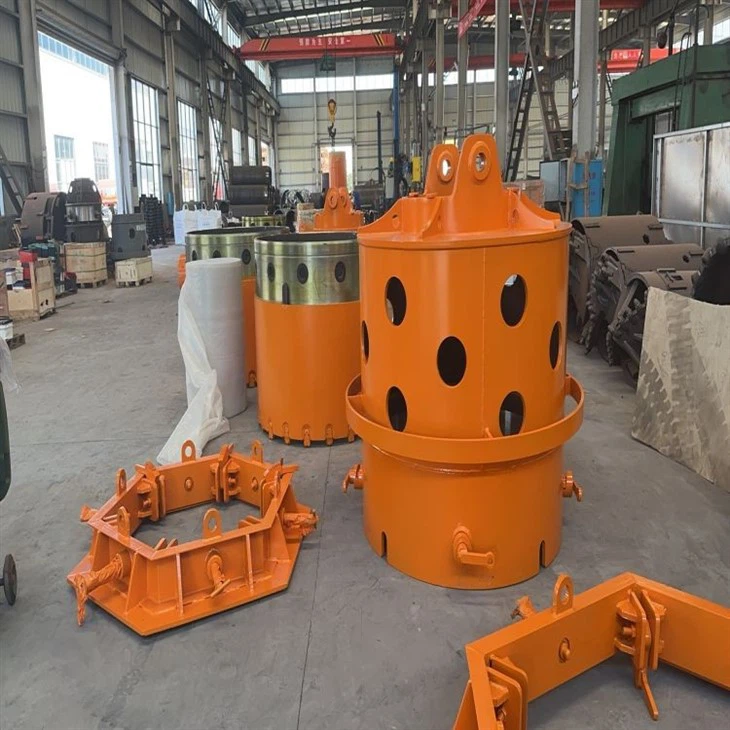
A casing drive consists of several key components, each playing a vital role in its overall functionality and quality. The Casing Drive Adapter is one such critical part. This adapter is designed to connect the driving equipment to the casing tube, allowing for efficient transfer of torque and axial force. It must be precisely engineered to ensure a perfect fit and alignment. For example, any misalignment can cause uneven stress distribution on the casing, leading to premature wear or even failure.
Another important component is the centralizing mechanism. A well - designed centralizing mechanism ensures that the casing remains centered during installation. This is essential for maintaining the integrity of the casing and ensuring its proper function within the structure. If the casing is not properly centered, it may be subject to excessive bending and stress, which can significantly reduce its lifespan.
Material Selection
The choice of materials is fundamental to the quality of a casing drive. High - strength steels are commonly used for casing tubes and adapters due to their excellent mechanical properties. These steels need to have high tensile strength, good toughness, and corrosion resistance. For instance, in marine or underground applications where the casing drive is exposed to moisture and corrosive substances, using corrosion - resistant steels can prevent rusting and deterioration, thereby extending the service life of the product.
When selecting materials for the components of a casing drive, it is also essential to consider the manufacturing process. Some materials may be more suitable for certain manufacturing techniques, such as forging, machining, or welding. For example, for components that require high precision and strength, forging may be the preferred method, and the material should be chosen accordingly to ensure its workability during forging.
Precision Manufacturing Processes
Precision manufacturing is the backbone of high - quality casing drives. Every step in the manufacturing process, from raw material processing to final assembly, must be carried out with utmost care and precision. Computer - numerical - control (CNC) machining is widely used in the production of casing drive components. This technology allows for highly accurate and repeatable machining, ensuring that each part meets the strict quality standards.
Welding is another critical manufacturing process. A high - quality welded joint is essential for the integrity of the casing drive. The welding process must be carefully controlled to ensure proper penetration, fusion, and strength. Welders should be highly skilled and certified, and the welding parameters, such as current, voltage, and welding speed, must be optimized for different materials and joint configurations.
Quality Control Measures
Implementing a comprehensive quality control system is non - negotiable when it comes to ensuring the quality of casing drives. This system should cover every aspect of the product, from incoming raw materials to the final finished product.
For incoming raw materials, strict inspection procedures should be in place. This includes checking the material certificates, dimensions, and surface quality. Any sub - standard materials should be rejected immediately to prevent them from entering the production process.
During the manufacturing process, in - process inspections are crucial. This involves inspecting the components at various stages of production to ensure that they meet the design specifications. For example, dimensional inspections can be carried out using precision measuring tools such as calipers, micrometers, and coordinate measuring machines (CMMs). Non - destructive testing methods, such as ultrasonic testing and magnetic particle testing, can be used to detect internal defects in the components.
Final product inspections are also essential. This includes functional testing of the casing drive to ensure that it operates smoothly and efficiently. For example, the torque transfer capacity, axial load capacity, and rotational speed should be tested under simulated operating conditions. Only products that pass all the inspection and testing procedures should be released for delivery.
Real - World Testing and Validation
In addition to in - house testing, real - world testing and validation are also necessary to ensure the quality of casing drives. This involves conducting field tests in actual construction or drilling sites. Field testing can provide valuable feedback on the performance of the casing drive under real - world conditions, such as different soil types, environmental factors, and loading conditions.
During field tests, data on the casing drive's performance, including torque, axial force, and rotation speed, can be collected and analyzed. Any issues or areas for improvement can be identified and addressed promptly. This feedback loop between field testing and product development can continuously improve the quality and performance of the casing drive.

Continuous Improvement and Innovation
The casing drive industry is constantly evolving, and innovation is key to staying competitive and ensuring high - quality products. As a supplier, we should invest in research and development to explore new materials, manufacturing processes, and design concepts.
For example, new alloy materials may offer better performance than traditional steels, such as higher strength - to - weight ratio or improved corrosion resistance. Advanced manufacturing technologies, such as 3D printing, may provide more flexibility in component design and production. By embracing these new technologies and materials, we can continuously improve the quality and performance of our casing drives.
After - Sales Service
A comprehensive after - sales service is an important part of ensuring the quality of casing drives. This includes providing technical support to customers, assisting with installation and maintenance, and offering prompt replacement of defective parts.
For example, our technical support team should be available to answer customers' questions and provide guidance on the proper use and maintenance of the casing drive. We can also offer training programs for customers' operators to ensure that they are familiar with the product and can operate it safely and efficiently.
In case of any product failures or defects, we should have a quick - response mechanism in place. This includes providing rapid replacement of defective parts and coordinating with the customers to resolve the issues as soon as possible.
Conclusion
Ensuring the quality of a casing drive is a complex and multi - faceted process that involves understanding the core components, selecting the right materials, implementing precision manufacturing processes, strict quality control measures, real - world testing, continuous improvement, and excellent after - sales service. As a casing drive supplier, we are committed to providing high - quality products that meet the highest standards in the industry.
If you are in the market for casing drives or have any questions about our products, we welcome you to contact us for a procurement discussion. We are eager to share our expertise and find the best casing drive solutions for your specific needs.
References
- Schubert, D. (2018). Foundations of Deep Foundations: Design and Construction. Wiley.
- Tomlinson, M. J. (2001). Foundation Design and Construction. Pearson Education.