


The acoustic properties of a Threaded Tremie Pipe are of significant interest in various construction and engineering applications, especially when it comes to concrete placement operations. As a leading supplier of Threaded Tremie Pipe, we have witnessed firsthand the importance of understanding these properties to ensure efficient and high - quality work.

1. Basic Acoustic Principles in a Threaded Tremie Pipe
Acoustics is the science that deals with the production, control, transmission, reception, and effects of sound. In the context of a Threaded Tremie Pipe, sound is mainly generated during the process of concrete pouring. When concrete is flowing through the pipe, the interaction between the concrete and the inner wall of the pipe, as well as the movement of the concrete itself, creates acoustic waves.
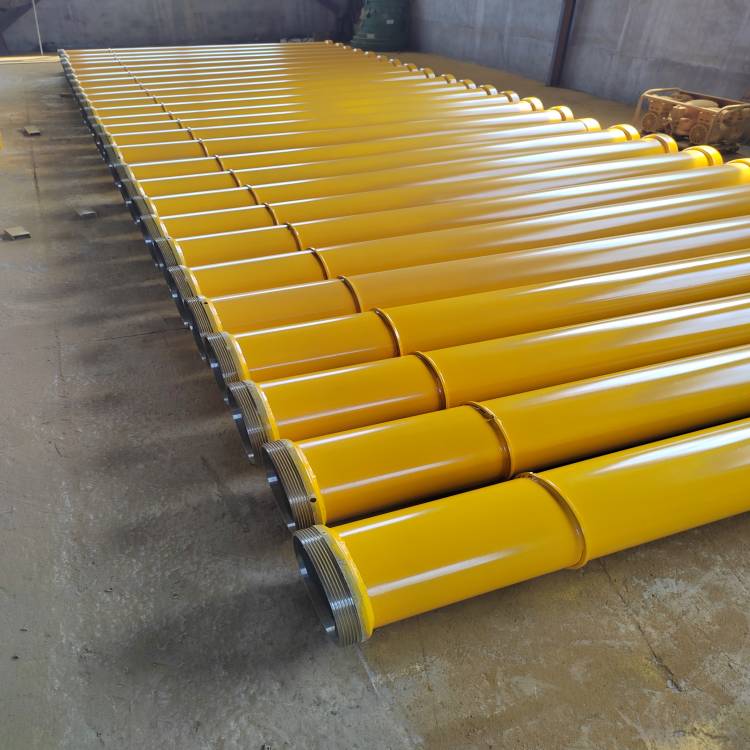
The speed of sound in a material is a fundamental acoustic property. In a Threaded Tremie Pipe, which is typically made of steel, the speed of sound is relatively high compared to other materials. The speed of sound in steel is approximately 5960 m/s. This high speed of sound allows for relatively fast propagation of acoustic signals within the pipe. When there is an impact or a sudden change in the flow of concrete, the resulting acoustic waves can travel quickly along the length of the pipe.
2. Acoustic Signals during Concrete Pouring
During the concrete pouring process using a Threaded Tremie Pipe, several types of acoustic signals can be observed. One of the most common is the sound associated with the flow of concrete. As the concrete moves through the pipe, it creates a continuous, low - frequency rumbling sound. This sound is a result of the frictional forces between the concrete and the inner surface of the pipe, as well as the turbulence within the flowing concrete.
The intensity of this sound can provide valuable information about the flow rate and the state of the concrete. For example, a louder sound may indicate a higher flow rate or a more turbulent flow. On the other hand, a sudden change in the sound, such as a decrease in volume or a change in pitch, could suggest a blockage or an abnormal condition within the pipe.

Another important acoustic signal is the impact sound when the concrete hits the bottom of the formwork or the existing concrete layer. This impact sound can be used to determine the position of the end of the tremie pipe relative to the concrete surface. By analyzing the time delay between the generation of the impact sound and its reception at the top of the pipe, it is possible to estimate the depth of the pipe end within the concrete.
3. Factors Affecting Acoustic Properties
3.1 Pipe Material
The material of the Threaded Tremie Pipe has a significant impact on its acoustic properties. As mentioned earlier, steel pipes have a high speed of sound, which means that acoustic signals can travel quickly. In addition, steel is a relatively rigid material, which allows for efficient transmission of acoustic waves with less attenuation.
In contrast, pipes made of other materials, such as plastic, may have different acoustic characteristics. Plastic pipes generally have a lower speed of sound and higher attenuation of acoustic waves. This can make it more difficult to detect and analyze acoustic signals accurately during concrete pouring operations.
3.2 Pipe Diameter and Wall Thickness
The diameter and wall thickness of the Threaded Tremie Pipe also affect its acoustic properties. A larger diameter pipe may have a lower resonance frequency compared to a smaller diameter pipe. Resonance occurs when the frequency of an acoustic wave matches the natural frequency of the pipe, resulting in a significant increase in the amplitude of the wave.
The wall thickness of the pipe can influence the attenuation of acoustic waves. A thicker - walled pipe may provide better insulation and less acoustic leakage, but it may also increase the weight and cost of the pipe. On the other hand, a thinner - walled pipe may be more flexible but may allow for more acoustic energy to be dissipated.
3.3 Concrete Properties
The properties of the concrete being poured also play a role in the acoustic behavior of the Threaded Tremie Pipe. The viscosity of the concrete affects the frictional forces between the concrete and the pipe wall, which in turn affects the sound generated during flow. A more viscous concrete may produce a louder and more irregular sound compared to a less viscous one.
The aggregate size and shape in the concrete can also impact the acoustic signals. Larger aggregates may cause more significant impacts and vibrations within the pipe, resulting in louder and more complex acoustic patterns.
4. Applications of Acoustic Monitoring in Threaded Tremie Pipe Operations
Acoustic monitoring can be a valuable tool in Threaded Tremie Pipe operations. By using microphones or other acoustic sensors placed at strategic locations on the pipe, it is possible to continuously monitor the acoustic signals during concrete pouring.
One of the main applications is the detection of blockages. A blockage in the pipe can cause a significant change in the acoustic pattern. For example, the continuous rumbling sound of the flowing concrete may suddenly stop or be replaced by a high - pitched screeching sound. By detecting these changes early, operators can take immediate action to clear the blockage and prevent delays in the construction process.
Acoustic monitoring can also be used to ensure the proper placement of concrete. By analyzing the impact sound at the bottom of the pipe, operators can determine if the pipe is at the correct depth and if the concrete is being distributed evenly. This can help to improve the quality of the concrete structure and reduce the risk of defects.
5. Complementary Products and Their Role in Acoustic Context
In addition to the Threaded Tremie Pipe, other related products such as Tremie Hopper and Tremie Coupling Cable also have an impact on the overall acoustic situation during concrete pouring.
The Tremie Hopper is used to receive and funnel the concrete into the Threaded Tremie Pipe. The design of the hopper can affect the initial flow of the concrete and the generation of acoustic signals. A well - designed hopper can ensure a smooth and continuous flow of concrete, reducing the likelihood of sudden changes in the acoustic pattern.

The Tremie Coupling Cable is used to connect different sections of the Threaded Tremie Pipe. A secure and properly installed coupling cable is essential for maintaining the integrity of the pipe system and ensuring efficient transmission of acoustic signals. A loose or damaged coupling cable may cause additional vibrations and noise, which can interfere with the accurate monitoring of acoustic signals.
6. Contact Us for Your Threaded Tremie Pipe Needs
Understanding the acoustic properties of a Threaded Tremie Pipe is crucial for successful concrete placement operations. At our company, we are committed to providing high - quality Threaded Tremie Pipes and related products that meet the strictest industry standards.
Whether you are a contractor, an engineer, or involved in any construction project that requires the use of a Threaded Tremie Pipe, we are here to assist you. Our team of experts has extensive knowledge and experience in the field, and we can provide you with the best solutions tailored to your specific needs.
If you are interested in learning more about our products or would like to discuss your project requirements, please do not hesitate to contact us. We look forward to working with you and contributing to the success of your construction projects.
References
- ASTM International. (Year). Standard Specification for [relevant standard for threaded tremie pipes]. ASTM [standard number].
- Concrete Construction Handbook. (Publisher, Year).
- Acoustics in Engineering Materials and Structures: Theory, Examples and Applications. (Author, Publisher, Year).