


What are the storage conditions for a casing joint?
As a supplier of casing joints, I understand the critical importance of proper storage conditions for these essential components. Casing joints are used in various industries, including oil and gas, construction, and mining, to connect sections of casing pipes. Ensuring that they are stored correctly can significantly extend their lifespan, maintain their integrity, and ultimately save costs for our customers. In this blog post, I will discuss the key storage conditions for casing joints.

1. Clean and Dry Environment
One of the most fundamental requirements for storing casing joints is a clean and dry environment. Moisture is the enemy of metal components like casing joints, as it can lead to rust and corrosion. Rust not only degrades the appearance of the casing joints but also weakens their structural integrity.
To prevent moisture from causing damage, the storage area should be well - ventilated. This helps to reduce humidity levels and prevent the accumulation of water vapor. Additionally, the storage facility should be protected from rain, snow, and groundwater. If possible, the casing joints should be stored indoors in a warehouse with a controlled climate.
For example, if the casing joints are stored outdoors for a short period, they should be covered with waterproof tarps. These tarps should be securely fastened to prevent wind from blowing them off and exposing the joints to the elements. Moreover, the storage area should be regularly inspected for any signs of water leakage or excessive moisture.
2. Proper Support and Positioning
Casing joints should be stored in a way that they are properly supported and positioned. Improper support can lead to deformation of the joints, which can affect their performance when they are installed.
When storing casing joints horizontally, they should be placed on a flat and stable surface. Wooden or steel supports can be used to keep the joints elevated off the ground. These supports should be evenly spaced along the length of the joints to prevent sagging. The distance between the supports depends on the length and diameter of the casing joints, but generally, they should be placed at intervals that can distribute the weight of the joints evenly.
If the casing joints are stored vertically, they should be placed in a rack or stand that is designed to hold them securely. The rack should be strong enough to support the weight of the joints and prevent them from tipping over. Each joint should be properly aligned within the rack to avoid any unnecessary stress on the connection points.
3. Protection from Physical Damage
Casing joints are relatively large and heavy components, and they can be easily damaged by physical impact. Therefore, the storage area should be designed to protect them from such damage.
The storage area should be free from any sharp objects or debris that could scratch or dent the casing joints. Tools and equipment should be stored separately from the joints to prevent accidental collisions. If there is a lot of traffic in the storage area, barriers or fencing can be used to create a dedicated space for the casing joints.
During handling and storage, care should be taken to avoid dropping or hitting the joints. Lifting equipment, such as cranes or forklifts, should be operated by trained personnel to ensure safe handling. When moving the joints, they should be secured properly to prevent them from shifting or falling.
4. Isolation from Chemicals and Contaminants
Casing joints can be affected by exposure to chemicals and contaminants. For instance, certain chemicals can react with the metal of the joints and cause corrosion or other forms of damage.
The storage area should be kept away from areas where chemicals are stored or used. If there are any chemical spills or leaks in the vicinity, the casing joints should be immediately protected and the area should be cleaned up promptly. Additionally, the joints should be protected from dust, dirt, and other contaminants that can accumulate on their surfaces over time. Regular cleaning of the storage area can help to reduce the risk of contamination.
5. Temperature Control
Extreme temperatures can also have an impact on the quality of casing joints. High temperatures can cause the metal to expand, which can lead to internal stress and potential cracking. Low temperatures, on the other hand, can make the metal more brittle and prone to fracture.
In a warehouse environment, the temperature should be maintained within a reasonable range. If the storage area is located in a region with extreme temperature variations, climate - control systems such as heaters or air conditioners can be installed. These systems can help to keep the temperature stable and protect the casing joints from the adverse effects of temperature changes.
6. Separation by Type and Specification
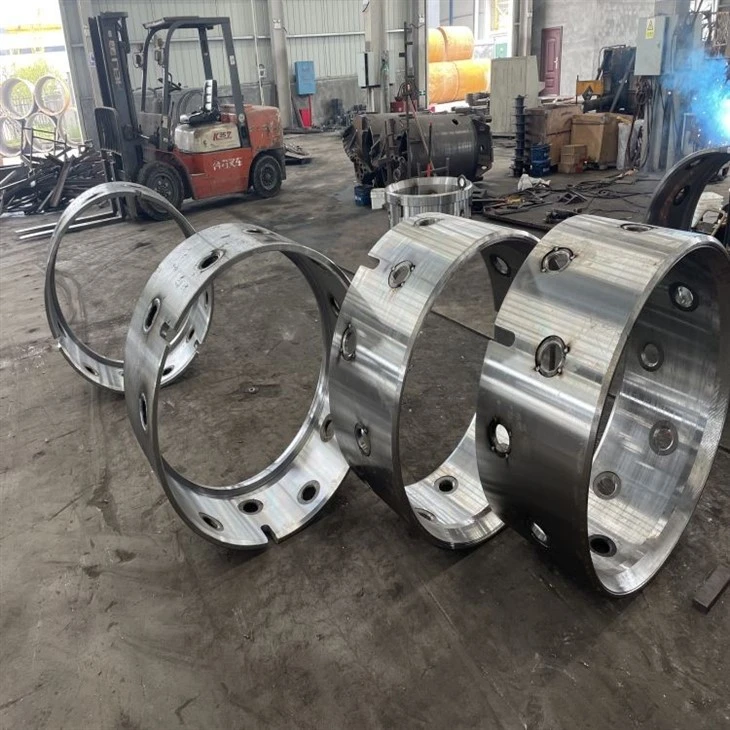
As a casing joint supplier, we offer a variety of casing joints, such as 25crmo Casing Joint, Forging Casing Joint, and Bauer Casing Joint. Each type of casing joint may have different storage requirements based on its material, size, and design.
Therefore, it is important to separate the casing joints by type and specification during storage. This makes it easier to manage inventory and ensures that the joints are stored under the most appropriate conditions. Labels or tags can be used to identify each type of joint, and they should be clearly visible for easy identification.
7. Inventory Management and Rotation
Proper inventory management is also an important aspect of storing casing joints. An inventory system should be in place to keep track of the quantity, location, and age of the joints. This helps to ensure that the oldest joints are used first, which is known as the first - in - first - out (FIFO) principle.
Regular inventory checks should be conducted to identify any joints that may be approaching their expiration date or showing signs of damage. These joints can then be inspected more closely and either repaired or removed from the inventory. By implementing an effective inventory management system, we can ensure that the casing joints are always in good condition when they are supplied to our customers.
Conclusion
In conclusion, proper storage conditions for casing joints are crucial for maintaining their quality and performance. A clean and dry environment, proper support and positioning, protection from physical damage, isolation from chemicals and contaminants, temperature control, separation by type and specification, and effective inventory management are all essential factors to consider.
As a casing joint supplier, we are committed to providing our customers with high - quality products. By ensuring that our casing joints are stored under the right conditions, we can guarantee that they will meet the expectations of our customers. If you are in need of casing joints or have any questions about their storage or usage, please feel free to contact us for a purchase negotiation. We look forward to serving you.
References
- API Specification 5CT, "Specification for Casing and Tubing", American Petroleum Institute.
- ASME B31.8, "Gas Transmission and Distribution Piping Systems", American Society of Mechanical Engineers.
- Various industry - specific guidelines and best practices for the storage of metal components.