


In the realm of construction and drilling operations, two essential components often come into play: the kelly bar and the drill pipe. As a seasoned kelly bar supplier, I've witnessed firsthand the significance of these tools and the confusion that sometimes arises between them. In this blog post, I'll delve into the differences between a kelly bar and a drill pipe, shedding light on their unique features, functions, and applications.
Understanding the Basics
Let's start by defining what a kelly bar and a drill pipe are. A kelly bar is a specialized tool used in drilling rigs, particularly in rotary drilling applications. It consists of a series of nested tubes, typically square or hexagonal in cross - section, that transmit torque from the drilling rig's power source to the drill bit. The kelly bar also provides a means of lowering and raising the drill bit during the drilling process.
On the other hand, a drill pipe is a long, tubular component that connects the drill bit to the drilling rig. It is usually made of high - strength steel and is designed to withstand the high stresses and pressures encountered during drilling. Drill pipes are used to transfer drilling fluid (such as mud) from the surface to the drill bit and to transmit torque and axial force to the bit.
Structural Differences
One of the most obvious differences between a kelly bar and a drill pipe lies in their structure. Kelly bars are characterized by their nested design. The outer tube of the kelly bar is connected to the drilling rig's rotary table, which imparts torque. The inner tubes slide within the outer tube, allowing the kelly bar to extend and retract as the drilling progresses. This telescopic feature enables the kelly bar to reach greater depths without the need for frequent disassembly and reassembly.
In contrast, drill pipes are single - length tubes that are connected end - to - end using threaded connections. As the drilling depth increases, additional drill pipes are added to the string. This modular design allows for flexibility in adjusting the length of the drill string according to the specific requirements of the drilling project.
Torque Transmission
Torque transmission is another area where kelly bars and drill pipes differ. Kelly bars are highly efficient at transmitting torque due to their unique shape and design. The square or hexagonal cross - section of the kelly bar provides a large contact area between the nested tubes, ensuring a reliable transfer of torque from the rig to the drill bit. This makes kelly bars ideal for applications that require high torque, such as drilling in hard rock or compacted soil.
Drill pipes, while also capable of transmitting torque, rely on the threaded connections between individual pipes. Although these connections are designed to be strong, they can introduce some limitations in terms of torque transmission efficiency. In some cases, the threaded connections may experience wear and tear over time, which can affect the overall performance of the drill string.
Depth Capability
Depth capability is an important consideration in drilling operations. Kelly bars are known for their ability to reach significant depths. The telescopic design of the kelly bar allows it to extend and retract smoothly, enabling it to access deeper layers of the earth. For example, our 90M Depth Friction Kelly Bar is specifically designed to reach depths of up to 90 meters, making it suitable for a wide range of deep - drilling applications.
Drill pipes, on the other hand, can also reach great depths, but the process of adding and removing individual pipes can be time - consuming and labor - intensive. As the drill string gets longer, the weight of the pipes also increases, which can pose challenges in terms of handling and stability. However, with proper equipment and techniques, drill pipes can be used for extremely deep - drilling projects.
Compatibility with Drilling Rigs
Kelly bars and drill pipes are designed to be compatible with different types of drilling rigs. Kelly bars are commonly used in rotary drilling rigs, where they are directly connected to the rotary table. The unique design of the kelly bar allows it to work in conjunction with the rig's power system to provide the necessary torque and axial force for drilling.
Drill pipes, on the other hand, are more versatile and can be used with a variety of drilling rigs, including rotary rigs, top - drive rigs, and cable - tool rigs. The modular nature of drill pipes makes them easy to adapt to different rig configurations.
Applications
The differences in structure, torque transmission, depth capability, and compatibility also translate into different applications for kelly bars and drill pipes.
Kelly bars are often used in large - scale construction projects, such as building foundations, bridge piers, and offshore platforms. Their high torque transmission capabilities make them suitable for drilling in challenging geological conditions. For example, in projects where the soil is hard and compacted, a kelly bar can provide the necessary force to penetrate the ground. Additionally, the telescopic design of the kelly bar makes it convenient for drilling in areas with limited space, as it can be extended and retracted without the need for a large footprint.

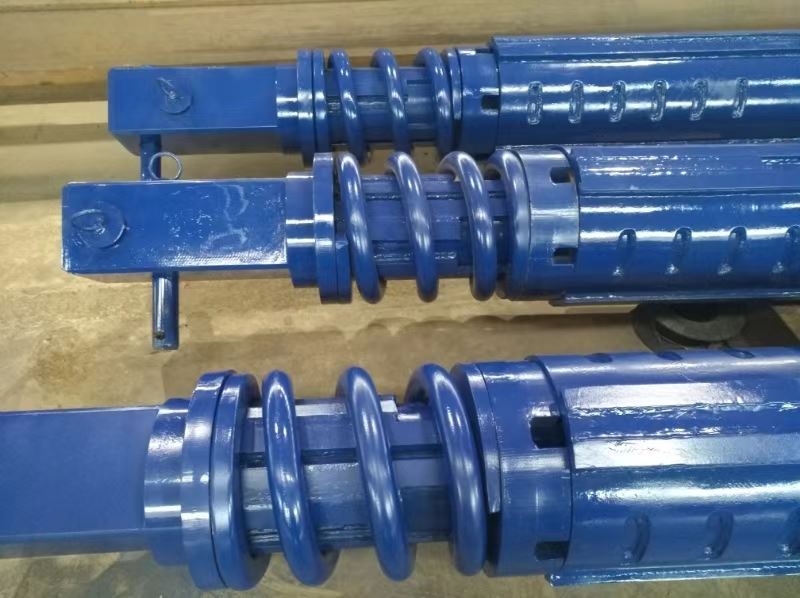
Drill pipes, on the other hand, are widely used in the oil and gas industry, as well as in water well drilling and geothermal exploration. In the oil and gas sector, drill pipes are used to drill wells to extract hydrocarbons from deep underground. The ability to connect multiple drill pipes end - to - end allows for the creation of long drill strings that can reach the oil and gas reservoirs. In water well drilling, drill pipes are used to bore holes to access groundwater sources.
Types of Kelly Bars
There are different types of kelly bars available, each with its own unique features and applications. For example, Casagrande Interlocking Kelly Bar and Soilmec Interlocking Kelly Bar are two popular types of interlocking kelly bars. These kelly bars use an interlocking mechanism between the nested tubes, which provides enhanced stability and torque transmission. They are often used in heavy - duty drilling applications, such as deep - foundation drilling and large - diameter pile construction.
Conclusion
In conclusion, while both kelly bars and drill pipes are essential tools in the drilling industry, they have distinct differences in terms of structure, torque transmission, depth capability, compatibility with drilling rigs, and applications. Understanding these differences is crucial for selecting the right tool for a specific drilling project.
As a kelly bar supplier, I'm committed to providing high - quality kelly bars that meet the diverse needs of our customers. Whether you're working on a small - scale construction project or a large - scale oil and gas exploration, our range of kelly bars can offer the performance and reliability you need.
If you're interested in learning more about our kelly bars or have a specific drilling project in mind, I encourage you to reach out to us for a detailed discussion. We're here to help you make the best choice for your drilling operations and to ensure the success of your projects.
References
- "Drilling Engineering Handbook" by John F. Dawson and Robert D. Schubert
- "Foundation Design and Construction" by Braja M. Das
- Industry reports and technical documents from leading drilling equipment manufacturers