

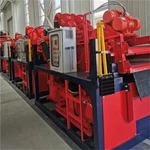

Hey there! As a supplier of Mud Desanders, I've been diving deep into the nitty - gritty details of these awesome pieces of equipment. One question that keeps popping up is: What is the influence of the shape of the inlet on the performance of a Mud Desander? Let's take a closer look.
First off, let me give you a quick intro to Mud Desanders. If you're not familiar, you can check out Mud Desander. These are essential tools in industries like oil and gas drilling, mining, and construction. They help separate solid particles from the drilling mud or slurry, making sure the mud can be reused and the overall operation runs smoothly. There's also something similar called Slurry Desander, which has a similar function but might be used in different settings.
Now, back to the inlet shape. The inlet of a Mud Desander is where the slurry or mud mixture first enters the device. You can think of it as the front door to the whole separation process. And just like the design of a door can affect how people enter a building, the shape of the inlet can have a big impact on how well the Mud Desander works.
Circular Inlets
Let's start with circular inlets. They're probably the most common type you'll see. The main advantage of a circular inlet is that it provides a smooth and even flow of the mud or slurry into the desander. When the fluid enters in a circular pattern, it creates a more stable vortex inside the desander. This vortex is crucial because it's what helps separate the heavier solid particles from the lighter fluid.
The circular shape also reduces the chances of turbulence at the entry point. Turbulence can be a real pain in the neck because it can disrupt the separation process. Instead of allowing the particles to settle properly, turbulent flow can keep them mixed up in the fluid. With a circular inlet, the fluid can enter the desander in an orderly fashion, making the separation more efficient.
However, circular inlets aren't perfect. One drawback is that they might not be as effective in handling large volumes of fluid. If the flow rate is too high, the circular inlet can get overwhelmed, and the fluid might not enter the desander evenly. This can lead to an uneven distribution of particles inside the desander and reduce its overall performance.
Rectangular Inlets
Next up are rectangular inlets. These are a bit different from circular ones. Rectangular inlets can offer a larger opening area compared to circular inlets of the same size. This means they can handle higher flow rates more easily. In industries where there's a need to process a large amount of mud or slurry quickly, rectangular inlets can be a great choice.
Another advantage of rectangular inlets is that they can be designed to direct the flow of fluid in a specific direction. This can be useful in situations where you want to optimize the formation of the vortex inside the desander. By controlling the flow direction, you can make sure that the fluid enters the desander in a way that maximizes the separation efficiency.
But rectangular inlets also have their own set of problems. One major issue is that they're more prone to creating turbulence at the entry point. The sharp corners of the rectangle can cause the fluid to flow unevenly, which can lead to turbulence. This turbulence can then disrupt the separation process and reduce the performance of the Mud Desander.
Elliptical Inlets
Elliptical inlets are a bit of a middle - ground between circular and rectangular inlets. They offer some of the benefits of both. The elliptical shape provides a relatively smooth flow of fluid, similar to a circular inlet. At the same time, it can handle a wider range of flow rates compared to a circular inlet.
The elliptical inlet can also be designed to create a more focused and efficient vortex inside the desander. By adjusting the shape and orientation of the ellipse, you can control the way the fluid enters the desander and optimize the separation process.
However, elliptical inlets are more complex to manufacture compared to circular or rectangular inlets. This means they can be more expensive. Also, because they're not as common, finding replacement parts or getting technical support might be a bit more difficult.
Impact on Separation Efficiency
The shape of the inlet has a direct impact on the separation efficiency of the Mud Desander. A well - designed inlet can increase the percentage of solid particles that are successfully separated from the fluid. For example, if a Mud Desander with a circular inlet can separate 80% of the solid particles, a properly designed rectangular or elliptical inlet might be able to increase that percentage to 85% or even higher.


The inlet shape also affects the size of the particles that can be separated. A more efficient inlet design can help separate smaller particles, which is important in industries where even the tiniest solid particles can cause problems. For instance, in oil and gas drilling, small particles can damage drilling equipment if they're not removed from the mud.
Impact on Pressure Drop
Pressure drop is another important factor to consider. Pressure drop refers to the decrease in pressure as the fluid flows through the desander. The shape of the inlet can influence the pressure drop significantly.
Circular inlets generally have a lower pressure drop compared to rectangular or elliptical inlets. This is because the smooth and even flow they provide requires less energy to maintain. A lower pressure drop is beneficial because it means the desander uses less energy to operate. This can result in cost savings over time, especially in industries where the desanders are running continuously.
On the other hand, rectangular and elliptical inlets might have a higher pressure drop. This is due to the turbulence and uneven flow they can create at the entry point. However, in some cases, this higher pressure drop might be acceptable if the inlet shape offers other advantages, such as better handling of high flow rates.
Impact on Wear and Tear
The shape of the inlet can also affect the wear and tear of the Mud Desander. Turbulent flow caused by an inefficient inlet shape can increase the abrasion inside the desander. The solid particles in the fluid can act like tiny sandpaper, wearing down the walls of the desander over time.
Circular inlets, with their smooth flow, generally cause less wear and tear compared to rectangular or elliptical inlets. The even distribution of the fluid reduces the chances of the particles hitting the walls of the desander with too much force. This can extend the lifespan of the desander and reduce maintenance costs.
Conclusion
So, as you can see, the shape of the inlet plays a crucial role in the performance of a Mud Desander. Each type of inlet - circular, rectangular, and elliptical - has its own advantages and disadvantages. When choosing a Mud Desander, it's important to consider the specific requirements of your application, such as the flow rate, the size of the particles to be separated, and the available energy.
If you're in the market for a Mud Desander and want to learn more about how the inlet shape can affect its performance, don't hesitate to reach out. We're here to help you make the best choice for your needs. Whether you need a desander for a small - scale project or a large - scale industrial operation, we've got you covered. Contact us for more information and let's start a conversation about how we can meet your Mud Desander requirements.
References
- Smith, J. (2020). "Fluid Dynamics in Mud Desanders: The Role of Inlet Shape". Journal of Industrial Filtration.
- Johnson, R. (2019). "Optimizing Mud Desander Performance with Different Inlet Designs". Mining Engineering Review.
- Brown, A. (2021). "Impact of Inlet Geometry on Pressure Drop in Desanding Equipment". Oil and Gas Technology Journal.