

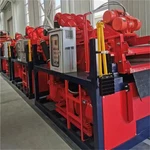

Hey there! As a supplier of Mud Desanders, I'm super stoked to walk you through the operation process of these nifty machines. So, let's dive right in!
Getting Started: The Basics
First things first, what the heck is a Mud Desander? Well, it's a crucial piece of equipment used in the oil and gas industry, as well as in mining and other sectors where you need to separate solids from drilling mud. The main goal is to remove larger particles, usually sand and other debris, from the mud so that it can be reused in the drilling process. This not only saves money but also helps in keeping the environment clean. You can check out more about Mud Desander on our website.
The Initial Setup
Before you can start using a Mud Desander, you need to set it up properly. This involves a few key steps.
Installation
The Mud Desander needs to be installed in a stable and level location. It's usually part of a larger solids control system, so you'll need to make sure it's connected to the other components correctly. This includes hooking up the inlet and outlet pipes for the mud flow. The inlet pipe brings the dirty mud into the desander, while the outlet pipes carry the cleaned mud and the separated solids out.
Power and Controls
Next, you'll need to power up the desander. Most Mud Desanders are electric, so you'll need to connect them to a reliable power source. Once it's powered on, you can start using the control panel to set the operating parameters. These parameters include things like the flow rate of the mud, the pressure, and the speed of the desander's internal components.
The Operation Process
Now, let's get into the nitty-gritty of how the Mud Desander actually works.
Inlet and Feed
The dirty drilling mud enters the Mud Desander through the inlet pipe. The mud is usually pumped in at a high pressure to ensure that it flows through the system efficiently. As the mud enters the desander, it's directed towards the center of the unit.
Centrifugal Separation
Once inside the desander, the magic happens. The Mud Desander uses centrifugal force to separate the solids from the mud. The mud spins around inside the desander at a high speed, creating a vortex. The larger particles, like sand, are heavier and are pushed towards the outer wall of the desander by the centrifugal force. Meanwhile, the lighter mud stays closer to the center.
Solids Discharge
The separated solids, which are now concentrated at the outer wall of the desander, are then discharged through a solids outlet. This outlet is usually located at the bottom of the desander. The solids are collected in a separate container or can be further processed for disposal.


Clean Mud Outlet
The cleaned mud, which is now free of most of the larger particles, is drawn out through the clean mud outlet. This outlet is usually located at the top of the desander, near the center. The cleaned mud can then be reused in the drilling process or sent for further treatment.
Monitoring and Adjustment
Throughout the operation, it's important to monitor the performance of the Mud Desander. You can use the control panel to check the flow rate, pressure, and other operating parameters. If you notice any issues, like a decrease in the efficiency of the separation or an increase in the solids content of the cleaned mud, you can make adjustments to the operating parameters. For example, you might need to increase the flow rate or the pressure to improve the separation.
Maintenance and Troubleshooting
Like any piece of equipment, the Mud Desander requires regular maintenance to keep it running smoothly.
Regular Checks
You should perform regular checks on the desander to make sure all the components are in good working condition. This includes checking the pipes for leaks, the control panel for any error messages, and the internal components for wear and tear. You should also clean the desander regularly to prevent the buildup of solids and debris.
Troubleshooting
If you encounter any problems with the Mud Desander, don't panic. Most issues can be resolved with a little troubleshooting. For example, if the desander is not separating the solids effectively, it could be due to a clogged inlet or outlet pipe, a malfunctioning control valve, or a problem with the centrifugal separation mechanism. You can refer to the user manual or contact our technical support team for help.
Why Choose Our Mud Desanders?
As a supplier, we take pride in offering high-quality Mud Desanders. Our desanders are designed with the latest technology to ensure efficient and reliable operation. They are also built to last, with durable materials and components that can withstand the harsh conditions of the oil and gas industry.
In addition to our top-notch products, we also offer excellent customer service. Our team of experts is always ready to help you with installation, operation, and maintenance. We can also provide customized solutions to meet your specific needs.
If you're in the market for a Mud Desander, or if you're interested in learning more about our products, don't hesitate to get in touch. We'd love to have a chat with you and see how we can help you with your solids control needs. You can also check out our Slurry Desander for more options.
Conclusion
So, there you have it! That's the operation process of a Mud Desander in a nutshell. It's a fascinating piece of equipment that plays a vital role in the oil and gas industry. Whether you're a seasoned professional or just starting out, understanding how a Mud Desander works is essential for efficient and effective drilling operations.
If you have any questions or if you're interested in purchasing a Mud Desander, feel free to reach out. We're here to help you every step of the way.
References
- "Drilling Fluids and Wellbore Stability" by George R. Gray and H. C. H. Darley
- "Solids Control Equipment Handbook" by various industry experts