


As a soil drilling bit supplier, I've often been asked about the penetration rate of a soil drilling bit. It's a crucial aspect that directly impacts the efficiency and productivity of any soil drilling operation. In this blog post, I'll delve into what penetration rate means, the factors that influence it, and how it relates to the soil drilling bits we supply.
Understanding the Penetration Rate of a Soil Drilling Bit
The penetration rate of a soil drilling bit refers to the speed at which the bit can drill through the soil. It is typically measured in units such as inches per minute (ipm) or meters per hour (m/h). A higher penetration rate means that the drilling process is faster, which can significantly reduce the overall time and cost of a project.
The penetration rate is not a fixed value; it can vary widely depending on several factors. These factors can be broadly categorized into two main groups: the characteristics of the soil and the properties of the drilling bit itself.
Factors Affecting the Penetration Rate
Soil Characteristics
- Soil Type: Different soil types have different levels of hardness and compactness. For example, sandy soils are generally easier to drill through compared to clayey or rocky soils. Sandy soils have loose particles, which allow the drilling bit to penetrate more easily. In contrast, clayey soils can be sticky and compact, making it more difficult for the bit to cut through. Rocky soils, of course, present the greatest challenge as the hard rocks can cause excessive wear on the bit and slow down the drilling process.
- Moisture Content: The moisture content in the soil can also impact the penetration rate. Dry soils are often more brittle and can be drilled through more easily in some cases. However, extremely dry soils may require more force to break apart. On the other hand, wet soils can be more cohesive, which can either help or hinder the drilling process depending on the soil type. For example, wet clay can become very sticky and clog the drilling bit, reducing the penetration rate.
- Soil Compaction: Compacted soils are more difficult to drill through than loose soils. High - compaction soils require the drilling bit to exert more force to break the soil particles apart. This can result in a lower penetration rate as more energy is needed to advance the bit.
Drilling Bit Properties
- Bit Design: The design of the soil drilling bit plays a crucial role in determining its penetration rate. Bits with a well - designed cutting edge can more effectively break through the soil. For example, bits with a sharp and pointed tip can penetrate the soil more easily compared to those with a blunt tip. Additionally, the shape of the bit, such as whether it is a spiral or a straight - shank design, can also affect how the soil is removed from the hole, which in turn impacts the penetration rate.
- Bit Material: The material of the drilling bit is another important factor. High - quality materials that are hard and wear - resistant can maintain their cutting edge for longer periods. For instance, bits made from carbide - tipped materials are known for their durability and ability to cut through tough soils. A bit made from a low - quality material may wear out quickly, leading to a decrease in the penetration rate as the cutting edge becomes dull.
- Bit Size: The size of the drilling bit can also influence the penetration rate. Larger bits generally require more force to drill through the soil, which can result in a lower penetration rate compared to smaller bits. However, larger bits are often used for larger - scale projects where the goal is to create wider holes.
Our Soil Drilling Bits and Penetration Rate
At our company, we understand the importance of a high penetration rate in soil drilling operations. That's why we offer a wide range of soil drilling bits designed to optimize this rate.
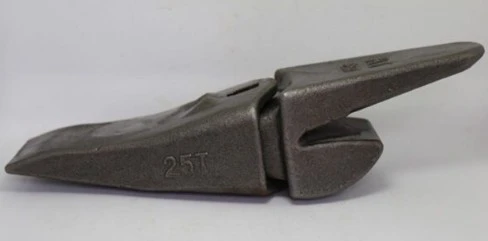
One of our popular products is the 25T Soil Drilling Teeth. These teeth are made from high - quality carbide materials, which provide excellent wear resistance and cutting performance. The design of these teeth allows for efficient soil penetration, even in tough soil conditions. Whether you are drilling through sandy, clayey, or rocky soils, the 25T Soil Drilling Teeth can maintain a relatively high penetration rate.
Another product we offer is the Flat Soil Drilling Teeth. These teeth are designed for specific applications where a flat cutting surface is required. The flat design helps to distribute the drilling force evenly, which can improve the penetration rate in certain soil types. For example, in softer soils, the flat teeth can quickly cut through the soil and create a smooth - walled hole.
Measuring and Improving the Penetration Rate
To measure the penetration rate of a soil drilling bit, you can simply record the depth of the hole drilled over a specific period of time. For example, if you drill a hole to a depth of 10 inches in 5 minutes, the penetration rate would be 2 inches per minute.
If you find that the penetration rate of your drilling bit is lower than expected, there are several steps you can take to improve it:

- Select the Right Bit: Choose a bit that is suitable for the soil type you are drilling through. As mentioned earlier, different soil types require different bit designs and materials.
- Maintain the Bit: Regularly inspect and maintain your drilling bits. Sharpen the cutting edges when they become dull and replace any worn - out parts.
- Adjust the Drilling Parameters: Depending on the soil conditions and the bit type, you may need to adjust the drilling parameters such as the rotational speed and the feed rate. For example, in harder soils, you may need to increase the rotational speed and reduce the feed rate to maintain an optimal penetration rate.
Conclusion
The penetration rate of a soil drilling bit is a critical factor in any soil drilling operation. It is influenced by a variety of factors, including soil characteristics and bit properties. As a soil drilling bit supplier, we are committed to providing high - quality bits that can achieve a high penetration rate in different soil conditions. Our 25T Soil Drilling Teeth and Flat Soil Drilling Teeth are just a few examples of our products designed to meet the needs of our customers.
If you are in the market for soil drilling bits and want to discuss how our products can improve your drilling efficiency, feel free to reach out. We're here to help you select the right bits for your projects and ensure that you achieve the best possible penetration rates.
References
- ASTM International. (20XX). Standard test methods for determining the penetration resistance of soils.
- Smith, J. (20XX). Soil mechanics and drilling efficiency. Journal of Geotechnical Engineering.
- Brown, A. (20XX). Advances in soil drilling bit technology. Drilling Industry Review.