

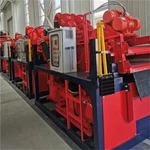

As a supplier of Friction Kelly Bars, I know firsthand how crucial quality control measures are in this industry. Friction Kelly Bars play a significant role in construction projects, especially in foundation work. They're used to transfer torque and axial force from the drilling rig to the drill bit, so their quality can make or break a project. In this blog, I'll share the quality control measures we implement to ensure our Friction Kelly Bars meet the highest standards.
Material Selection
The first step in our quality control process is material selection. We only use high - strength steel for our Friction Kelly Bars. High - strength steel offers excellent durability and can withstand the high stresses during drilling operations. We source our steel from reputable suppliers who have a proven track record of providing high - quality materials.
Before we accept any steel shipments, we conduct a series of tests. Chemical composition analysis is one of the most important tests. It ensures that the steel has the right balance of elements like carbon, manganese, and silicon. For example, the carbon content affects the hardness and strength of the steel. If the carbon content is too high, the steel may become brittle; if it's too low, the strength may be insufficient. By analyzing the chemical composition, we can make sure the steel meets our specifications.
In addition to chemical analysis, we also perform mechanical property tests such as tensile strength testing and impact testing. Tensile strength testing measures the maximum stress the steel can withstand before breaking. Impact testing assesses the steel's ability to absorb energy under impact loading. Only when the steel passes all these tests do we use it in the production of our Friction Kelly Bars.
Manufacturing Process Control
Once we have the right materials, the next step is to control the manufacturing process. Precision machining is a key aspect. For the sections of the Friction Kelly Bar, we use state - of - the - art CNC (Computer Numerical Control) machines. These machines can accurately cut and shape the steel according to our design specifications, ensuring tight tolerances. For example, the diameter of the bars and the dimensions of the friction keys need to be very precise. Any deviation can affect the fit between different sections of the Kelly Bar and its overall performance.


Welding is another critical process. We use experienced welders who are certified to perform the welding operations. We follow strict welding procedures to ensure strong and reliable joints. Before welding, the surfaces to be welded are cleaned to remove any dirt, rust, or contaminants. During welding, we monitor parameters such as welding current, voltage, and welding speed. After welding, we conduct non - destructive testing, such as ultrasonic testing and magnetic particle testing, to detect any internal defects in the welds.
Assembly of the Friction Kelly Bar is also carefully controlled. We make sure that all components are properly aligned and tightened. Each section of the Kelly Bar is inspected for proper fit and function before it is assembled. For instance, if we're assembling a 6 Section Friction Kelly Bar, we check the connection between each of the six sections to ensure smooth operation and a secure connection.
Quality Assurance Checks
Throughout the manufacturing process, we conduct multiple quality assurance checks. In - process inspections are carried out at various stages. For example, after machining a particular part, we measure its dimensions to ensure they are within the specified tolerances. If we find any non - conforming parts, we either rework them or scrap them, depending on the severity of the issue.
Final inspections are the last line of defense before the Friction Kelly Bars are shipped to our customers. We perform a comprehensive inspection of the entire Kelly Bar. This includes checking the overall appearance for any signs of damage, such as surface cracks or scratches. We also test the functionality of the Kelly Bar. For example, we check the rotation of the bar to ensure it's smooth and without any abnormal noises. We simulate the actual working conditions as closely as possible to make sure the Kelly Bar performs well in real - world applications.
Performance Testing
Before a batch of Friction Kelly Bars is released for sale, we conduct performance testing. We have a testing facility where we simulate different drilling conditions. We test the torque transmission capacity of the Kelly Bar. This is important because the Kelly Bar needs to be able to transfer the required torque from the drilling rig to the drill bit efficiently. If the torque transmission is not efficient, it can lead to reduced drilling efficiency and even equipment damage.
We also test the axial force capacity. The Kelly Bar should be able to withstand the axial forces generated during drilling, such as the weight of the drill bit and the downward pressure applied by the drilling rig. By conducting these performance tests, we can identify any potential issues and make necessary improvements to our products.
Compliance with Standards
Our Friction Kelly Bars are designed and manufactured to comply with international standards. We follow standards such as ISO 9001 for quality management systems. This ensures that our quality control measures are documented, implemented, and continuously improved. We also comply with relevant industry - specific standards for construction equipment. By adhering to these standards, we provide our customers with products that they can trust.
After - Sales Service
Quality control doesn't end when the product leaves our factory. We offer comprehensive after - sales service. If a customer encounters any problems with our Friction Kelly Bars, we have a dedicated team to provide technical support. We can help diagnose the problem and offer solutions, whether it's through on - site service or remote assistance.
We also collect feedback from our customers. This feedback is valuable as it helps us identify areas for improvement in our products and quality control measures. For example, if a customer reports an issue with the durability of a particular part of the Kelly Bar, we can analyze the problem and take steps to enhance the design or material selection for that part.
The Importance of Quality Control
Implementing these quality control measures is not just about meeting standards; it's about ensuring the success of our customers' projects. A high - quality Friction Kelly Bar can improve drilling efficiency, reduce downtime, and extend the service life of the equipment. On the other hand, a sub - standard Kelly Bar can lead to costly breakdowns, project delays, and even safety hazards.
As a supplier, we understand the trust our customers place in us. That's why we're committed to continuous improvement in our quality control. We invest in new technologies and training for our staff to keep up with the latest industry trends and ensure our Friction Kelly Bars remain at the forefront of quality and performance.
Different Types of Kelly Bars
We also offer a variety of Kelly Bars to meet different customer needs. For example, our 4 Elements Interlocking Kelly Bar is designed for specific drilling conditions where interlocking elements provide enhanced stability. Our Casagrande Interlocking Kelly Bar is another popular choice, known for its high - performance design and reliability.
Conclusion
If you're in the market for Friction Kelly Bars, you need a supplier who takes quality control seriously. At our company, we go the extra mile to ensure that every Friction Kelly Bar we produce meets the highest quality standards. From material selection to after - sales service, we have a comprehensive quality control system in place.
If you're interested in our products or have any questions, don't hesitate to contact us to start a procurement discussion. We're here to help you find the right Friction Kelly Bar for your project.
References
- ASTM International standards for steel materials used in construction equipment.
- ISO 9001:2015 Quality management systems — Requirements.
- Industry research reports on the performance and quality requirements of Friction Kelly Bars.