

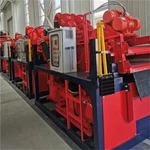

Hey there! As a supplier of casing drives, I often get asked about the rotational speed of a casing drive. So, I thought I'd take a few minutes to break it down for you.
First off, let's talk about what a casing drive is. A casing drive is a piece of equipment used in the drilling industry. It's designed to rotate the casing - that's the large - diameter pipe that's inserted into the wellbore to protect it and keep it stable. Now, the rotational speed of a casing drive is super important. It can affect everything from the efficiency of the drilling process to the lifespan of the equipment.
Factors Affecting Rotational Speed
There are several factors that can influence the rotational speed of a casing drive. One of the main ones is the type of soil or rock you're drilling through. If you're dealing with soft soil, you can usually crank up the rotational speed. Soft soil doesn't put up as much resistance, so the casing can rotate more freely. For example, in sandy or clay - like soils, you might be able to run the casing drive at a relatively high speed, maybe around 60 - 80 revolutions per minute (RPM).
On the other hand, if you're drilling through hard rock, you've got to slow things down. Hard rock is tough, and if you try to spin the casing too fast, you could damage the drive or the casing itself. In hard rock formations, you might only be able to achieve a rotational speed of 20 - 30 RPM. It's all about finding that sweet spot where you can still make progress but without causing any unnecessary wear and tear.
Another factor is the size of the casing. Larger - diameter casings generally require lower rotational speeds. This is because they have more mass and inertia, which means it takes more energy to get them spinning and to keep them spinning at a consistent speed. A smaller - diameter casing, say around 6 inches, can handle a higher rotational speed compared to a massive 36 - inch casing.
The torque capacity of the casing drive also plays a role. Torque is the force that causes an object to rotate. If your casing drive has a high torque capacity, it can handle higher rotational speeds, especially when dealing with challenging drilling conditions.
Optimal Rotational Speeds
So, what are the optimal rotational speeds? Well, it really depends on the specific application. For most general - purpose drilling in medium - density soils, a rotational speed of around 40 - 50 RPM is often a good starting point. This allows for efficient drilling while minimizing the risk of issues.
In some cases, like when you're using a Bauer Casing Drive Adapter, you might be able to fine - tune the rotational speed based on the adapter's specifications. These adapters are designed to work with different types of casing drives and can help optimize the performance.
If you're using a Casing Drive Adapter, it's important to follow the manufacturer's guidelines regarding rotational speed. They've done the research and testing to figure out the best speeds for different scenarios.
Measuring and Monitoring Rotational Speed
Measuring the rotational speed of a casing drive is crucial. Most modern casing drives come equipped with sensors that can accurately measure the RPM. These sensors are connected to a control panel, which allows the operator to monitor the speed in real - time.
Monitoring the rotational speed is not just about knowing how fast the casing is spinning. It can also help detect potential problems. For example, if the speed suddenly drops or fluctuates erratically, it could be a sign of a mechanical issue, like a worn - out bearing or a problem with the power supply. By keeping an eye on the rotational speed, you can catch these issues early and prevent more serious damage.
Impact on Drilling Efficiency
The rotational speed of a casing drive has a direct impact on drilling efficiency. If the speed is too low, you're going to be spending a lot of time on the job. Drilling will be slow, and you won't be able to make as much progress. This can lead to increased costs, both in terms of labor and equipment rental.
On the other hand, if the speed is too high, you risk damaging the casing drive, the casing, or other components of the drilling rig. This can result in costly repairs and downtime. So, finding the right rotational speed is all about maximizing efficiency while keeping everything running smoothly.
Safety Considerations
Safety is always a top priority when it comes to using a casing drive. High rotational speeds can create a lot of energy, and if something goes wrong, it can be dangerous. That's why it's important to have proper safety guards in place around the casing drive. These guards prevent operators from getting too close to the moving parts and reduce the risk of injury.
Operators should also be trained on how to handle the casing drive at different rotational speeds. They need to know what to do in case of an emergency and how to safely shut down the equipment if necessary.
Choosing the Right Casing Drive for Your Needs
When you're in the market for a casing drive, one of the things you need to consider is its rotational speed capabilities. Different casing drives are designed to operate at different speed ranges. You need to choose a drive that can handle the rotational speeds required for your specific drilling projects.


If you're mainly drilling in soft soils, you might be able to get away with a casing drive that has a higher maximum rotational speed. But if you're going to be dealing with hard rock on a regular basis, you'll want a drive that can maintain a stable, lower speed.
Conclusion
In conclusion, the rotational speed of a casing drive is a complex but crucial aspect of the drilling process. It's affected by factors like the type of soil or rock, the size of the casing, and the torque capacity of the drive. By understanding these factors and finding the optimal rotational speed, you can improve drilling efficiency, reduce costs, and ensure the safety of your operations.
If you're in the market for a casing drive or need more information about rotational speeds and how they apply to your projects, don't hesitate to reach out. We're here to help you make the right choices and get the most out of your casing drive. Whether you're a small - scale drilling contractor or a large - scale mining company, we've got the expertise and the products to meet your needs. Let's have a chat and see how we can work together to make your drilling projects a success.
References
- Industry standards and guidelines for casing drives
- Manufacturer's specifications for casing drives and adapters
- Technical papers on drilling efficiency and rotational speed optimization