Hunan Hyper Drill Machinery Co., Ltd
+86 18670017100
What is Casing Joint?


A casing joint refers to a segment of casing pipe used in piling operations. These joints are typically about 3 feet (1 meters) long and are threaded at both ends. The threading allows for multiple joints to be connected, forming a continuous casing string that can extend from the surface to the bottom of the wellbore.


Why Choose Us

Main Products

Mainly manufacture drilling bucket,auger,core barrel,cleaning bucket,casing tube,drilling bits,kelly bar,desander,pile breaker,tremie pipes etc.

Specialized Processing and Equipments

Raw material comes from the biggest supplier of steel plate in China.
4-Rolls CNC rolling machine,max rolling thickness 70mm and width 3200mm,rolling error of one.

Cases

Our products have been sold more than 60 countries and regions:USA,Australia,Canada,New Zealand,Russia,Brazil,Mexico,South East Asia, Bangladesh,Africa etc.

Advanced equipment

We have the most advanced production equipment such as rolling machine, vertical lathe, CNC automatic boring and milling machine.


How a Bolting Casing Joint For Piling Works


Casing Sections: Casing or casing pipes are used to protect the pile and maintain its shape during installation, especially in loose or granular soils. These casings are typically made of steel and come in sections.


Bolted Connection: To connect two sections of casing together, a bolting casing joint is used. This joint that welded at the ends of the casing pieces have holes for bolts.


Bolts and Nuts: Bolts and nuts are used to secure the two casing sections together. The bolts pass through the holes in the joints of both sections and are tightened using nuts. This creates a strong and secure connection between the casing sections.


Sealing: In some cases, a sealing material or gasket is used to prevent soil or water from entering the casing joint during installation.


Installation: The connected casing sections are lowered into the borehole or excavation where the pile is being driven. As the pile is driven into the ground, the casing protects it from soil and groundwater, preventing cave-ins or damage to the pile.


Bolting casing joints are important for maintaining the alignment and integrity of the casing during pile driving operations. They ensure that the casing sections remain connected and can be easily removed once the pile has been installed. 


Key Features Of Casing Joint Tools For Bored Pile


Borehole Stability

These tools help maintain the stability of the borehole, preventing soil or rock collapse during drilling.

Alignment and Verticality

Rotary casing tools allow for precise control over the alignment and verticality of the casing, ensuring that the foundation element is constructed as intended.

Efficiency

Simultaneous drilling and casing installation streamline the piling process, reducing construction time.

Versatility

Rotary casing tools can be used in various soil and geological conditions, including loose soils, cohesive soils, and rock formations.

Reduction of Environmental Impact

The use of casing pipes can help prevent contamination of the surrounding soil and groundwater in environmentally sensitive areas.


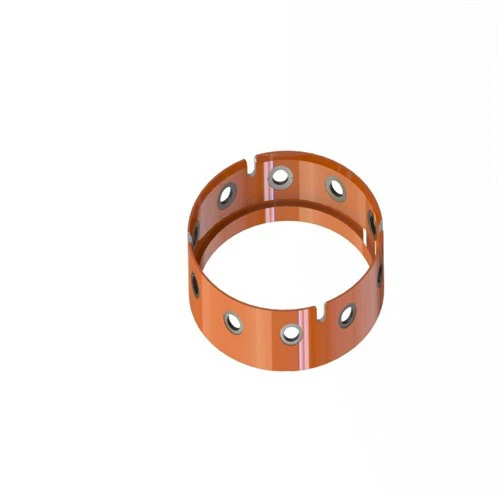
Replaceable Casing Joint

What Is The Purpose Of Casing Joint?


Preventing Well Collapse

The wellbore, the hole drilled into the earth, is inherently unstable. Without support, the walls of the wellbore can collapse, leading to a loss of the well and potential hazards. Casing provides the necessary support to keep the wellbore open and stable.

Isolating Different Geological Formations

As drilling progresses, it passes through various geological formations, each with its own pressure, fluid content, and characteristics. Casing helps isolate these formations, preventing the mixing of different fluids and pressures, which could lead to well control issues.

Protecting Freshwater Aquifers

One of the critical environmental concerns in drilling is the protection of freshwater aquifers from contamination by drilling fluids or hydrocarbons. Casing seals off the wellbore from these aquifers, ensuring that drilling operations do not compromise water quality.

Enabling Well Control

Casing provides a conduit for the drilling fluid to return to the surface, facilitating well control operations. It also allows for the installation of blowout preventers (BOPs), which are essential for controlling unexpected pressure surges or blowouts.

Enhancing Well Integrity

By providing structural support and isolating various sections of the well, casing enhances the overall integrity and longevity of the well. It ensures that the well can be safely operated for its intended lifespan.


The Process Of Casing a Joint
 

Casing a joint involves several steps to ensure that the casing is properly installed and functional. Here is an overview of the process 


Preparation: Before casing can be run into the wellbore, the hole must be drilled to the desired depth. This involves drilling through various formations and ensuring that the wellbore is clean and stable.


Casing Running: Once the wellbore is prepared, the casing joints are connected at the surface and run into the wellbore. The joints are threaded together to form a continuous casing string. This process is typically performed using specialized equipment to handle the heavy casing pipes and ensure precise connections.


Cementing: After the casing string is in place, the next step is cementing. Cement is pumped down the casing and then forced back up into the annular space (the space between the casing and the wellbore). This process seals the casing to the wellbore, providing additional structural support and isolating different geological formations.


Pressure Testing: Once the cement has set, the casing is pressure tested to ensure its integrity. This involves applying pressure to the casing string to check for leaks or weaknesses. If any issues are detected, they must be addressed before proceeding.


Well Completion: With the casing and cementing complete, the well can be completed. The casing can then be removed using a rotary drilling rig or a full-rotation drilling rig and the operation can be repeated in the next well.


The Crucial Role of Casing Joint: Ensuring Structural Integrity and Safety


Understanding Casing a Joint
Casing joint involves reinforcing the connection points between different structural elements. Joints are vulnerable areas where stresses concentrate, making them susceptible to wear, fatigue, and failure over time. By casing these joints, builders add an extra layer of protection, enhancing durability and stability.


Importance of Structural Reinforcement
Enhanced Durability:Casing a joint significantly increases the lifespan of structures by protecting them from wear and tear. It prevents corrosion, erosion, and other forms of damage that can compromise the integrity of the joint and the overall structure.


Improved Stability:Reinforcing joints ensures that the structure can withstand various external forces, including wind, seismic activity, and live loads. This added stability is crucial for ensuring the safety of occupants and the longevity of the building.


Importance of Structural Reinforcement
Enhanced Durability:Casing a joint significantly increases the lifespan of structures by protecting them from wear and tear. It prevents corrosion, erosion, and other forms of damage that can compromise the integrity of the joint and the overall structure.


Improved Stability:Reinforcing joints ensures that the structure can withstand various external forces, including wind, seismic activity, and live loads. This added stability is crucial for ensuring the safety of occupants and the longevity of the building.


Applications Across Industries
Construction:In building construction, casing joints are prevalent in areas such as foundation footings, columns, beams, and connections between structural members. Proper casing ensures that these critical components can bear the loads they're subjected to over time.


Infrastructure:Casing joints are equally important in infrastructure projects like bridges, tunnels, and pipelines. These structures often face harsh environmental conditions and heavy traffic, making joint reinforcement essential for preventing deterioration and ensuring continued functionality.


What are the benefits of using a fulled Casing Joint?

Complex geological conditions: When the pile hole encounters complex formation conditions, such as easily collapsed formations, aquifers, high temperature and high pressure, etc., full casing can provide better support and protection for the pile hole wall, reducing the risk of pile hole collapse and mud leakage.


High-pressure wells: In high-pressure pile wells, full casing can withstand higher pressures, protect the integrity of the well wall, and prevent well wall rupture and leakage.


Horizontal wells and multi-stage horizontal wells: In horizontal wells and multi-stage horizontal wells, full casing can provide better pile hole stability and effectively prevent pile hole collapse and mud leakage.


High environmental protection requirements: In environmentally sensitive areas or areas where groundwater resources need to be protected, the full casing can reduce the risk of groundwater pollution and improve the environmental safety of the pile hole.

Replaceable Casing Joint


What Should Be Paid Attention To In The Construction Of a Casing Joint?


Design and selection of Casing Joint size: Reasonably design and select the size of casing according to the depth of the pile hole, formation conditions and engineering requirements. The diameter and wall thickness of the casing should meet the needs of pile hole support and protection.


Preparation and injection of cement slurry: The preparation of cement slurry should comply with the relevant specifications. During the injection process, the injection speed and pressure should be controlled to ensure that the cement slurry can fully fill the gap between the casing and the well wall and form a good cementing quality.


Casing Joint and fixing of casing: When casing is running, it is necessary to ensure that the verticality and position of the casing are accurate to prevent deflection or jamming. When fixing the casing, the quality and curing time of the cement slurry should be guaranteed to ensure the sealing and stability between the casing and the well wall.casing a joint


Quality control and inspection: During the full casing construction process, quality control and inspection are required, including casing quality inspection, cementing quality evaluation and testing, etc., to ensure that the construction quality meets the requirements.


Safety measures and risk management: Full casing construction involves risks such as high pressure and high temperature, and corresponding safety measures need to be taken, including safety training, use of protective equipment, and formulation of emergency plans, to ensure the safety of the construction process.


Construction planning and coordination: Full casing construction requires detailed construction planning and coordination, including connection with other processes, supply of materials and equipment, etc., to ensure construction progress and quality control.


In short, the construction of the full casing needs to be carried out in strict accordance with the specifications and standards, focusing on quality control and safety management to ensure the construction quality and safety of the construction process. In the actual construction, it is necessary to adjust and respond flexibly according to the specific situation to ensure the smooth progress of the construction.


How Is a Fulled Casing Joint Used In Drilling?

Fulled Casing Joint is a liner system for piled pile hole. It is a larger diameter pipe used to protect the well wall from collapse and mud leakage. 


The construction of full Casing Joint generally includes the following steps:


Drilling: Firstly, the drilling operation is carried out to drill the pile hole to the target formation.


Casing running: After drilling a section of the pile hole, the outer casing is lowered into the pile hole, and the casing is fixed to the well wall by cement slurry.


Drilling: Continue to drill to the next target formation, and then repeat the steps of casing running until the final target formation is drilled.


Well Completion: After casing running and well cementing, well completion operations are carried out, including installation of wellhead equipment, plugging of pile hole, etc.


The key to full casing construction is to ensure the tightness and stability between the casing and the well wall to prevent mud leakage and well wall collapse. At the same time, it is also necessary to select the appropriate casing size and cementing material according to the depth of the pile hole and formation conditions. During the construction process, the drilling speed and the injection pressure of cement slurry need to be strictly controlled to ensure the quality and integrity of the casing.


Our Factory
 

Hunan SMSCC Heavy Industry Co., Ltd,which was founded in 2013,Focus on R&D, manufacturing and sales of drilling tools for bore piling machine. SMSCC Drill is one of the biggest manufacturers of casing tube and drilling tools in China after more than 10 years development.Meanwhile Hyper Drill is dedicated to providing customers from all over the world with deeper ,greater and stronger foundation engineering products . 


productcate-1-1


Certifications


productcate-1-1
productcate-1-1
productcate-1-1
productcate-1-1


FAQ

Q: What is a Casing Joint?

A: A casing joint is a segment of a casing string used in the oil and gas industry for well construction. It is typically composed of a steel pipe with a threaded connection at each end, used to join multiple sections together to form a continuous casing string.

Q: What are the primary components of a Casing Joint?

A: The primary components include the pipe body, the threads (male and female), and the coupling which connects two joints together.

Q: What are Casing Joints made of?

A: They are typically made from carbon steel or alloy steel, depending on the well conditions such as temperature, pressure, and the presence of corrosive fluids.

Q: How long is a standard Casing Joint?

A: Standard lengths vary, but a typical casing joint can be around 30 to 45 feet long, although this can vary based on the application and the manufacturer’s specifications.

Q: What is the purpose of Casing Joints in oil well drilling?

A: They provide a physical barrier to protect the wellbore from the surrounding formations, and they also support the wellbore to prevent collapse. Additionally, they can be used to isolate different geological layers.

Q: How are Casing Joints connected together?

A: They are connected using threaded connections at each end, often with the assistance of a coupling or connector.

Q: What is the difference between a casing joint and a tubular joint?

A: A casing joint is specifically designed for use in oil and gas wells, while a tubular joint is a more general term that can include casing joints but also other types of pipes used in the industry.

Q: What factors influence the type of Casing Joint used?

A: Factors include the type of rock being drilled, the well depth, expected reservoir pressures, and the presence of corrosive materials.

Q: How do you select the right size and grade of Casing Joint?

A: Selection is based on the well design, the expected loads, and the operating conditions. Consulting with an engineer who specializes in well construction is recommended.

Q: What is the importance of the thread design on a Casing Joint?

A: The thread design is crucial for ensuring a proper seal and preventing leakage under high pressure. It also affects the ease of installation and the joint’s overall strength.

Q: Are Casing Joints reused?

A: While theoretically possible, it is uncommon due to the potential for damage and wear. New casing joints are typically used for each well to ensure integrity and safety.

Q: What is the role of coatings on Casing Joints?

A: Coatings can protect the casing joints from corrosion and wear, especially in harsh environments or when drilling through corrosive formations.

Q: How are Casing Joints transported to the drilling site?

A: They are typically transported in bundles by trucks or railcars, depending on the location of the drilling site.

Q: What safety considerations should be taken when handling Casing Joints?

A: Proper handling equipment should be used to prevent damage to the threads, and safety measures should be in place to protect workers from potential injuries.

Q: How do Casing Joints contribute to environmental protection in oil drilling?

A: By preventing leaks and containing well fluids, they minimize the risk of environmental damage to the surrounding ecosystem.

Q: Can Casing Joints be tested for quality and integrity?

A: Yes, they undergo various tests including non-destructive testing to ensure they can withstand the pressures and conditions they will encounter.

Q: What is the role of Casing Joints in the production phase of a well?

A: Once the well is completed, casing joints remain in place to continue providing support and protection to the wellbore and to facilitate the flow of oil or gas.

Q: How does temperature affect the selection of Casing Joints?

A: High temperatures can require special materials or coatings to prevent deformation and maintain structural integrity.

Q: What are the common issues faced when using Casing Joints?

A: Common issues include thread damage, corrosion, and leaks. Regular inspection and maintenance can help mitigate these issues.

Q: How do Casing Joints differ from drill pipes?

A: While both are tubular steel components used in drilling, drilling pipes are primarily used to transmit the drilling fluid and the weight of the drill bit, whereas casing joints are designed to support and protect the wellbore.

As one of the leading casing joint manufacturers and suppliers in China, we warmly welcome you to buy durable casing joint for sale here and get free sample from our factory. All customized products are with high quality and competitive price.

25crmo Casing Joint, Forging Casing Joint, Bauer Casing Joint

(0/10)

clearall