


Can a kelly bar be used in clayey soil? This is a question that often arises among construction professionals and those involved in foundation work. As a kelly bar supplier, I've encountered this query numerous times, and I'm here to provide a comprehensive answer based on scientific knowledge and practical experience.
Understanding Clayey Soil
Before delving into the use of kelly bars in clayey soil, it's essential to understand the characteristics of this type of soil. Clayey soil is composed of fine - grained particles with a high plasticity index. It has a tendency to retain water, which can make it sticky and heavy when wet. When dry, clayey soil can become hard and compact. These properties pose unique challenges for excavation and foundation work.
Types of Kelly Bars
There are different types of kelly bars, each designed for specific soil conditions and construction requirements. Two common types are the friction kelly bar and the interlocking kelly bar.
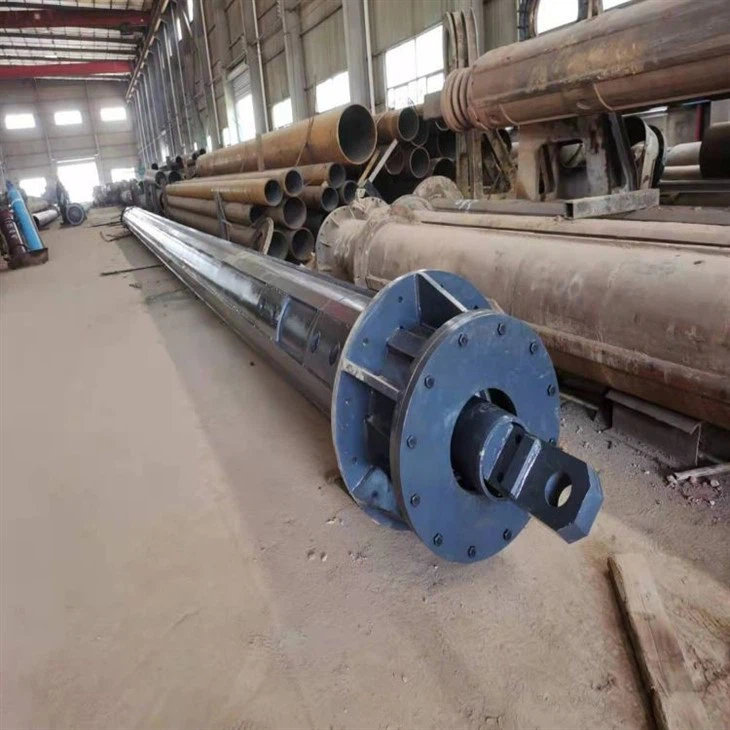
The Friction Kelly Bar relies on the friction between the soil and the bar to transmit torque and axial force. It is typically used in relatively soft to medium - hard soils. The bar has a smooth outer surface, which allows it to rotate and penetrate the soil by relying on the frictional resistance.
On the other hand, the 4 Section Interlocking Kelly Bar is designed with interlocking sections. This type of kelly bar provides higher torque transmission and is suitable for more challenging soil conditions, including hard rock and very dense soils. The interlocking mechanism ensures that the sections remain connected and transfer the load effectively.

Using Kelly Bars in Clayey Soil
Advantages
- Penetration Ability: Kelly bars can be effective in clayey soil due to their ability to apply high torque and axial force. The rotation of the kelly bar helps to break up the clay, allowing it to penetrate the soil layer by layer. For example, in wet clayey soil, the rotation can help to reduce the stickiness and make the excavation process smoother.
- Versatility: Different types of kelly bars can be selected according to the specific properties of the clayey soil. If the clay is relatively soft, a friction kelly bar may be sufficient. However, if the clay is hard and compacted, an interlocking kelly bar can provide the necessary torque and strength for penetration.
Challenges
- Sticking: One of the main challenges when using a kelly bar in clayey soil is the sticking of the clay to the bar. The sticky nature of the clay can cause it to adhere to the surface of the kelly bar, increasing the friction and making it difficult to rotate and extract the bar. This can lead to increased wear and tear on the bar and may also reduce the efficiency of the excavation process.
- Torque Requirements: Clayey soil, especially when it is dry and hard, can require a significant amount of torque to penetrate. If the kelly bar does not have enough torque - transmitting capacity, it may get stuck or fail to make sufficient progress in the excavation.
Mitigating Challenges
- Surface Coating: Applying a special surface coating to the kelly bar can help reduce the adhesion of clay. Non - stick coatings can prevent the clay from sticking to the bar, making it easier to rotate and extract.
- Optimized Design: Kelly bars can be designed with features such as helical fins or scrapers. Helical fins can help to break up the clay as the bar rotates, while scrapers can remove the adhered clay from the surface of the bar, improving the efficiency of the excavation process.
Case Studies
Let's take a look at some real - world examples of using kelly bars in clayey soil. In a construction project in a region with predominantly clayey soil, a contractor initially used a standard friction kelly bar. They faced significant problems with the clay sticking to the bar, which slowed down the excavation process. After consulting with our team, they switched to a 90M Depth Friction Kelly Bar with a special non - stick coating. The new bar was able to penetrate the clay more easily, and the non - stick coating reduced the adhesion of the clay, resulting in a significant improvement in the excavation efficiency.
Conclusion
In conclusion, a kelly bar can be used in clayey soil, but it comes with its own set of challenges. By understanding the properties of clayey soil and selecting the appropriate type of kelly bar, as well as implementing mitigation strategies, these challenges can be overcome. The right kelly bar, combined with proper design and surface treatment, can ensure efficient and successful excavation in clayey soil.
If you are involved in a project that requires excavation in clayey soil and are considering using a kelly bar, we are here to help. As a leading kelly bar supplier, we have a wide range of products to meet your specific needs. Whether you need a friction kelly bar for softer clay or an interlocking kelly bar for more challenging conditions, we can provide you with high - quality solutions. Contact us to discuss your requirements and let's work together to ensure the success of your project.
References
- Bowles, J. E. (1996). Foundation analysis and design. McGraw - Hill.
- Coduto, D. P., Kitch, K. W., & Duncan, J. M. (2011). Geotechnical engineering: principles and practices. Wiley.