

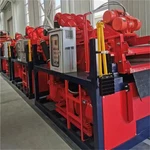

Can a slurry desander be used in the rubber industry? This is a question that has been increasingly asked in recent times, and as a leading Slurry Desander supplier, I am excited to delve into this topic.
Understanding Slurry Desanders
Before exploring the potential use in the rubber industry, it's essential to understand what a slurry desander is. A slurry desander is a device designed to separate sand and other solid particles from a slurry, which is a mixture of solid particles and a liquid. The basic principle behind a slurry desander is centrifugal force. When the slurry enters the desander at a high velocity, the centrifugal force causes the heavier solid particles, such as sand, to move towards the outer wall of the desander and then be discharged through the bottom outlet, while the cleaner liquid with finer particles exits from the top.
There are different types of slurry desanders, each with its own features and applications. For example, the Mud Desander is commonly used in the oil and gas industry to remove sand from drilling mud. These desanders come in various sizes and configurations to suit different flow rates and separation requirements.
The Rubber Industry and Its Challenges
The rubber industry involves the production of a wide range of products, from tires to rubber seals and gaskets. The quality of rubber products is highly dependent on the purity of the raw materials used. During the production process, rubber is often mixed with various additives and fillers to enhance its properties. However, if there are impurities, especially solid particles like sand, in the rubber mixture, it can have a significant impact on the quality of the final product.
Sand and other solid impurities in the rubber can cause several problems. Firstly, they can affect the mechanical properties of the rubber, such as its strength and elasticity. For example, sharp sand particles can act as stress concentrators, leading to premature failure of the rubber product under stress. Secondly, these impurities can also cause surface defects on the rubber products, which are not only aesthetically unappealing but can also reduce the functionality of the product. In addition, the presence of sand can cause excessive wear and tear on the production equipment, increasing maintenance costs and downtime.
Potential Applications of Slurry Desanders in the Rubber Industry
Given the challenges faced by the rubber industry, there are several potential applications for slurry desanders.
Raw Material Purification
One of the primary applications is in the purification of raw rubber materials. Natural rubber latex, which is the main raw material for many rubber products, often contains small amounts of sand and other solid impurities. By using a slurry desander, these impurities can be effectively removed before the latex is processed further. This ensures that the rubber used in the production process is of high purity, leading to better quality products.
For example, in the production of high - performance tires, the purity of the rubber is crucial. Even a small amount of sand in the rubber can cause uneven wear on the tire tread, reducing its lifespan and performance. By incorporating a slurry desander in the raw material purification process, tire manufacturers can ensure that their products meet the highest quality standards.
Recycling Processes
The rubber industry also has a growing focus on recycling. Rubber products, such as tires, can be recycled into new rubber materials. However, the recycled rubber often contains a significant amount of impurities, including sand and other debris. A slurry desander can be used in the recycling process to separate these impurities from the recycled rubber. This not only improves the quality of the recycled rubber but also makes the recycling process more efficient.
Process Liquid Purification
During the rubber manufacturing process, various process liquids are used, such as solvents and emulsions. These liquids can become contaminated with solid particles over time. A slurry desander can be used to purify these process liquids, allowing them to be reused in the production process. This not only reduces the consumption of fresh liquids but also minimizes the environmental impact of the rubber manufacturing process.


Advantages of Using Slurry Desanders in the Rubber Industry
There are several advantages to using slurry desanders in the rubber industry.
Improved Product Quality
As mentioned earlier, the removal of sand and other solid impurities from the rubber mixture leads to improved product quality. Rubber products with higher purity have better mechanical properties, such as strength, elasticity, and durability. This makes them more competitive in the market and can increase customer satisfaction.
Cost Savings
By using a slurry desander, rubber manufacturers can save on costs in several ways. Firstly, the reduced wear and tear on production equipment due to the removal of abrasive sand particles can lower maintenance costs. Secondly, the reuse of purified process liquids can reduce the consumption of fresh liquids, leading to cost savings. Additionally, the use of high - quality raw materials and recycled rubber can also reduce the scrap rate, further saving costs.
Environmental Benefits
The rubber industry is under increasing pressure to reduce its environmental impact. The use of slurry desanders can contribute to this goal. By purifying process liquids and recycling rubber materials more effectively, the industry can reduce its waste generation and water consumption. This makes the rubber manufacturing process more sustainable.
Considerations for Implementing Slurry Desanders in the Rubber Industry
While there are many potential benefits to using slurry desanders in the rubber industry, there are also some considerations that need to be taken into account.
Compatibility with Rubber Processes
The slurry desander needs to be compatible with the specific rubber manufacturing processes. For example, the desander should be able to handle the viscosity and flow rate of the rubber mixtures and process liquids. It should also be made of materials that are resistant to the chemicals used in the rubber industry.
Operational Costs
The operational costs of the slurry desander, including energy consumption and maintenance, need to be considered. Rubber manufacturers need to ensure that the cost - benefits analysis shows that the use of a slurry desander is economically viable in the long run.
Integration with Existing Systems
Implementing a slurry desander in an existing rubber manufacturing plant requires careful planning. The desander needs to be integrated seamlessly with the existing production equipment and processes. This may require some modifications to the plant layout and the installation of additional piping and controls.
Conclusion
In conclusion, a slurry desander has significant potential for use in the rubber industry. It can address the challenges faced by the industry in terms of raw material purity, product quality, and environmental sustainability. By effectively removing sand and other solid impurities from the rubber production process, slurry desanders can help rubber manufacturers produce higher - quality products at a lower cost.
If you are in the rubber industry and are interested in exploring the use of slurry desanders in your production process, I encourage you to get in touch with us. As a leading Slurry Desander supplier, we have the expertise and experience to provide you with the right solution for your specific needs. Whether you are looking for a desander for raw material purification or process liquid purification, we can offer you a high - quality product and excellent after - sales service. Contact us today to start a discussion about how our slurry desanders can benefit your business.
References
- "Handbook of Rubber Technology" by K. George Thomas
- "Rubber Compounding: Principles, Materials, and Techniques" by Henry H. Winter