


Can a soil drilling bucket be used for offshore drilling? This is a question that often arises in the field of drilling operations, especially when considering the diverse range of drilling equipment available. As a supplier of soil drilling buckets, I have encountered numerous inquiries regarding the applicability of our products in offshore environments. In this blog post, I will delve into the technical aspects, challenges, and potential solutions related to using soil drilling buckets for offshore drilling.
Technical Overview of Soil Drilling Buckets
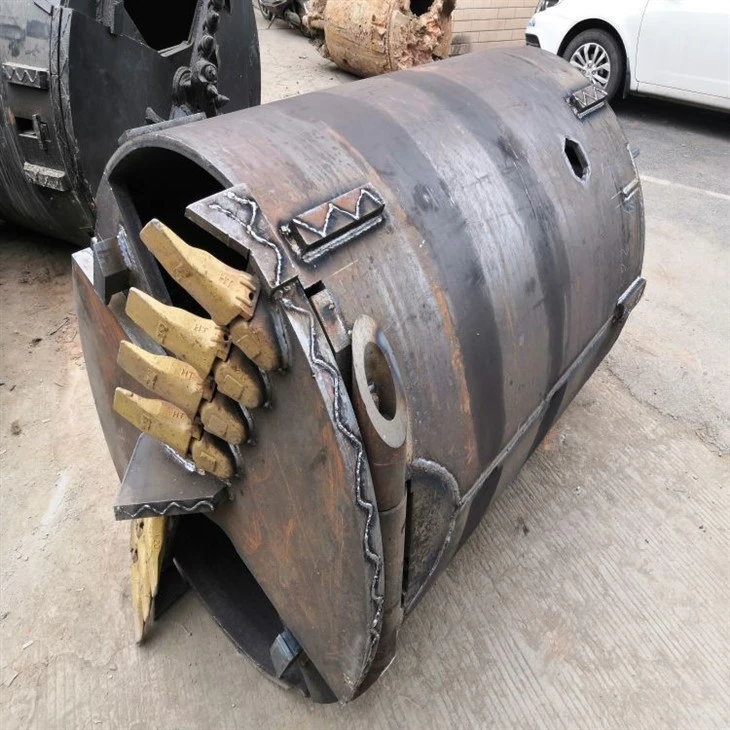
Soil drilling buckets are essential tools in the construction and geotechnical industries. They are designed to excavate soil and other soft materials efficiently. Our company offers a variety of soil drilling buckets, including the Big Diameter Soil Drilling Bucket, Rotary Rig Soil Drilling Bucket, and Double Cut Soil Drilling Bucket. These buckets are typically made of high - strength steel and are equipped with cutting teeth or blades that can penetrate and remove soil.
The basic working principle of a soil drilling bucket involves rotating the bucket while it is lowered into the ground. As the bucket rotates, the cutting elements on the bottom of the bucket break up the soil, which is then collected inside the bucket. Once the bucket is filled, it is lifted out of the hole, and the soil is emptied.
Offshore Drilling Requirements
Offshore drilling presents a unique set of challenges compared to on - shore drilling. The marine environment is characterized by high pressures, corrosive saltwater, and unpredictable weather conditions. Offshore drilling operations often target oil, gas, or minerals located beneath the seabed, which requires specialized equipment capable of withstanding these harsh conditions.
One of the primary requirements for offshore drilling equipment is its ability to operate at great depths. The water pressure at significant depths can be extremely high, which means that the equipment must be designed to withstand these forces without failure. Additionally, the equipment must be corrosion - resistant to prevent damage from the saltwater.

Suitability of Soil Drilling Buckets for Offshore Drilling
Advantages
- Soft Soil Excavation: In some offshore areas, the seabed may consist of soft soil layers. Soil drilling buckets are well - suited for excavating these soft materials. Their cutting elements can effectively break up the soil, and the bucket can collect and remove it efficiently. This can be useful in preliminary site investigations or for creating shallow foundations for offshore structures.
- Cost - Effectiveness: Compared to some specialized offshore drilling equipment, soil drilling buckets are relatively inexpensive. For small - scale offshore projects or when the drilling requirements are not overly complex, using soil drilling buckets can be a cost - effective solution.
Disadvantages
- Depth Limitations: Soil drilling buckets are typically designed for relatively shallow drilling operations. The high water pressure at greater depths can pose a significant challenge. The bucket may not be able to maintain its structural integrity under extreme pressure, leading to deformation or failure.
- Corrosion Resistance: Standard soil drilling buckets are not designed to withstand the corrosive effects of saltwater over an extended period. If used in an offshore environment without proper protection, the buckets can quickly deteriorate, reducing their effectiveness and lifespan.
- Limited Penetration in Hard Layers: Offshore drilling often encounters hard rock layers or other resistant materials. Soil drilling buckets are not designed to penetrate these hard materials effectively. Their cutting elements are optimized for soft soil, and attempting to drill through hard rock can cause excessive wear and damage to the bucket.
Solutions and Adaptations
To overcome the challenges associated with using soil drilling buckets for offshore drilling, several solutions and adaptations can be considered.
- Material Selection: Using corrosion - resistant materials such as stainless steel or applying protective coatings to the buckets can enhance their durability in the offshore environment. These coatings can act as a barrier between the bucket and the saltwater, preventing corrosion.
- Reinforcement: Reinforcing the structure of the soil drilling bucket can help it withstand higher water pressures. This can involve adding additional support ribs or using thicker steel plates in critical areas.
- Combined Drilling Systems: For offshore projects that encounter both soft soil and hard rock layers, a combined drilling system can be used. Soil drilling buckets can be used for the initial soft soil excavation, and then specialized rock - drilling equipment can be employed to penetrate the hard layers.
Case Studies
Although the use of soil drilling buckets in offshore drilling is not as common as in on - shore applications, there have been some successful case studies. In a small - scale offshore wind farm project, soil drilling buckets were used for the initial site investigation. The seabed in the project area consisted of soft clay layers, and the soil drilling buckets were able to quickly and efficiently collect soil samples for analysis. This helped the project team to better understand the soil conditions and plan the foundation design for the wind turbines.
Conclusion
In conclusion, while soil drilling buckets have some potential for use in offshore drilling, they are not a one - size - fits - all solution. Their suitability depends on the specific conditions of the offshore site, including the soil type, depth, and presence of hard layers. With proper adaptations and in combination with other drilling equipment, soil drilling buckets can play a role in certain offshore projects.
If you are considering using soil drilling buckets for your offshore project, or if you have any questions about our Big Diameter Soil Drilling Bucket, Rotary Rig Soil Drilling Bucket, or Double Cut Soil Drilling Bucket, please feel free to contact us for further discussion and to explore potential procurement options. We are committed to providing high - quality drilling solutions to meet your specific needs.
References
- Lang, T., & Hansen, J. (2018). Geotechnical Engineering for Offshore Structures. Wiley.
- API RP 2GEO. (2019). Recommended Practice for Planning, Designing, and Constructing Fixed Offshore Platforms - Geotechnical and Foundation Design Considerations. American Petroleum Institute.