


What is the torque requirement for tightening the threads of a Threaded Tremie Pipe?
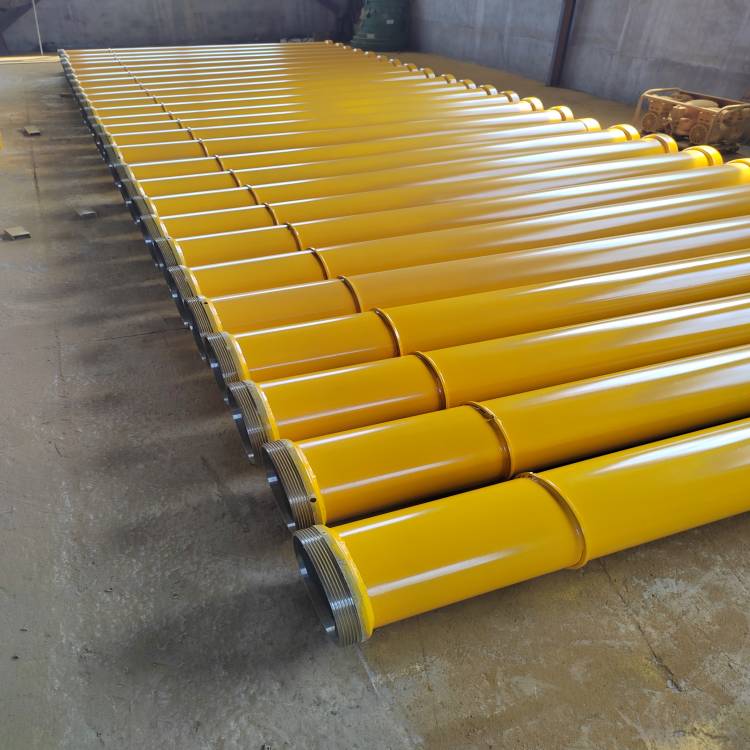
As a supplier of Threaded Tremie Pipes, I often receive inquiries from customers about the torque requirements for tightening the threads of these pipes. Understanding the correct torque is crucial as it ensures the integrity and safety of the entire tremie pipe system, especially in applications such as underwater concrete pouring.
Importance of Proper Torque in Threaded Tremie Pipes
Threaded Tremie Pipes are widely used in construction projects, particularly for placing concrete below water levels, such as in the construction of bridge piers, foundations, and dams. When the threads of these pipes are not tightened to the appropriate torque, several issues can arise.
Firstly, insufficient torque can lead to leaks. In the process of concrete pouring, any leakage can result in a loss of concrete, which not only wastes materials but also affects the quality of the concrete structure being built. For example, if there is a leak in the tremie pipe system during the pouring of a bridge pier foundation, it can cause uneven distribution of concrete, weakening the foundation's strength and stability.
Secondly, over - tightening the threads can damage the pipe threads. This can lead to premature wear and tear, making the pipes less reliable for future use. In some cases, over - tightened threads can even cause the pipe to crack or break, posing a significant safety hazard on the construction site.
Factors Affecting Torque Requirements
Several factors influence the torque requirements for tightening the threads of a Threaded Tremie Pipe.
-
Pipe Size and Diameter
The size and diameter of the pipe play a significant role in determining the torque. Generally, larger diameter pipes require higher torque values. This is because larger pipes have a greater surface area in contact with the concrete and are subject to more significant forces during the pouring process. For instance, a 12 - inch diameter Threaded Tremie Pipe will need more torque to ensure a tight seal compared to a 6 - inch diameter pipe. -
Thread Type and Pitch
The type of thread and its pitch also affect the torque requirements. Different thread profiles, such as NPT (National Pipe Taper) or BSP (British Standard Pipe), have different frictional characteristics. A finer pitch thread may require less torque to achieve the same level of tightness as a coarser pitch thread because the finer pitch allows for more precise adjustment. -
Material of the Pipe
The material of the Threaded Tremie Pipe is another crucial factor. Pipes made of different materials, such as steel, aluminum, or PVC, have different mechanical properties. Steel pipes, for example, are generally stronger and more rigid than PVC pipes. As a result, steel pipes can withstand higher torque values without damage. -
Environmental Conditions
The environmental conditions in which the tremie pipe is used can also impact the torque requirements. In a wet or corrosive environment, the threads may experience more friction due to the presence of moisture or chemicals. This may require a slightly higher torque to ensure a proper seal. On the other hand, in a cold environment, the material of the pipe may become more brittle, and care must be taken not to over - tighten the threads.
Determining the Torque Requirements
To determine the appropriate torque for tightening the threads of a Threaded Tremie Pipe, it is essential to refer to the manufacturer's specifications. These specifications are based on extensive testing and take into account the factors mentioned above.
In addition to the manufacturer's guidelines, some general rules of thumb can be followed. For steel Threaded Tremie Pipes, a common starting point is to use a torque wrench to apply a torque value in the range of 100 - 300 foot - pounds for smaller diameter pipes (up to 6 inches) and 300 - 600 foot - pounds for larger diameter pipes (6 - 12 inches). However, these values are only approximate and should be adjusted based on the specific circumstances of the project.
It is also important to note that the torque should be applied gradually and evenly. This helps to ensure that the threads are tightened uniformly and reduces the risk of damage to the pipes.
Using the Right Tools for Torque Application
Using a torque wrench is the most accurate way to apply the correct torque to the threads of a Threaded Tremie Pipe. A torque wrench allows the user to set the desired torque value and provides a clear indication when that value has been reached.
There are different types of torque wrenches available, including click - type, beam - type, and digital torque wrenches. Click - type torque wrenches are the most commonly used in construction applications. When the preset torque value is reached, the wrench emits a clicking sound, indicating that the correct torque has been applied.
Related Products and Their Torque Considerations
As a supplier, we also offer other related products such as Tremie Rack and Wire Cable Tremie Pipe. While these products may not have the same thread - tightening requirements as Threaded Tremie Pipes, they still play important roles in the overall tremie pipe system.
A Tremie Rack is used to support and organize the tremie pipes during the concrete pouring process. Although it does not involve thread tightening, proper installation and secure fastening are essential to ensure its stability.
Wire Cable Tremie Pipes, on the other hand, are connected using wire cables instead of threads. However, the connection points still need to be properly tightened to prevent any movement or disconnection during the pouring process.

Conclusion
In conclusion, understanding the torque requirements for tightening the threads of a Threaded Tremie Pipe is essential for ensuring the safety and efficiency of construction projects. By considering factors such as pipe size, thread type, material, and environmental conditions, and by using the right tools, the appropriate torque can be applied to achieve a tight and reliable seal.
If you are in the market for high - quality Threaded Tremie Pipes or have any questions about torque requirements or other aspects of our products, we encourage you to contact us for a detailed discussion. Our team of experts is ready to assist you in selecting the right products and ensuring that you have all the information you need for a successful project. We look forward to the opportunity to work with you and contribute to the success of your construction endeavors.
References
- Construction Materials Handbook, 5th Edition
- Standards for Pipe Threading and Tightening in Civil Engineering, International Association of Civil Engineers