



Hey there! As a supplier of Threaded Tremie Pipe, I often get asked if this type of pipe can be used for underwater grouting. Well, let's dive right into it and explore the ins and outs of using a Threaded Tremie Pipe for this underwater task.
First off, what exactly is underwater grouting? It's a process where grout, which is a mixture of cement, water, and sometimes additives, is placed underwater to fill voids, stabilize structures, or create a seal. This process is crucial in many construction and engineering projects, such as building bridges, piers, and offshore platforms.
Now, let's talk about the Threaded Tremie Pipe. A Threaded Tremie Pipe is designed with threaded connections that allow for easy assembly and disassembly. These pipes are typically made of high - strength steel to withstand the harsh underwater environment. The threaded design also ensures a tight seal between the pipe sections, preventing any leakage of the grout during the pouring process.
One of the main advantages of using a Threaded Tremie Pipe for underwater grouting is its flexibility. The threaded connections make it easy to adjust the length of the pipe according to the depth of the underwater area where the grouting needs to be done. You can simply add or remove pipe sections as required. This is a huge plus, especially when dealing with varying depths in a single project.
Another benefit is the reliability of the connection. The threaded joints are designed to be strong and secure, reducing the risk of the pipe coming apart during the grouting process. This is essential because any disconnection can lead to a loss of grout, which not only wastes material but can also compromise the quality of the grouting job.
In terms of the grouting process itself, the Threaded Tremie Pipe works in a pretty straightforward way. First, the pipe is assembled and lowered into the water to the desired depth. A Tremie Hopper is then attached to the top of the pipe. The grout is poured into the hopper, and gravity causes it to flow down through the pipe and into the underwater area.
It's important to note that the design of the Threaded Tremie Pipe helps to ensure a smooth and continuous flow of the grout. The internal surface of the pipe is usually smooth, which reduces friction and allows the grout to move freely. This is important for maintaining the consistency of the grout and preventing blockages.
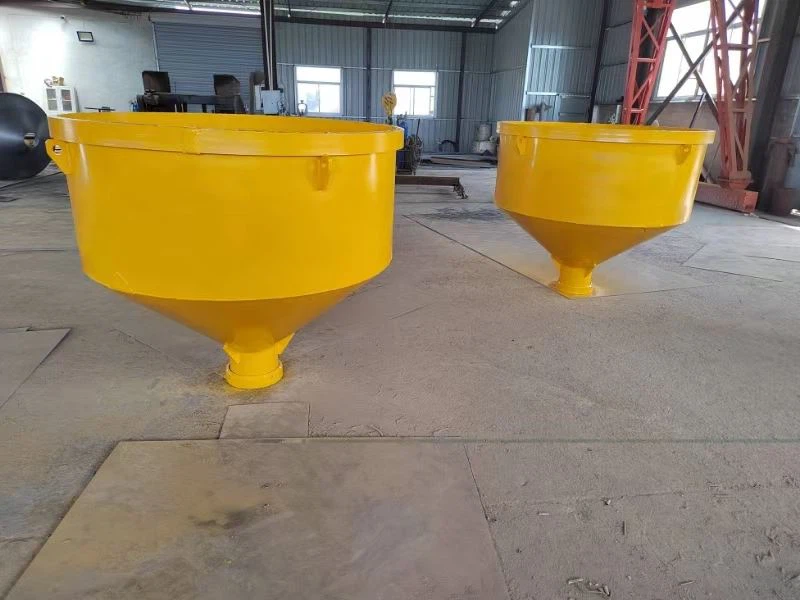

However, there are also some considerations when using a Threaded Tremie Pipe for underwater grouting. One of the challenges is dealing with the water pressure at different depths. As the depth increases, the water pressure also increases, which can put additional stress on the pipe and its connections. To overcome this, the pipe needs to be designed and manufactured to withstand high - pressure conditions.
Another aspect to consider is the quality of the grout itself. The grout needs to have the right consistency and properties to flow smoothly through the pipe and set properly underwater. If the grout is too thick, it may not flow easily through the pipe, and if it's too thin, it may not have the required strength.
To support the Threaded Tremie Pipe during the grouting process, a Tremie Rack can be used. A Tremie Rack provides a stable base for the pipe and helps to keep it in the correct position. It also makes it easier to handle the pipe, especially when adding or removing sections.
In real - world applications, Threaded Tremie Pipes have been used successfully in a wide range of underwater grouting projects. For example, in the construction of offshore wind farms, these pipes are used to grout the foundations of the wind turbines. The ability to adjust the length of the pipe and the reliable threaded connections make it an ideal choice for this type of project.
In bridge construction, underwater grouting is often required to stabilize the bridge piers. Threaded Tremie Pipes are used to ensure that the grout is placed accurately and effectively, providing a strong foundation for the bridge.
When it comes to choosing a Threaded Tremie Pipe for your underwater grouting project, there are a few things to keep in mind. First, make sure to choose a pipe that is made of high - quality materials. The steel should be corrosion - resistant to withstand the underwater environment.
Second, consider the size and diameter of the pipe. The size will depend on the amount of grout that needs to be pumped and the depth of the underwater area. A larger diameter pipe may be required for projects that involve a large volume of grout.
Finally, look for a supplier who can provide technical support and advice. As a supplier of Threaded Tremie Pipes, I understand the importance of providing our customers with the right information and assistance. We can help you choose the right pipe for your project, offer guidance on the grouting process, and provide any necessary accessories, such as the Tremie Hopper and Tremie Rack.
If you're involved in an underwater grouting project and are considering using a Threaded Tremie Pipe, I encourage you to get in touch. We have a wide range of Threaded Tremie Pipes and related products to meet your needs. Whether you're working on a small - scale project or a large - scale infrastructure development, we can provide the solutions you need.
In conclusion, a Threaded Tremie Pipe can definitely be used for underwater grouting. Its flexibility, reliability, and ease of use make it a great choice for many underwater construction projects. With the right pipe, proper grout, and the necessary support equipment, you can achieve a successful underwater grouting job. So, don't hesitate to reach out if you have any questions or if you're ready to start your project.
References
- Construction Materials and Methods Handbook
- Underwater Engineering Principles and Practices