

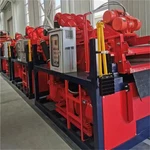

Slurry desanders play a crucial role in various industries, such as oil and gas drilling, mining, and wastewater treatment. These devices are designed to separate sand and other solid particles from the slurry, ensuring the smooth operation of equipment and the quality of the final product. As a Slurry Desander supplier, I am often asked about the materials used in the manufacturing of these essential pieces of equipment. In this blog post, I will delve into the common materials employed in making a slurry desander and explain their characteristics and advantages.
1. Steel
Steel is one of the most widely used materials in the construction of slurry desanders. It offers several key benefits that make it an ideal choice for this application.
Carbon Steel
Carbon steel is a popular option due to its high strength and relatively low cost. It can withstand high pressure and abrasive wear, which are common conditions in slurry handling systems. The desander body and some internal components, such as the inlet and outlet pipes, are often made of carbon steel. For example, in a typical oil - drilling operation, the slurry desander needs to handle high - velocity slurry containing sand particles. Carbon steel can resist the impact and abrasion of these particles, ensuring the long - term stability of the desander.


However, carbon steel is prone to corrosion, especially when exposed to harsh chemical environments. To mitigate this issue, it can be coated with anti - corrosion paints or undergo galvanization processes. This protective layer helps to extend the service life of the carbon steel components in the slurry desander.
Stainless Steel
Stainless steel is another type of steel commonly used in slurry desanders, especially in applications where corrosion resistance is a top priority. It contains chromium, which forms a passive oxide layer on the surface, protecting the steel from rust and chemical attack. In industries such as food processing or pharmaceutical manufacturing, where the slurry may be corrosive or the equipment needs to meet strict hygiene standards, stainless steel desanders are the preferred choice.
Stainless steel also has good mechanical properties, similar to carbon steel, allowing it to withstand the pressure and stress during the operation of the desander. Additionally, it has a smooth surface finish, which reduces the adhesion of solid particles and facilitates the flow of the slurry through the desander. For more information on high - quality Slurry Desanders, you can visit Slurry Desander.
2. Abrasion - Resistant Alloys
In addition to steel, abrasion - resistant alloys are extensively used in the parts of slurry desanders that are directly exposed to the abrasive slurry.
High - Chrome Alloys
High - chrome alloys are known for their excellent abrasion resistance. They contain a high percentage of chromium, which forms hard carbide particles in the alloy matrix. These carbide particles act as a protective barrier against the wear caused by the abrasive sand particles in the slurry. Components such as the cyclone liners in a slurry desander are often made of high - chrome alloys.
The high - chrome alloy liners can significantly extend the service life of the desander, reducing the frequency of replacement and maintenance. They are particularly suitable for applications where the slurry has a high concentration of abrasive particles, such as in mining operations.
Tungsten Carbide
Tungsten carbide is an extremely hard and wear - resistant material. It is often used in the nozzles and other critical parts of the slurry desander. The high hardness of tungsten carbide allows it to maintain its shape and performance even under severe abrasion conditions.
Tungsten carbide nozzles can ensure a precise and stable flow of the slurry into the desander, improving the separation efficiency. However, tungsten carbide is relatively expensive compared to other materials, so it is usually used in small, high - wear - prone components.
3. Composite Materials
Composite materials are also finding their way into the manufacturing of slurry desanders, offering unique advantages.
Rubber - Lined Steel
Rubber - lined steel is a composite material where a layer of rubber is bonded to the inner surface of a steel component. The rubber layer provides excellent abrasion resistance and also acts as a shock absorber, reducing the noise and vibration during the operation of the desander.
In a slurry desander, rubber - lined steel can be used for the cyclone body and the slurry inlet pipes. The rubber lining not only protects the steel from abrasion but also helps to reduce the erosion of the slurry on the equipment. It is also resistant to some chemicals, making it suitable for a wide range of slurry applications.
Fiberglass Reinforced Plastic (FRP)
FRP is a lightweight and corrosion - resistant composite material. It consists of a plastic matrix reinforced with glass fibers. FRP can be used in the construction of the outer shell of the slurry desander, especially in applications where weight reduction is important or where the desander needs to be installed in a corrosive environment.
FRP has good mechanical properties and can withstand the pressure and stress of the desander operation. It is also easy to fabricate into complex shapes, allowing for more flexible design options. For those interested in Mud Desanders, you can explore Mud Desander.
4. Ceramics
Ceramics are used in specific parts of slurry desanders due to their high hardness, wear resistance, and chemical stability.
Alumina Ceramics
Alumina ceramics are commonly used in the liners of small - diameter cyclones in slurry desanders. They have a high hardness and can resist the abrasion of fine sand particles in the slurry. Alumina ceramics also have good chemical resistance, making them suitable for use in corrosive slurry environments.
The smooth surface of alumina ceramics reduces the friction between the slurry and the liner, improving the flow characteristics of the slurry and the separation efficiency of the desander.
Silicon Carbide Ceramics
Silicon carbide ceramics are even harder than alumina ceramics and have excellent thermal conductivity. They are often used in high - temperature and high - abrasion applications. In some industrial processes where the slurry is hot and contains highly abrasive particles, silicon carbide ceramic liners can provide long - term reliable performance.
Conclusion
The materials used in making a slurry desander are carefully selected based on the specific requirements of the application. Steel provides strength and structural integrity, abrasion - resistant alloys offer excellent wear resistance, composite materials combine the advantages of different substances, and ceramics provide high - performance solutions for specific conditions.
As a Slurry Desander supplier, we have the expertise and resources to select the most appropriate materials for our products, ensuring that they meet the highest quality and performance standards. If you are in the market for a slurry desander or have any questions about our products, please feel free to contact us for a detailed discussion and procurement negotiation.
References
- Smith, J. (2018). Materials for Industrial Equipment. Industrial Publishing.
- Johnson, R. (2020). Abrasion - Resistant Alloys in Mining Applications. Mining Journal.
- Brown, A. (2019). Composite Materials in Engineering Design. Engineering Press.