

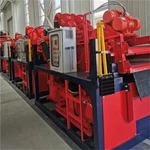

Determining the number of strikes a round pile breaker needs to break a pile is a complex yet crucial aspect in construction and foundation work. As a supplier of round pile breakers, I've witnessed firsthand the importance of understanding this process for efficient and cost - effective project execution.
Factors Influencing the Number of Strikes
Pile Material
The material of the pile plays a fundamental role. For instance, concrete piles are among the most common in construction. The strength of concrete can vary significantly based on its mix design, curing process, and age. High - strength concrete piles, which are often used in large - scale commercial or high - rise building projects, require more strikes to break. The aggregate type and size in the concrete also matter. A concrete pile with large, hard aggregates will be more resistant to breaking compared to one with smaller, softer aggregates.


On the other hand, steel piles are different. Steel has high ductility and strength. While it may not shatter like concrete, it needs to be deformed and cut. The number of strikes required to break a steel pile depends on the thickness of the steel, its grade, and the shape of the pile cross - section. A thick - walled, high - grade steel pile will need more forceful and numerous strikes from a round pile breaker.
Pile Dimensions
The diameter and length of the pile are key factors. Larger - diameter piles have a greater cross - sectional area, which means more material needs to be broken. A round pile breaker has to work harder to fracture the pile along its entire cross - section. For example, a pile with a diameter of 1 meter will require more strikes than a pile with a diameter of 0.5 meters, assuming all other factors are equal.
The length of the pile can also affect the number of strikes. Longer piles may have more structural integrity due to their length, and the stress distribution along the pile is more complex. In some cases, the round pile breaker may need to make multiple passes along the length of the pile to ensure a complete break.
Pile Condition
The condition of the pile before the breaking process starts is also important. If the pile has pre - existing cracks or damage, it will be easier to break and may require fewer strikes. However, if the pile has been well - maintained or is in a harsh environment that has caused it to become more brittle or has strengthened its structure (such as in a marine environment where the pile has been exposed to saltwater and has developed a protective layer), more strikes will be needed.
The Role of the Round Pile Breaker
Design and Power
The design of the round pile breaker is crucial in determining the number of strikes required. Modern Round Type Pile Breaker are engineered to deliver maximum force with each strike. The shape of the breaker's jaws or cutting edges is designed to focus the force on the pile effectively. For example, some round pile breakers have specially contoured jaws that can grip the pile tightly and apply a concentrated force, reducing the number of strikes needed.
The power source of the round pile breaker also matters. Hydraulic - powered pile breakers are known for their high - force output. They can generate a large amount of pressure, which allows them to break piles more quickly compared to pneumatic or electric - powered breakers in many cases. However, the efficiency of the power transfer from the power source to the breaking mechanism also affects the number of strikes. A well - designed hydraulic system will ensure that the maximum amount of power is used to break the pile, minimizing the number of strikes.
Operator Skill
The skill of the operator cannot be underestimated. An experienced operator knows how to position the round pile breaker correctly on the pile. They can adjust the angle and force of the strikes based on the pile's characteristics. For example, if the pile has a slight tilt or irregular shape, an experienced operator can compensate for this by adjusting the breaker's position to ensure that each strike is as effective as possible. This can significantly reduce the number of strikes needed to break the pile.
Calculating the Number of Strikes
There is no one - size - fits - all formula for calculating the number of strikes a round pile breaker needs to break a pile. However, some general guidelines can be followed. Construction engineers often conduct tests on sample piles to estimate the number of strikes. They measure the force required to break a small section of the pile and then extrapolate this data to the entire pile.
In some cases, computer - aided simulations can be used. These simulations take into account the pile's material properties, dimensions, and the characteristics of the round pile breaker. They can provide a more accurate estimate of the number of strikes and the force required for each strike.
Case Studies
Residential Construction Project
In a recent residential construction project, we supplied a round pile breaker for breaking concrete piles with a diameter of 0.6 meters and a length of 3 meters. The concrete had a standard strength of 30 MPa. The operator, with several years of experience, was able to break each pile in an average of 15 - 20 strikes. This was achieved by carefully positioning the breaker at the optimal height on the pile and using the hydraulic power effectively.
Bridge Construction Project
For a large - scale bridge construction project, the piles were large - diameter steel piles with a diameter of 1.5 meters and a wall thickness of 20 mm. The round pile breaker we provided had to make around 50 - 60 strikes on each pile to deform and cut through the steel. The project engineers used computer - aided simulations to plan the breaking process, which helped in reducing the overall time and cost of the pile - breaking operation.
Conclusion
Determining the number of strikes a round pile breaker needs to break a pile is a multi - faceted process that depends on various factors such as pile material, dimensions, condition, the design and power of the breaker, and the skill of the operator. As a supplier of round pile breakers, we are committed to providing high - quality products that are designed to minimize the number of strikes and increase the efficiency of pile - breaking operations.
If you are involved in a construction project that requires pile - breaking, we invite you to contact us for more information about our Round Type Pile Breaker. Our team of experts can assist you in choosing the right pile breaker for your specific needs and help you optimize the pile - breaking process. We look forward to the opportunity to work with you and contribute to the success of your project.
References
- "Construction Materials and Methods" by Frank S. Dischinger
- "Foundation Engineering Handbook" by H. Bolton Seed