


In the field of soil exploration and construction, soil drilling augers are indispensable tools. As a professional soil drilling auger supplier, I often encounter customers who are confused about the differences between hand - held soil drilling augers and power - driven ones. In this blog, I will comprehensively compare these two types of augers to help you make a more informed choice.
Design and Structure
Hand - held soil drilling augers are generally simple in design. They usually consist of a spiral blade attached to a shaft, with a handle at the top for the operator to hold. The spiral blade is designed to cut into the soil and lift it out of the hole as the auger is rotated. The size of hand - held augers is relatively small, which makes them easy to carry and operate in tight spaces. For example, a common hand - held auger may have a shaft length of around 1 - 2 meters and a blade diameter of 5 - 20 centimeters.
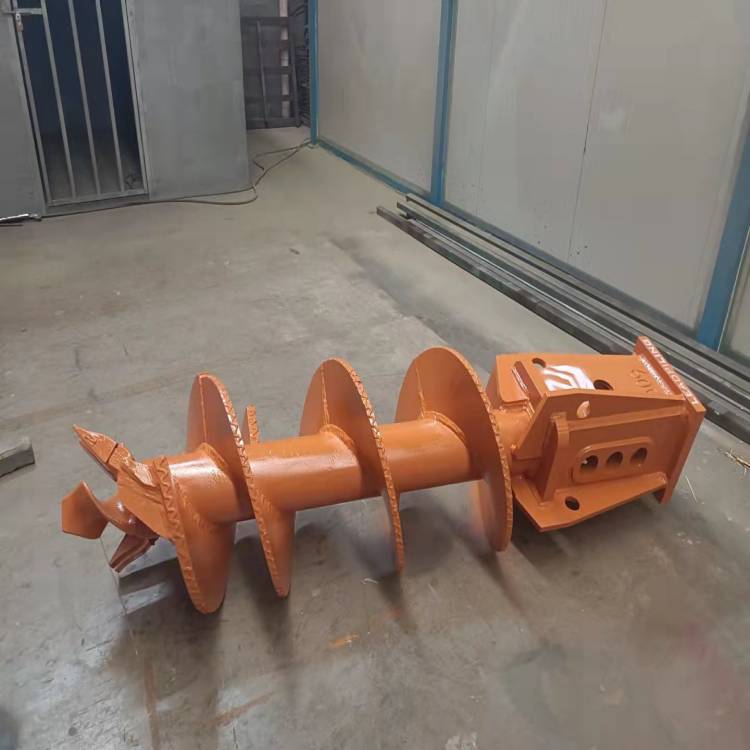
On the other hand, power - driven soil drilling augers are more complex in structure. They are equipped with a power source, which can be an electric motor, a gasoline engine, or a hydraulic system. The power source is connected to the auger shaft through a transmission mechanism, such as a gearbox or a belt drive. Power - driven augers also have a more robust frame and support structure to withstand the high - torque forces generated during operation. The size of power - driven augers can vary widely, from small - sized ones for light - duty tasks to large - scale industrial models with blade diameters of over 1 meter.
Drilling Efficiency
One of the most significant differences between hand - held and power - driven soil drilling augers lies in their drilling efficiency. Hand - held augers rely entirely on the physical strength of the operator to rotate the auger. This means that the drilling speed is limited by the operator's strength and endurance. In soft soil conditions, a skilled operator may be able to drill a hole of a few centimeters in diameter and a depth of 1 - 2 meters within 10 - 15 minutes. However, in hard or compacted soil, the drilling process can be extremely labor - intensive and time - consuming.
Power - driven augers, in contrast, can drill much faster. The power source provides a continuous and powerful rotational force, allowing the auger to cut through soil more easily. For example, a small electric - powered auger can drill a hole of the same size as the hand - held auger in just 1 - 2 minutes. Large - scale power - driven augers used in construction projects can drill holes several meters deep and with large diameters in a relatively short period. This high efficiency makes power - driven augers more suitable for large - scale projects where time is of the essence.
Drilling Depth and Diameter
The drilling depth and diameter capabilities of hand - held and power - driven augers also differ significantly. Hand - held augers are typically limited in terms of both depth and diameter. Due to the operator's physical strength and the relatively small size of the auger, it is difficult to drill holes deeper than 2 - 3 meters. The maximum diameter of the hole that a hand - held auger can drill is usually around 20 - 30 centimeters.
Power - driven augers can achieve much greater drilling depths and diameters. Small - sized power - driven augers can drill holes up to 5 - 10 meters deep and with diameters of 30 - 50 centimeters. Large - scale industrial power - driven augers, such as those used in foundation construction, can drill holes over 50 meters deep and with diameters of several meters. This makes power - driven augers more suitable for applications that require deep and large - diameter holes, such as building foundations, well drilling, and geotechnical investigations.

Mobility and Portability
Hand - held soil drilling augers are highly portable. They are lightweight and do not require any additional power equipment, which means they can be easily carried to different locations. This makes them ideal for small - scale projects in remote areas or places where access is limited. For example, in a garden or a small farm, a hand - held auger can be used to drill holes for planting trees or installing fence posts without the need for heavy machinery.
Power - driven augers, especially large - scale ones, are less portable. They are often heavy and require a vehicle or a trailer for transportation. In addition, some power - driven augers need a stable power supply, which may not be available in all locations. However, there are also some small - sized power - driven augers that are relatively lightweight and can be carried by hand, but they still require a power source, such as a battery or a small generator.
Cost
The cost of hand - held and power - driven soil drilling augers also varies. Hand - held augers are generally much cheaper. They have a simple design and do not require a power source, which reduces the manufacturing cost. A basic hand - held auger can cost as little as $20 - $50, making it an affordable option for small - scale users.
Power - driven augers, on the other hand, are more expensive. The cost of a power - driven auger depends on its power source, size, and features. A small electric - powered auger may cost around $200 - $500, while a large - scale industrial power - driven auger can cost tens of thousands of dollars. In addition to the initial purchase cost, power - driven augers also require maintenance and fuel or electricity costs, which can add to the overall cost of ownership.
Applications
Hand - held soil drilling augers are commonly used in small - scale projects, such as gardening, landscaping, and small - scale construction. They are suitable for tasks such as planting trees, installing fence posts, and taking soil samples in a limited area. The portability and low cost of hand - held augers make them a popular choice for DIY enthusiasts and small - scale contractors.
Power - driven soil drilling augers are widely used in large - scale construction projects, geotechnical investigations, and well drilling. They are essential for tasks such as building foundations, bridge piers, and underground utility installations. The high efficiency, large drilling depth and diameter capabilities of power - driven augers make them indispensable in these applications.
Our Product Range
As a soil drilling auger supplier, we offer a wide range of products to meet different customer needs. We have high - quality hand - held soil drilling augers that are made of durable materials and designed for easy operation. Our power - driven soil drilling augers come in various sizes and power sources, including electric, gasoline, and hydraulic models.
If you are interested in our products, you can check out our Double Cut Soil Drilling Auger, Drilling Rig Soil Drilling Auger, and Flat Soil Drilling Auger. These products are designed with advanced technology and high - quality materials to ensure reliable performance and long - term durability.
Conclusion
In conclusion, the choice between a hand - held soil drilling auger and a power - driven one depends on several factors, including the scale of the project, the drilling depth and diameter requirements, the mobility needs, and the budget. Hand - held augers are suitable for small - scale, low - cost, and portable applications, while power - driven augers are more appropriate for large - scale, high - efficiency, and deep - drilling projects.
If you have any questions about our soil drilling augers or need help in choosing the right product for your project, please feel free to contact us. We are committed to providing you with the best products and services to meet your specific needs.
References
- "Soil Drilling Equipment Handbook"
- Industry reports on construction machinery