


When it comes to underwater construction and concrete placement, a Tremie Rack plays a crucial role. As a supplier of high - quality Tremie Racks, I've witnessed firsthand the importance of understanding the special requirements for using these essential tools underwater. In this blog, I'll delve into the key aspects that need to be considered when using a Tremie Rack in an underwater environment.

1. Structural Integrity and Material Selection
The underwater environment is harsh, with factors such as water pressure, corrosion, and potential impacts from underwater debris. Therefore, the structural integrity of the Tremie Rack is of utmost importance.
The materials used to construct the Tremie Rack must be able to withstand the corrosive nature of saltwater or other types of water bodies. Stainless steel is a popular choice due to its excellent corrosion resistance. It can prevent rust and degradation over time, ensuring the long - term durability of the rack. Additionally, the design of the rack should be robust enough to handle the weight of the tremie pipes and the concrete being placed. The joints and connections need to be well - engineered to prevent any separation or failure during operation.
2. Compatibility with Tremie Pipes
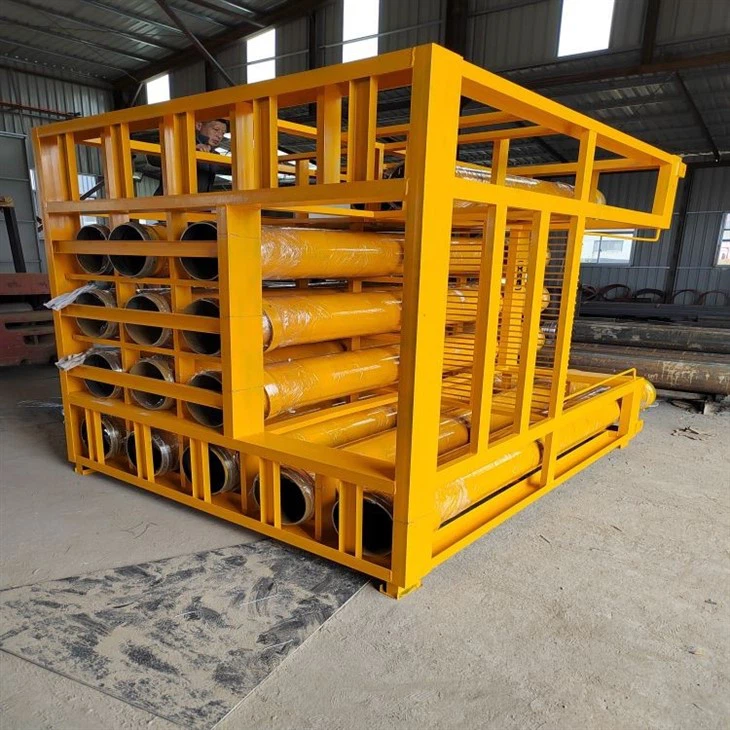
A Tremie Rack is designed to hold and support tremie pipes. There are different types of tremie pipes available, such as Threaded Tremie Pipe and Wire Cable Tremie Pipe. The Tremie Rack must be compatible with the specific type of tremie pipes being used.
The size and shape of the pipe holders on the rack should match the dimensions of the tremie pipes. For threaded tremie pipes, the rack should have holders that can securely grip the pipes at the threaded sections, preventing any loosening or shifting. Wire cable tremie pipes may require different types of holders that can accommodate the cable - attached design. Ensuring proper compatibility between the rack and the pipes is essential for a smooth and efficient concrete placement process.
3. Depth and Water Pressure Considerations
Underwater construction can take place at various depths, and each depth brings its own set of challenges related to water pressure. As the depth increases, the water pressure also increases significantly. The Tremie Rack must be designed to withstand the specific water pressure at the intended operating depth.
Engineers need to calculate the maximum water pressure that the rack will be exposed to and design the rack accordingly. This may involve using thicker materials or reinforcing certain parts of the rack. Additionally, the seals and gaskets on the rack, if any, must be able to prevent water from entering the internal components of the rack under high - pressure conditions.
4. Stability and Positioning
Maintaining stability is crucial when using a Tremie Rack underwater. The rack needs to be properly positioned and secured to prevent it from shifting or toppling during the concrete placement process.
In some cases, the rack may be attached to a platform or a support structure on the seabed. The attachment mechanism must be strong enough to hold the rack in place, even in the presence of water currents. Water currents can exert significant forces on the rack and the tremie pipes, so the design of the rack should take these forces into account. Some racks may be equipped with adjustable legs or stabilizers that can be used to level the rack and ensure its stability on uneven seabeds.
5. Visibility and Monitoring
In an underwater environment, visibility can be limited. It is important to have a way to monitor the operation of the Tremie Rack and the concrete placement process.
Some racks may be equipped with sensors or cameras that can provide real - time information about the position of the tremie pipes, the flow of concrete, and the overall condition of the rack. These sensors can be connected to a monitoring system on the surface, allowing operators to make adjustments as needed. Additionally, the rack should be designed in a way that makes it easy to visually inspect the key components, such as the pipe connections and the concrete flow, even in low - visibility conditions.
6. Maintenance and Cleaning
Regular maintenance and cleaning are essential to ensure the proper functioning of the Tremie Rack. Underwater, the rack can accumulate dirt, sediment, and marine growth over time.
The design of the rack should allow for easy access to all parts for cleaning and inspection. Some racks may be designed with removable panels or sections that can be taken out for more thorough cleaning. It is also important to use appropriate cleaning agents that are safe for the underwater environment and do not damage the materials of the rack.
7. Safety Precautions
Safety is always a top priority in underwater construction. When using a Tremie Rack, several safety precautions need to be taken.
Operators should be properly trained on how to use the rack and handle the tremie pipes. They should be aware of the potential hazards, such as the risk of the rack collapsing or the pipes getting blocked. Safety equipment, such as life jackets and harnesses, should be provided to all personnel involved in the operation. Additionally, emergency procedures should be in place in case of any unexpected events, such as a sudden increase in water pressure or a mechanical failure of the rack.
Contact for Procurement
If you are in need of a high - quality Tremie Rack that meets all the special requirements for underwater use, we are here to help. Our team of experts can provide you with detailed information about our products and assist you in selecting the right rack for your specific project. Contact us to start a procurement discussion and find the best solution for your underwater construction needs.
References
- "Underwater Construction Handbook" by Peurifoy, Robert L.
- "Marine Structures Design and Analysis" by Chakrabarti, Subrata K.