


What are the vibration levels of a casing drive during operation?
As a casing drive supplier, I've witnessed firsthand the importance of understanding the vibration levels during the operation of these crucial pieces of equipment. Casing drives play a vital role in various construction and drilling projects, and their performance is directly related to the vibration characteristics they exhibit.

Vibration in a casing drive can have multiple implications. Firstly, it can affect the efficiency of the operation. Excessive vibration may lead to a loss of energy, as some of the power that should be used for driving the casing is instead dissipated in the form of vibrations. This not only increases the energy consumption but also slows down the overall process, which can be a significant drawback in time - sensitive projects.
Secondly, vibration levels are closely related to the wear and tear of the casing drive components. High - frequency or large - amplitude vibrations can cause accelerated fatigue of the gears, bearings, and other moving parts. Over time, this can lead to premature failure of these components, resulting in costly repairs and downtime. For example, a bearing that is constantly subjected to high - level vibrations may experience pitting or spalling on its raceways, which will eventually lead to a complete breakdown of the bearing and require replacement.
To accurately measure the vibration levels of a casing drive during operation, several factors need to be considered. The type of soil or ground conditions where the casing drive is being used is a crucial factor. Different soil types, such as clay, sand, or rock, present different resistances to the casing being driven. In hard rock formations, the casing drive may experience higher levels of vibration due to the increased force required to penetrate the rock. In contrast, in soft clay soils, the vibrations may be relatively lower, but the drive may still need to operate at a different frequency to maintain an efficient driving process.
The design and specifications of the casing drive itself also have a significant impact on the vibration levels. A well - designed casing drive with balanced components and proper damping mechanisms can effectively reduce vibrations. For instance, modern casing drives often incorporate advanced shock - absorbing materials and structures in their design to minimize the transmission of vibrations to the rest of the equipment and the surrounding environment.
Another important aspect is the speed and torque settings of the casing drive. Higher speeds generally tend to increase the vibration levels, especially if the drive is not properly calibrated. Similarly, excessive torque can also lead to increased vibrations, as the drive may be over - stressed. Operators need to carefully adjust these parameters based on the specific requirements of the project to maintain optimal vibration levels.
Let's take a closer look at some of the common methods used to measure and analyze the vibration levels of a casing drive. One of the most widely used techniques is the use of accelerometers. These sensors can be attached to various parts of the casing drive, such as the housing or the drive shaft, to measure the acceleration of the vibrations. By analyzing the data collected from the accelerometers, engineers can determine the frequency, amplitude, and direction of the vibrations. This information can then be used to identify potential problems and make necessary adjustments to the drive's operation.
In addition to accelerometers, vibration analysis software is also commonly used. This software can process the data collected from the sensors and provide detailed reports on the vibration characteristics of the casing drive. It can also generate graphs and charts to visualize the vibration patterns over time, which helps engineers to quickly identify any abnormal vibrations that may indicate a problem.
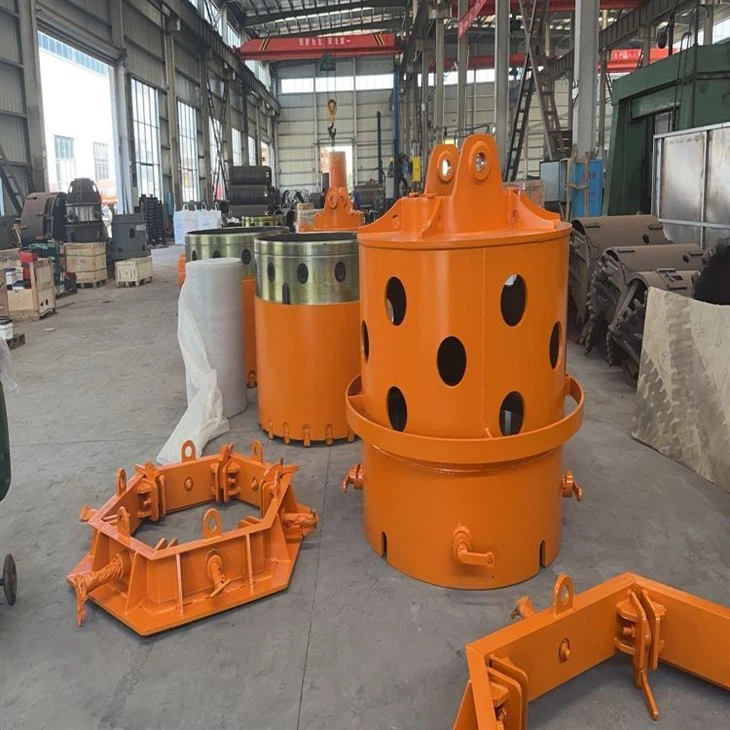
As a casing drive supplier, we offer a range of high - quality casing drives, including the Bauer Casing Drive Adapter and the Casing Drive Adapter. These products are designed with the latest technologies to ensure optimal performance and low vibration levels. Our engineering team is constantly working on improving the design and functionality of our casing drives to meet the ever - changing needs of our customers.
We understand that every project is unique, and the vibration requirements may vary depending on the specific circumstances. That's why we offer customized solutions to our customers. Our experts can work closely with you to analyze your project requirements, recommend the most suitable casing drive, and provide guidance on how to operate the drive to maintain optimal vibration levels.
If you're involved in a construction or drilling project and are in need of a reliable casing drive, we encourage you to get in touch with us. Our team is ready to assist you in selecting the right product and ensuring that it operates at its best. Whether you're dealing with challenging soil conditions or have strict vibration - control requirements, we have the expertise and the products to meet your needs. Contact us today to start a discussion about your project and explore how our casing drives can help you achieve your goals.
References
- "Vibration Analysis for Machinery Maintenance and Predictive Maintenance" by John D. Andrews
- "Soil Mechanics and Foundation Engineering" by Braja M. Das
- Technical manuals of various casing drive manufacturers