


What is the cutting mechanism of a rock drilling bit?
As a seasoned supplier of rock drilling bits, I've witnessed firsthand the critical role these tools play in various industries, from mining and construction to geothermal exploration. Understanding the cutting mechanism of a rock drilling bit is essential for optimizing drilling performance, reducing costs, and ensuring the longevity of the equipment. In this blog post, I'll delve into the intricacies of how rock drilling bits work, exploring the different types of cutting mechanisms and their applications.
The Basics of Rock Drilling
Before we dive into the cutting mechanism, let's briefly review the basics of rock drilling. The primary goal of rock drilling is to create a hole in the rock formation by breaking or cutting the rock material. This is achieved by applying a combination of force and rotation to the drilling bit. The force, also known as the axial load, pushes the bit into the rock, while the rotation provides the cutting action.
Types of Rock Drilling Bits
There are several types of rock drilling bits available, each designed for specific applications and rock formations. The most common types include:
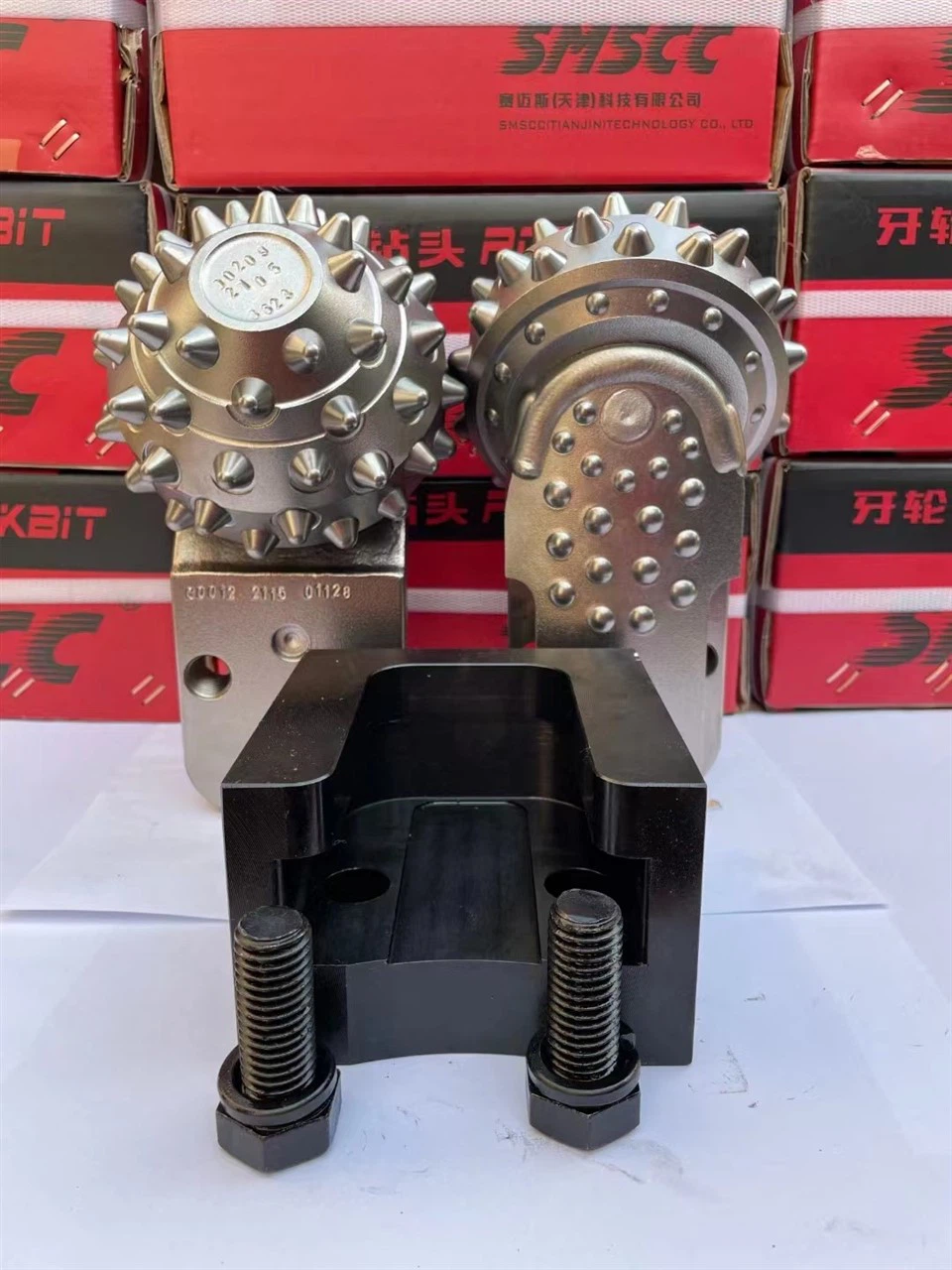

- Roller Cone Bits: These bits feature three rotating cones with teeth or buttons that crush and shear the rock as they roll. Roller cone bits are suitable for a wide range of rock formations, from soft to hard, and are commonly used in oil and gas drilling, mining, and construction. 200MPA Roller Bit
- Tricone Bits: Similar to roller cone bits, tricone bits have three cones, but they are designed with a more aggressive cutting profile for faster penetration rates. Tricone bits are often used in hard rock formations and are popular in the mining and quarrying industries.
- Diamond Bits: Diamond bits use industrial diamonds or diamond-impregnated segments to cut through the rock. These bits are extremely hard and can penetrate even the toughest rock formations, making them ideal for high-precision drilling applications, such as geothermal exploration and scientific research.
- Percussion Bits: Percussion bits work by delivering a series of high-energy blows to the rock, breaking it into small pieces. These bits are commonly used in shallow drilling applications, such as water well drilling and foundation work.
- Button Bits: Button bits feature tungsten carbide buttons that are brazed or sintered onto the bit body. These buttons provide a hard cutting surface that can effectively break through the rock. Button bits are suitable for a variety of rock formations and are often used in mining, tunneling, and construction. C31HD Drilling Bit
Cutting Mechanisms of Rock Drilling Bits
The cutting mechanism of a rock drilling bit depends on its design and the type of rock formation being drilled. Here are the three main cutting mechanisms used in rock drilling:
Crushing
Crushing is the most common cutting mechanism used in roller cone and tricone bits. As the cones rotate, the teeth or buttons on the cones apply a high pressure to the rock, causing it to fracture and break into small pieces. The crushed rock is then removed from the hole by the drilling fluid, which circulates through the bit and up the annulus between the drill pipe and the hole wall.
Shearing
Shearing is another important cutting mechanism used in rock drilling. It involves the application of a sideways force to the rock, causing it to slide or shear along a plane. Shearing is commonly used in diamond bits and button bits, where the cutting edges of the diamonds or buttons apply a shearing force to the rock as the bit rotates.
Abrasion
Abrasion is a cutting mechanism that involves the wearing away of the rock surface by friction. This mechanism is commonly used in diamond bits, where the diamonds act as abrasive particles, grinding away the rock as the bit rotates. Abrasion is also used in some roller cone and tricone bits, where the teeth or buttons on the cones may wear down the rock surface over time.
Factors Affecting the Cutting Mechanism
Several factors can affect the cutting mechanism of a rock drilling bit, including:
- Rock Type: Different rock formations have different properties, such as hardness, strength, and brittleness, which can affect the cutting mechanism of the bit. For example, hard and brittle rocks are more likely to be crushed, while soft and ductile rocks are more likely to be sheared.
- Bit Design: The design of the bit, including the shape, size, and arrangement of the cutting elements, can also affect the cutting mechanism. For example, a bit with a more aggressive cutting profile may be more effective at shearing the rock, while a bit with a more rounded cutting profile may be more effective at crushing the rock.
- Drilling Parameters: The drilling parameters, such as the axial load, rotation speed, and drilling fluid flow rate, can also affect the cutting mechanism of the bit. For example, increasing the axial load can increase the crushing force applied to the rock, while increasing the rotation speed can increase the shearing force applied to the rock.
Applications of Rock Drilling Bits
Rock drilling bits are used in a wide range of applications, including:
- Mining: Rock drilling bits are essential tools in the mining industry, where they are used to create holes for blasting, ore extraction, and ventilation. Different types of rock drilling bits are used depending on the type of rock formation and the mining method being used. Hard Rock Drilling Bit
- Construction: Rock drilling bits are also used in the construction industry, where they are used to create holes for foundations, piles, and anchor bolts. In addition, rock drilling bits are used in tunneling and excavation projects to create holes for blasting and rock removal.
- Oil and Gas Drilling: Rock drilling bits are used in the oil and gas industry to drill wells for exploration and production. Different types of rock drilling bits are used depending on the depth and type of rock formation being drilled.
- Geothermal Exploration: Rock drilling bits are used in geothermal exploration to drill wells for the extraction of geothermal energy. These bits are designed to withstand high temperatures and pressures and are often made of specialized materials, such as diamond or tungsten carbide.
Conclusion
Understanding the cutting mechanism of a rock drilling bit is essential for optimizing drilling performance, reducing costs, and ensuring the longevity of the equipment. By choosing the right type of bit for the specific application and rock formation, and by optimizing the drilling parameters, operators can achieve faster penetration rates, longer bit life, and lower drilling costs.
If you're in the market for high-quality rock drilling bits, look no further. As a leading supplier of rock drilling bits, we offer a wide range of products to meet your specific needs. Whether you're drilling in soft or hard rock formations, we have the right bit for the job. Contact us today to learn more about our products and to discuss your drilling requirements. We look forward to working with you to achieve your drilling goals.
References
- Detournay, E., & Defourny, P. (1992). Mechanics of PDC bit: A review. Journal of Energy Resources Technology, 114(1), 4-18.
- Warren, E. R., & Root, R. A. (1960). Mechanics of the roller cone rock bit. Journal of Petroleum Technology, 12(11), 381-390.
- Teale, R. (1965). The concept of specific energy in rock drilling. International Journal of Rock Mechanics and Mining Sciences & Geomechanics Abstracts, 2(2), 135-143.