


As a seasoned supplier of rock drilling augers, I understand the critical role that proper alignment plays in the efficiency and effectiveness of drilling operations. A misaligned auger can lead to a host of problems, including reduced drilling speed, uneven hole quality, increased wear and tear on the equipment, and even safety hazards. In this blog post, I'll share some practical tips on how to check the alignment of a rock drilling auger.
Why Alignment Matters
Before diving into the alignment - checking process, it's important to understand why alignment is so crucial. When a rock drilling auger is properly aligned, it can penetrate the rock smoothly and efficiently. The cutting edges of the auger can make consistent contact with the rock, ensuring that the hole is drilled straight and with the correct diameter.
On the other hand, a misaligned auger may cause the drill bit to wander off - course, resulting in an irregularly shaped hole. This can be a major issue, especially in applications where precision is required, such as in foundation drilling for buildings or in geotechnical investigations. Additionally, misalignment can put extra stress on the auger and the drilling rig, leading to premature failure of components and increased maintenance costs.
Visual Inspection
The first step in checking the alignment of a rock drilling auger is a visual inspection. Start by examining the auger from a distance. Look for any obvious signs of bending or warping. If the auger appears to be curved or if the flighting (the spiral part of the auger) is not evenly spaced, this could be an indication of misalignment.
Next, get closer to the auger and check the cutting edges. The cutting teeth should be in a straight line along the length of the auger. Any teeth that are bent, chipped, or out of place can affect the alignment and the drilling performance. Also, inspect the connection between the auger and the drill rig. Make sure that the coupling or the joint is properly seated and that there are no signs of damage or excessive wear.
Using Measuring Tools
Visual inspection can only take you so far. To get a more accurate assessment of the auger's alignment, you'll need to use some measuring tools. One of the most common tools for this purpose is a straightedge. Place the straightedge along the length of the auger, both on the outside of the flighting and along the centerline. If there are any gaps between the straightedge and the auger, this indicates misalignment.

Another useful tool is a dial indicator. A dial indicator can measure small variations in the alignment of the auger. Mount the dial indicator on a stable surface near the auger and position the probe against the auger. Rotate the auger slowly and observe the readings on the dial indicator. Any significant fluctuations in the readings suggest that the auger is not properly aligned.
Checking the Flighting
The flighting of a rock drilling auger is an important part of its design, and its alignment is crucial for efficient drilling. To check the alignment of the flighting, measure the pitch (the distance between adjacent turns of the spiral) at several points along the length of the auger. The pitch should be consistent throughout the auger. If there are significant variations in the pitch, this can cause the auger to drill unevenly.
Also, check the width of the flighting. The flighting should have a uniform width from one end of the auger to the other. Any narrowing or widening of the flighting can affect the alignment and the ability of the auger to transport the cuttings out of the hole.
Testing the Auger in Operation
One of the best ways to check the alignment of a rock drilling auger is to test it in operation. Before starting a full - scale drilling job, conduct a test run in a controlled environment. Observe the drilling process closely. Pay attention to how the auger enters the rock, how it progresses through the hole, and how the cuttings are being removed.
If the auger is properly aligned, it should drill smoothly and steadily. There should be no excessive vibration or noise during the drilling process. If you notice any jerks, vibrations, or if the auger seems to be struggling to penetrate the rock, this could be a sign of misalignment.
Types of Rock Drilling Augers and Their Alignment Considerations
At our company, we offer a variety of rock drilling augers, each with its own unique design and alignment requirements.
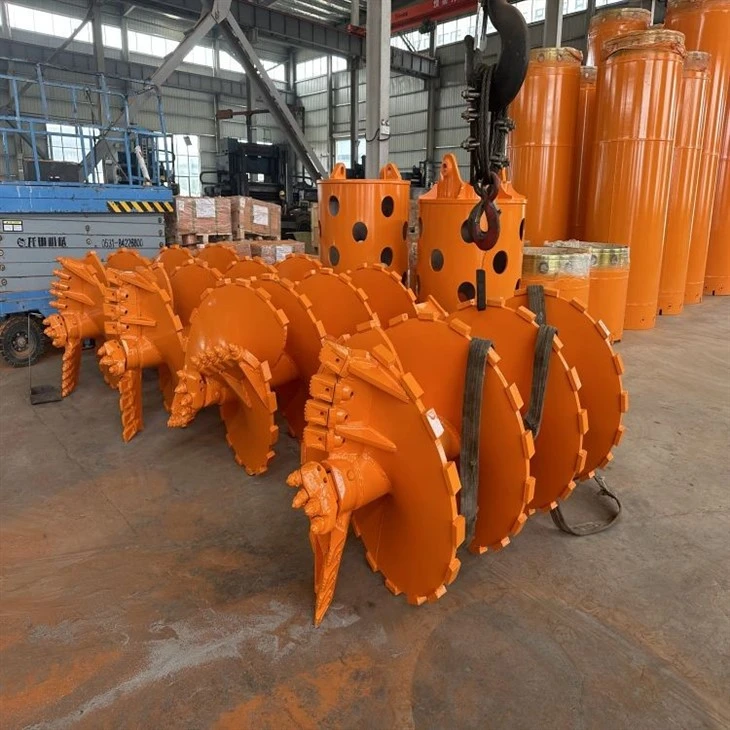
- Flat Rock Drilling Auger: The Flat Rock Drilling Auger is designed for drilling in hard rock formations. When checking the alignment of a flat rock drilling auger, pay special attention to the flat cutting surface. The surface should be parallel to the axis of the auger, and the cutting edges should be sharp and evenly aligned.
- Single Spiral Rock Drilling Auger: The Single Spiral Rock Drilling Auger has a single spiral flighting. The alignment of the flighting is crucial for the efficient removal of cuttings. Make sure that the spiral is evenly spaced and that there are no kinks or bends in the flighting.
- Rotary Rock Drilling Auger: The Rotary Rock Drilling Auger is designed to rotate during the drilling process. When checking the alignment of a rotary rock drilling auger, ensure that the rotation is smooth and that the auger remains centered in the hole. Check the bearings and the drive mechanism for any signs of misalignment or wear.
Correcting Misalignment
If you find that your rock drilling auger is misaligned, it's important to take corrective action as soon as possible. In some cases, minor misalignments can be corrected by adjusting the connection between the auger and the drill rig. Make sure that all the bolts and nuts are tightened properly and that the coupling is properly seated.
For more severe misalignments, you may need to have the auger repaired or replaced. If the auger is bent or warped, it may be possible to straighten it using specialized equipment. However, if the damage is too severe, it's usually more cost - effective to replace the auger.
Conclusion
Checking the alignment of a rock drilling auger is an essential part of maintaining its performance and ensuring the success of your drilling operations. By following the steps outlined in this blog post, you can identify and correct any alignment issues before they cause major problems.
At our company, we are committed to providing high - quality rock drilling augers that are designed for optimal performance and alignment. If you have any questions about our products or need assistance with alignment checks, please don't hesitate to contact us. We are here to help you make the most of your drilling equipment and achieve the best results in your projects. Whether you are in the construction industry, mining, or any other field that requires rock drilling, our team of experts can provide you with the guidance and support you need. Contact us today to discuss your specific requirements and start a fruitful partnership.
References
- Smith, J. (2018). Drilling Equipment Maintenance Guide. Publisher: Drilling Tech Press.
- Johnson, R. (2019). Rock Drilling Best Practices. Publisher: Geotechnical Publishing Co.