

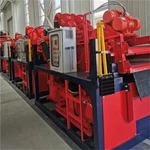

When it comes to construction projects, pile breakers are essential tools for efficiently removing the excess length of piles. As a reputable pile breaker supplier, I often encounter inquiries about the differences between hydraulic and pneumatic pile breakers. In this blog post, I'll delve into the distinct characteristics, advantages, and applications of these two types of pile breakers to help you make an informed decision for your construction needs.
Working Principle
The fundamental difference between hydraulic and pneumatic pile breakers lies in their working principles. Hydraulic pile breakers operate using hydraulic power. They are connected to a hydraulic power unit, which generates high-pressure hydraulic fluid. This fluid is then used to drive the pistons inside the pile breaker, creating a powerful impact force that breaks the pile. The hydraulic system allows for precise control of the force, making it suitable for a wide range of pile sizes and materials.
On the other hand, pneumatic pile breakers rely on compressed air to function. An air compressor supplies compressed air to the pile breaker, which powers the internal mechanism to deliver blows to the pile. The compressed air is released in a controlled manner to generate the necessary force for breaking the pile. Pneumatic pile breakers are generally lighter and more portable than hydraulic ones, but they may have limitations in terms of the maximum force they can generate.
Power and Force
Hydraulic pile breakers are known for their high power and force capabilities. The hydraulic system can generate a significant amount of pressure, allowing these pile breakers to break through even the toughest piles. They are particularly well-suited for large-diameter piles and piles made of high-strength materials such as reinforced concrete. The ability to adjust the hydraulic pressure also means that operators can fine-tune the force according to the specific requirements of the project.
Pneumatic pile breakers, while less powerful than their hydraulic counterparts, still offer sufficient force for many construction applications. They are ideal for smaller piles and projects where a lower level of force is needed. Their relatively lower power consumption also makes them a more energy-efficient option in some cases. However, if you're dealing with large or extremely hard piles, a pneumatic pile breaker may not be the best choice.
Precision and Control
One of the key advantages of hydraulic pile breakers is their superior precision and control. The hydraulic system allows for accurate adjustment of the force, stroke length, and frequency of the impacts. This precision is crucial when working on projects that require careful handling of the piles, such as in urban areas where there may be nearby structures or utilities. Hydraulic pile breakers can also be easily integrated with other construction equipment, such as excavators, for enhanced efficiency.
Pneumatic pile breakers offer a certain degree of control, but they are generally less precise than hydraulic ones. The compressed air system may have some limitations in terms of fine-tuning the force and impact frequency. However, for projects where a high level of precision is not required, pneumatic pile breakers can still provide reliable performance.
Mobility and Portability
Pneumatic pile breakers are typically more mobile and portable than hydraulic pile breakers. They are lighter in weight and do not require a large hydraulic power unit, making them easier to transport and set up on different job sites. This portability is a significant advantage for contractors who need to move their equipment frequently between projects.
Hydraulic pile breakers, on the other hand, are heavier and require a hydraulic power source. While they can be mounted on excavators or other heavy equipment for mobility, they may be more challenging to transport and set up compared to pneumatic pile breakers. However, the increased power and performance of hydraulic pile breakers often justify the additional logistical considerations.
Noise and Vibration
Noise and vibration are important factors to consider in construction projects, especially in urban or residential areas. Hydraulic pile breakers tend to produce less noise and vibration compared to pneumatic pile breakers. The hydraulic system operates more smoothly, resulting in a quieter and more stable working environment. This can be a significant advantage when working in close proximity to sensitive areas.
Pneumatic pile breakers, due to the nature of the compressed air system, can generate more noise and vibration. However, advancements in technology have led to the development of quieter and more vibration-damped pneumatic pile breakers. Contractors can also take additional measures, such as using noise barriers and vibration isolators, to minimize the impact of noise and vibration on the surrounding environment.
Applications
The choice between a hydraulic and a pneumatic pile breaker depends largely on the specific application. Hydraulic pile breakers are commonly used in large-scale construction projects, such as high-rise buildings, bridges, and industrial facilities. Their high power and precision make them suitable for breaking large-diameter piles and piles in challenging soil conditions.
Pneumatic pile breakers are often preferred for smaller projects, such as residential construction, foundation work, and repair jobs. Their portability and lower cost make them a practical choice for contractors working on smaller sites. They are also commonly used in situations where noise and vibration need to be minimized.
Our Pile Breaker Products
As a leading pile breaker supplier, we offer a wide range of hydraulic and pneumatic pile breakers to meet the diverse needs of our customers. Our Cutting Pile Breaker is a high-performance hydraulic pile breaker that is designed for precise and efficient pile cutting. It features advanced hydraulic technology and a robust construction, making it suitable for a variety of pile materials and sizes.
Our 1000mm Foundation Pile Breaker is specifically designed for large-diameter foundation piles. It offers a high level of force and precision, ensuring reliable performance in demanding construction applications.
For those who need a more portable option, our Excavator Pile Breaker is a great choice. It can be easily attached to an excavator, providing enhanced mobility and efficiency on the job site.


Conclusion
In conclusion, the difference between a hydraulic and a pneumatic pile breaker lies in their working principles, power and force capabilities, precision and control, mobility and portability, noise and vibration levels, and applications. Each type of pile breaker has its own advantages and disadvantages, and the choice between them depends on the specific requirements of the construction project.
As a pile breaker supplier, we are committed to providing our customers with high-quality products and professional advice. If you're unsure which type of pile breaker is right for your project, please don't hesitate to contact us. Our team of experts will be happy to assist you in making the best decision. Whether you need a hydraulic pile breaker for a large-scale project or a pneumatic pile breaker for a smaller job, we have the solution for you.
References
- Construction Equipment Handbook, various editions
- Pile Foundation Design and Construction Manual, published by relevant construction authorities
- Technical brochures from pile breaker manufacturers