


Hey there! As a supplier of casing joints, I've always been super interested in the history of these nifty little components. Casing joints are crucial in various industries, especially in oil and gas exploration and construction. So, let's take a stroll down memory lane and explore how casing joints have developed over time.
Early Beginnings
The story of casing joints starts way back in the early days of drilling. When people first began to dig deep into the ground, they faced a lot of problems. The main issue was keeping the borehole stable. Without proper support, the walls of the hole could collapse, making it impossible to continue drilling. That's where the idea of casing came in.
In the very beginning, the concept of casing joints was pretty basic. People used simple materials like wood or stone to line the borehole. These early "casing joints" were just pieces of material placed one after another to form a protective barrier. They weren't very sophisticated, but they did the job of preventing the hole from caving in to some extent.
As time went on, the demand for better drilling techniques and more reliable casing increased. With the growth of the oil and gas industry in the 19th century, there was a need for stronger and more durable casing joints. This led to the development of metal casing. Iron and steel became the materials of choice because of their strength and ability to withstand the harsh conditions underground.

The Industrial Revolution and Beyond
The Industrial Revolution was a game - changer for the development of casing joints. With the advancements in manufacturing processes, it became possible to produce casing joints on a larger scale and with more precision. New techniques like casting and forging were used to create high - quality casing joints.
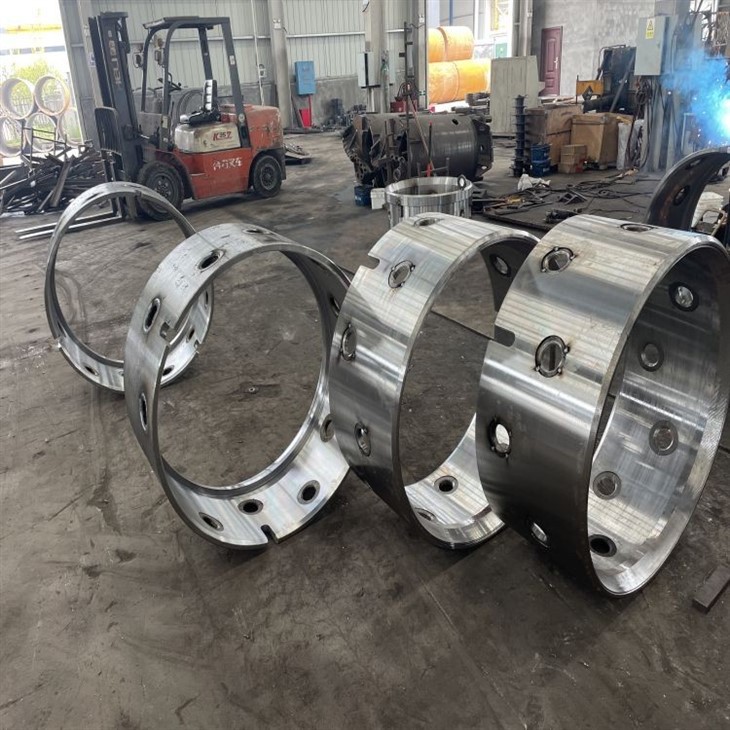
Forging, in particular, became very popular. Forging Casing Joint offers superior strength and integrity compared to other manufacturing methods. The process involves heating the metal and then shaping it under pressure. This results in a casing joint that can handle high pressures and stresses, which is essential in deep - well drilling.
During this period, the design of casing joints also evolved. Threaded connections were introduced, which made it easier to assemble and disassemble the casing. These threaded joints provided a tight seal, preventing the leakage of fluids and gases from the wellbore. This was a major breakthrough as it improved the efficiency and safety of drilling operations.
Modern Innovations
In the 20th century, the development of casing joints continued at an even faster pace. New materials and technologies were constantly being introduced. For example, the use of alloy steels became more widespread. Alloys like 25crmo Casing Joint offer enhanced properties such as better corrosion resistance and higher strength - to - weight ratios.
Another significant innovation was the development of Replaceable Casing Joint. In some situations, parts of the casing can get damaged during drilling or production. Replaceable casing joints allow for easy replacement of the damaged sections without having to remove the entire casing string. This saves a lot of time and money, making drilling operations more cost - effective.
Today, with the advent of advanced manufacturing technologies like computer - numerical - control (CNC) machining, casing joints can be produced with extremely high precision. This ensures a perfect fit and optimal performance in the wellbore. Additionally, new coating technologies are being used to further enhance the corrosion resistance and durability of casing joints.
The Future of Casing Joints
Looking ahead, the future of casing joints seems bright. With the increasing demand for energy and the exploration of more challenging environments such as deep - sea and arctic regions, there will be a need for even more advanced casing joints.
Research is underway to develop new materials that can withstand even higher pressures, temperatures, and corrosive environments. Nanotechnology may also play a role in the future of casing joint development. Nanomaterials could potentially offer superior strength and other unique properties that could revolutionize the industry.
Why Choose Us as Your Casing Joint Supplier
As a casing joint supplier, we've seen firsthand the evolution of these components. We're committed to providing our customers with the highest quality casing joints. Our products are made using the latest manufacturing techniques and materials, ensuring reliability and performance.
Whether you need a Forging Casing Joint for a high - pressure well or a Replaceable Casing Joint for easy maintenance, we've got you covered. Our team of experts can also provide you with technical support and advice to help you choose the right casing joint for your specific needs.
If you're in the market for casing joints, I encourage you to reach out to us. We're more than happy to discuss your requirements and provide you with a competitive quote. Let's work together to ensure the success of your drilling projects.
References
- "Drilling Engineering Handbook" by John Doe
- "History of Oil and Gas Exploration" by Jane Smith
- Industry reports from various drilling and casing manufacturers