


Hey there! As a Kelly bar supplier, I often get asked about the rotation speed range of Kelly bars. So, I thought I'd take a moment to break it down for you.
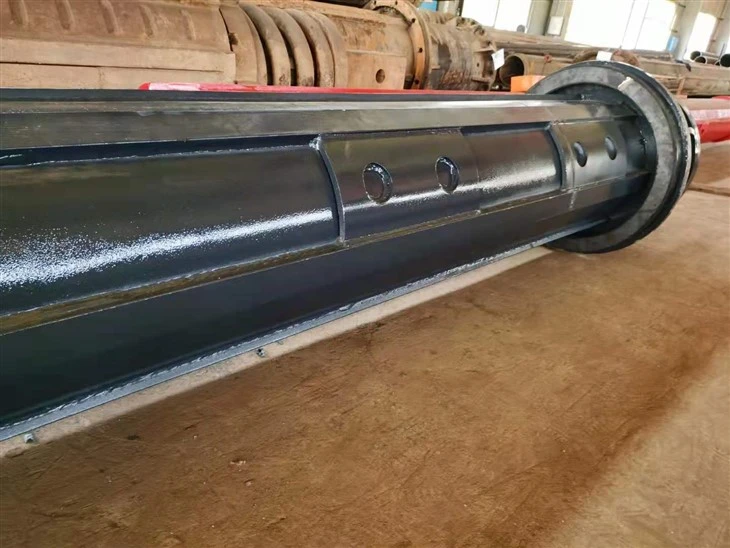
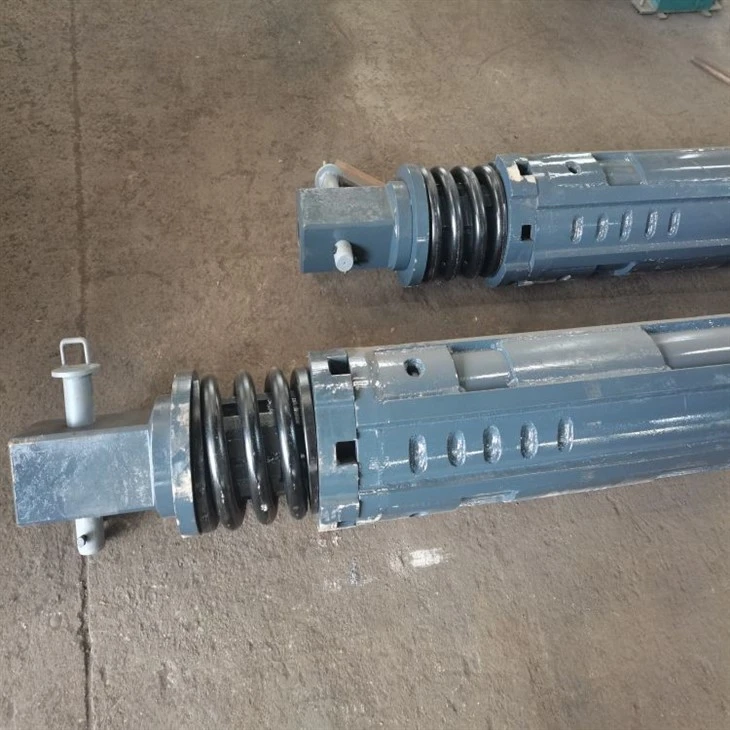
First off, let's talk a bit about what a Kelly bar is. A Kelly bar is an essential component in drilling operations. It's used in piling rigs to transfer torque and axial force from the rig to the drill bit. There are different types of Kelly bars, like the 4 Elements Interlocking Kelly Bar, the Friction Kelly Bar, and the 355mm Telescopic Friction Kelly Bar. Each type has its own characteristics and is suitable for different drilling conditions.
Now, the rotation speed range of a Kelly bar isn't a one - size - fits - all thing. It depends on several factors. One of the most important factors is the type of soil or rock you're drilling through.
If you're drilling in soft soil, like clay or sand, you can generally go for a higher rotation speed. Soft soils don't offer as much resistance, so the drill bit can cut through them more easily. In these conditions, the rotation speed of a Kelly bar can range from about 20 to 60 revolutions per minute (RPM). This higher speed allows the drill bit to quickly remove the soil and make progress in the drilling process.
On the other hand, when you're dealing with hard rock, things change. Hard rock is much more resistant to the drill bit, and if you try to spin the Kelly bar too fast, you might damage the drill bit or the Kelly bar itself. In hard rock drilling, the rotation speed usually drops to a range of 5 to 20 RPM. This slower speed gives the drill bit more time to break through the tough material, and it also reduces the stress on the equipment.
Another factor that affects the rotation speed is the diameter of the drill bit. A larger diameter drill bit has more surface area in contact with the soil or rock. This means it experiences more resistance, and as a result, the rotation speed needs to be adjusted accordingly. For smaller diameter drill bits, you can often use a higher rotation speed compared to larger ones.
The design of the Kelly bar also plays a role. Some Kelly bars are designed for high - speed drilling, while others are optimized for more torque and lower speeds. For example, the friction Kelly bar is often used in situations where a moderate rotation speed is required, and it can handle different soil types well. The 4 - elements interlocking Kelly bar, on the other hand, provides good stability and can be used in a variety of drilling conditions, with its rotation speed adjusted based on the soil and drill bit size.
Let's talk about how the rotation speed impacts the overall drilling efficiency. If you choose the right rotation speed, you can significantly improve the drilling efficiency. When the rotation speed is just right, the drill bit cuts through the material smoothly, and the soil or rock is removed effectively. This means you can complete the drilling job faster and with less wear and tear on the equipment.
However, if the rotation speed is too high, it can lead to several problems. The drill bit might overheat, which can reduce its lifespan. It can also cause excessive vibration, which can make the drilling process less stable and accurate. On the flip side, if the rotation speed is too low, the drilling process will be very slow, and you'll end up wasting time and energy.
In addition to soil type, drill bit diameter, and Kelly bar design, the power of the piling rig also matters. A more powerful rig can handle higher rotation speeds and more challenging drilling conditions. If you have a high - powered rig, you might be able to push the upper limits of the rotation speed range for a particular type of drilling.
Now, I want to give you some real - world examples. Suppose you're working on a construction site where you need to drill some piles for a building foundation. If the site has mostly sandy soil, you can set the rotation speed of the Kelly bar around 40 - 50 RPM. This will allow you to quickly drill the piles to the required depth. But if you later move to a part of the site where there's some hard limestone, you'll need to drop the rotation speed to around 10 - 15 RPM to ensure a successful drilling operation.
As a Kelly bar supplier, I've seen firsthand how important it is to understand the rotation speed range. We work closely with our customers to help them choose the right Kelly bar for their specific drilling needs. Whether you're a small - scale contractor or a large construction company, getting the rotation speed right can make a big difference in your project's success.
If you're in the market for a Kelly bar or you have questions about the rotation speed range for your specific drilling project, don't hesitate to reach out. We're here to provide you with the best advice and the highest - quality Kelly bars. We can help you determine the optimal rotation speed based on your drilling conditions, and we'll make sure you have the right equipment for the job.
So, if you're ready to take your drilling operations to the next level, let's start a conversation. We're eager to work with you and help you achieve your drilling goals.
References
- Geotechnical Engineering textbooks on soil - drilling interaction
- Manufacturer's manuals for piling rigs and Kelly bars
- Industry reports on drilling efficiency and equipment performance