


In the dynamic world of construction and geotechnical engineering, rotary casing tubes play a pivotal role. As a supplier deeply entrenched in this industry, I've witnessed firsthand the ebb and flow of trends that shape the design of these essential components. This blog post aims to delve into the current industry trends in the design of rotary casing tubes, offering insights that could be invaluable for contractors, engineers, and anyone involved in the construction ecosystem.
1. Material Advancements
One of the most significant trends in the design of rotary casing tubes is the continuous evolution of materials. Traditionally, carbon steel has been the go - to material due to its strength, durability, and relatively low cost. However, recent years have seen a surge in the use of high - strength alloys and composite materials.
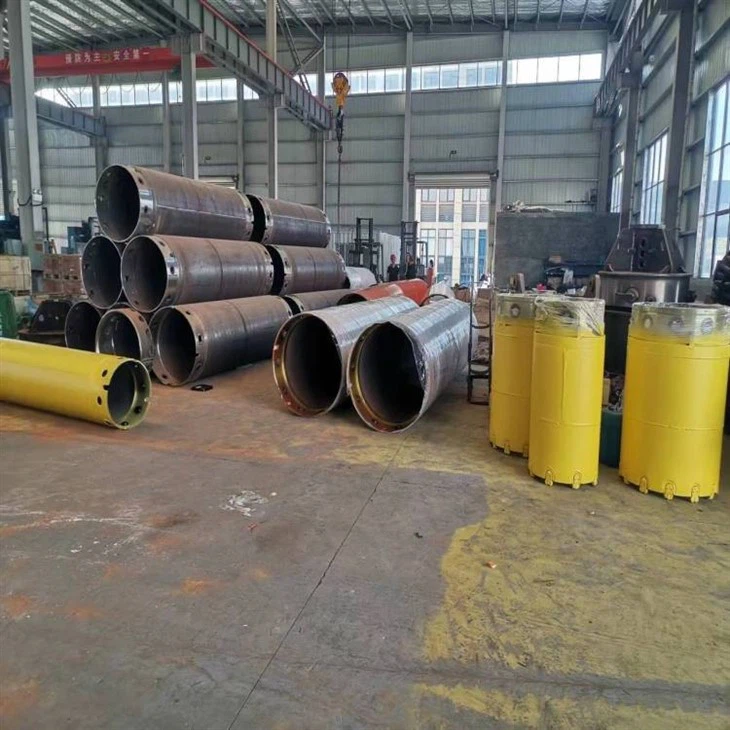

High - strength alloys offer enhanced mechanical properties, such as increased yield strength and toughness. This allows for the design of thinner - walled casing tubes without sacrificing structural integrity. Thinner - walled tubes are not only lighter, which reduces transportation and handling costs, but also require less energy to install. For example, some modern high - strength alloy casing tubes can withstand higher axial and radial loads, making them ideal for challenging geological conditions.
Composite materials are also making their mark in the industry. These materials, typically made of a combination of fibers and resins, offer excellent corrosion resistance and high strength - to - weight ratios. In environments where corrosion is a major concern, such as offshore or coastal construction projects, composite rotary casing tubes can provide a longer service life compared to traditional steel tubes. The ability to customize the properties of composite materials also allows for more tailored designs to meet specific project requirements.
2. Precision Manufacturing and Quality Control
In today's competitive market, precision manufacturing is no longer a luxury but a necessity. The design of rotary casing tubes now emphasizes tight tolerances in dimensions and surface finish. Advanced manufacturing techniques, such as computer - numerical - control (CNC) machining and laser cutting, enable the production of casing tubes with highly accurate diameters, wall thicknesses, and lengths.
Quality control has also become more rigorous. Non - destructive testing methods, such as ultrasonic testing and magnetic particle inspection, are commonly used to detect internal and surface defects in the casing tubes. This ensures that only high - quality products reach the market, reducing the risk of failures during installation and operation. As a supplier, we understand the importance of precision manufacturing and quality control. We invest in state - of - the - art equipment and trained personnel to guarantee that our rotary casing tubes meet or exceed industry standards.
3. Design for Ease of Installation
Another notable trend is the focus on designing rotary casing tubes for ease of installation. This includes features such as improved connection systems and optimized tube lengths.
Connection systems are a critical aspect of casing tube design. Traditional threaded connections are being replaced by more advanced systems, such as quick - connect couplings and welded connections. Quick - connect couplings allow for faster and easier assembly on the job site, reducing installation time and labor costs. Welded connections, on the other hand, provide a stronger and more reliable joint, especially in high - stress applications.
Optimized tube lengths are also important. Shorter tube lengths are easier to handle and transport, but may require more connections, which can increase the risk of leakage and reduce overall structural integrity. Longer tube lengths, on the other hand, reduce the number of connections but may pose challenges in transportation and handling. Modern design approaches aim to find the optimal balance between these factors, taking into account the specific requirements of each project.
4. Environmental Considerations
In an era of increasing environmental awareness, the design of rotary casing tubes is also being influenced by environmental considerations. This includes reducing the environmental impact of manufacturing processes and improving the recyclability of the tubes.
Manufacturers are now exploring more sustainable manufacturing methods, such as using recycled materials and reducing energy consumption during production. For example, some companies are using scrap steel to produce new casing tubes, which not only reduces the demand for virgin materials but also minimizes waste.
In terms of recyclability, steel casing tubes are highly recyclable. However, composite casing tubes present more challenges in this regard. Research is underway to develop more easily recyclable composite materials or to find ways to recycle existing composite casing tubes at the end of their service life.
5. Customization and Modular Design
The demand for customized rotary casing tubes is on the rise. Different construction projects have unique requirements in terms of diameter, wall thickness, length, and material properties. As a supplier, we offer a wide range of customization options to meet these diverse needs.
Modular design is also becoming popular. Modular casing tubes can be easily assembled and disassembled, allowing for flexibility in installation and reuse. This is particularly useful in temporary construction applications, such as Foundation Construction Temp Casing Tube. Contractors can use modular casing tubes to quickly set up and dismantle structures, reducing project timelines and costs.
6. Integration with Digital Technologies
The integration of digital technologies is transforming the design and use of rotary casing tubes. For example, sensors can be embedded in the casing tubes to monitor various parameters, such as stress, strain, and temperature. This real - time data can be used to optimize the installation process, predict potential failures, and ensure the long - term performance of the casing tubes.
Building Information Modeling (BIM) is also being increasingly used in the design of construction projects. BIM allows for the creation of detailed 3D models of the project, including the rotary casing tubes. This enables better visualization, coordination, and communication among different stakeholders, leading to more efficient project execution.
7. Applications in New Industries
Rotary casing tubes are finding new applications in emerging industries. In addition to traditional construction projects, such as building foundations and bridge piers, they are now being used in renewable energy projects, such as wind turbine foundations. The design of casing tubes for these new applications often requires specific features, such as high - strength to support the large loads of wind turbines and corrosion resistance to withstand the harsh marine environment in offshore wind farms.
Another emerging application is in geothermal energy projects. Rotary casing tubes are used to drill wells for geothermal energy extraction. The design of these casing tubes needs to withstand high temperatures and pressures, as well as corrosive fluids present in the geothermal reservoirs.
Conclusion
The design of rotary casing tubes is constantly evolving to meet the changing needs of the construction and geotechnical engineering industries. From material advancements and precision manufacturing to environmental considerations and digital integration, these trends are shaping the future of the industry. As a supplier, we are committed to staying at the forefront of these trends, offering high - quality, innovative rotary casing tubes that meet the diverse requirements of our customers.
If you are interested in learning more about our Rotary Bored Pile Drilling Casing or Double Wall Casing Tube, or if you have specific project requirements that you need our expertise for, we invite you to contact us for a detailed discussion and potential procurement. We look forward to working with you to find the best solutions for your construction projects.
References
- Construction Materials Handbook: A Guide to Selection and Application. McGraw - Hill.
- Geotechnical Engineering Principles and Practices. Pearson Education.
- Journal of Construction Engineering and Management. ASCE.