

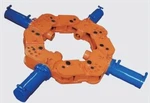
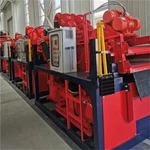
As a supplier of Mud Desanders, I've witnessed firsthand the critical role these devices play in various industries, especially in oil and gas drilling, mining, and construction. The separation efficiency of a Mud Desander is paramount as it directly impacts the quality of the processed mud, the lifespan of equipment, and overall operational costs. In this blog, I'll share some effective strategies to improve the separation efficiency of a Mud Desander.
Understanding the Basics of Mud Desander
Before delving into the improvement strategies, it's essential to understand how a Mud Desander works. A Mud Desander is a hydrocyclone-based device designed to separate sand and other coarse solids from drilling mud or slurry. The principle behind its operation is based on the centrifugal force generated by the high - speed rotation of the fluid within the cyclone. As the mud enters the cyclone tangentially, the heavier particles are forced to the outer wall and move downward towards the underflow, while the lighter fluid and finer particles move towards the center and are discharged through the overflow.
Optimize the Inlet Conditions
The inlet conditions of the Mud Desander have a significant impact on its separation efficiency.
- Flow Rate: Maintaining an appropriate flow rate is crucial. If the flow rate is too low, the centrifugal force generated may not be sufficient to separate the solids effectively. On the other hand, if the flow rate is too high, it can cause turbulence and carry-over of solids into the overflow. Manufacturers usually provide a recommended flow rate range for each model of Mud Desander. Regularly monitor and adjust the flow rate using flow meters and control valves to ensure it stays within the optimal range.
- Inlet Pressure: Similar to the flow rate, the inlet pressure needs to be carefully controlled. A proper inlet pressure is necessary to create the required centrifugal force for separation. Insufficient pressure may lead to poor separation, while excessive pressure can cause wear and tear on the cyclone walls and increase the risk of equipment failure. Use pressure gauges to monitor the inlet pressure and make adjustments as needed.
- Particle Size Distribution: The particle size distribution of the incoming mud also affects the separation efficiency. A Mud Desander is more effective at separating larger particles. If the mud contains a high proportion of fine particles, pre - treatment methods such as screening or using a Slurry Desander for initial separation of coarser particles can be employed. This helps to reduce the load on the Mud Desander and improve its overall performance.
Maintain the Cyclone Geometry
The geometry of the cyclone is a key factor in determining the separation efficiency.
- Diameter and Length: The diameter and length of the cyclone are designed to optimize the centrifugal force and the residence time of the fluid within the cyclone. Any damage or wear to the cyclone walls can change its geometry and affect the separation performance. Regularly inspect the cyclone for signs of abrasion, erosion, or corrosion. Replace worn - out cyclones promptly to maintain the proper geometry.
- Cone Angle: The cone angle of the cyclone influences the flow pattern and the separation of solids. A smaller cone angle generally provides better separation for finer particles, but it may also reduce the throughput. Ensure that the cone angle of the cyclone is within the design specifications. If necessary, consult the manufacturer for advice on the appropriate cone angle for your specific application.
Choose the Right Material
The material of the Mud Desander components can significantly impact its separation efficiency and durability.
- Cyclone Liners: The cyclone liners are in direct contact with the abrasive mud and are prone to wear. Using high - quality, wear - resistant materials such as polyurethane or ceramic can extend the lifespan of the cyclone and maintain its separation efficiency. Polyurethane liners offer good flexibility and impact resistance, while ceramic liners provide excellent abrasion resistance.
- Body Material: The body of the Mud Desander should also be made of a material that can withstand the corrosive and abrasive nature of the mud. Stainless steel or other corrosion - resistant alloys are commonly used for the body construction. This helps to prevent leaks and structural damage that can affect the separation process.
Implement Regular Maintenance
Regular maintenance is essential for ensuring the long - term performance of a Mud Desander.
- Cleaning: Over time, solids can accumulate inside the cyclone and other components of the Mud Desander, reducing its separation efficiency. Regularly clean the cyclone, inlet pipes, and outlet ports to remove any built - up solids. Use appropriate cleaning agents and methods to avoid damaging the equipment.
- Inspection and Calibration: Conduct regular inspections of all components of the Mud Desander, including the cyclone, valves, and sensors. Check for any signs of wear, damage, or misalignment. Calibrate the flow meters, pressure gauges, and other instruments to ensure accurate measurement and control of the operating parameters.
- Lubrication: If the Mud Desander has moving parts such as valves or pumps, proper lubrication is necessary to ensure smooth operation. Follow the manufacturer's recommendations for lubricant type and frequency of lubrication.
Monitor and Analyze Performance
Continuous monitoring and analysis of the Mud Desander's performance are crucial for identifying areas for improvement.
- Sampling and Testing: Regularly take samples of the inlet mud, overflow, and underflow to analyze the particle size distribution, solids content, and other relevant parameters. This data can help you evaluate the separation efficiency and identify any trends or issues. Use laboratory testing methods such as sieve analysis or sedimentation tests to obtain accurate results.
- Performance Metrics: Establish performance metrics such as separation efficiency (calculated as the ratio of the mass of solids removed to the mass of solids in the inlet mud), cut - point (the particle size at which 50% of the particles are separated), and throughput. Monitor these metrics over time and compare them with the design specifications or historical data. If the performance metrics deviate from the expected values, investigate the cause and take corrective actions.
Conclusion
Improving the separation efficiency of a Mud Desander requires a comprehensive approach that involves optimizing the inlet conditions, maintaining the cyclone geometry, choosing the right materials, implementing regular maintenance, and monitoring performance. By following these strategies, you can enhance the performance of your Mud Desander, reduce operational costs, and improve the quality of the processed mud.


If you're interested in learning more about our Mud Desanders or have any questions regarding separation efficiency improvement, we'd be more than happy to assist you. Contact us to start a procurement discussion and find the best solution for your specific needs.
References
- Svarovsky, L. (1984). Solid - Liquid Separation. Butterworths.
- Thew, M. T., & Brandt, E. (1995). Hydrocyclones: Analysis and Applications. Elsevier.