



What are the technical specifications of a casing shoe?
As a seasoned supplier of casing shoes, I understand the importance of providing accurate and detailed technical specifications to our clients. Casing shoes play a crucial role in the oil and gas drilling industry, serving as the bottom - most component of the casing string. They protect the casing from damage during the running process and help guide the casing into the wellbore. In this blog, I'll delve into the key technical specifications of a casing shoe to help you make informed decisions for your drilling projects.
1. Dimensions
The dimensions of a casing shoe are of primary importance as they need to be compatible with the casing string and the wellbore. The outer diameter (OD) of the casing shoe is designed to match the OD of the casing it will be attached to. For example, our WS39 Casing Shoe has an OD precisely engineered to fit a specific range of casing sizes, ensuring a seamless connection.
The inner diameter (ID) of the casing shoe is also carefully calculated. It should be large enough to allow the passage of drilling fluids, tools, and cement slurries during the drilling and completion processes. The length of the casing shoe can vary depending on the application. Shorter casing shoes may be used in shallow wells or where space is limited, while longer ones are often employed in deeper wells to provide better guidance and protection. Our 586mm Casing Shoe with WS39 Drilling Bits and 1500mm Casing Shoe offer different length options to meet diverse project requirements.
2. Material Composition
The material used in manufacturing a casing shoe is a critical factor that determines its performance and durability. Most casing shoes are made from high - strength steel alloys. These alloys are chosen for their excellent mechanical properties, such as high tensile strength, yield strength, and hardness.
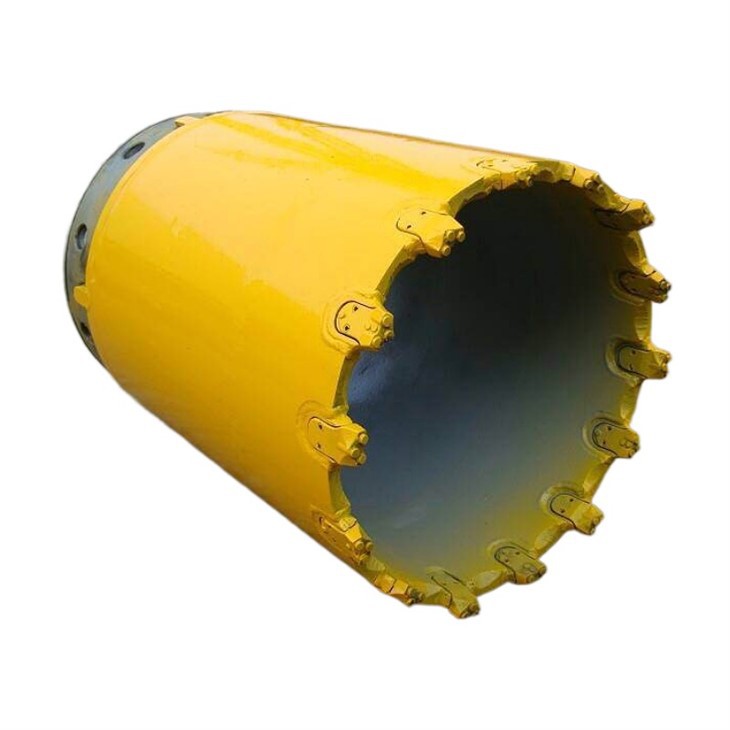

The steel alloy should be able to withstand the high pressures and forces encountered during the drilling process. It also needs to resist corrosion from the drilling fluids and the surrounding wellbore environment. Some casing shoes may be further treated with special coatings to enhance their corrosion resistance. For instance, a zinc - based coating can provide an additional layer of protection against rust and other forms of corrosion, extending the service life of the casing shoe.
3. Thread Type
The thread type of a casing shoe is essential for ensuring a secure connection to the casing string. There are several common thread types used in the industry, such as API (American Petroleum Institute) threads. API threads are standardized and widely recognized, which makes it easier to find compatible casing components.
The thread profile, pitch, and taper are all precisely defined. A proper thread connection is crucial to prevent leakage of drilling fluids and to maintain the integrity of the casing string. The threads also need to be able to withstand the torque applied during the make - up process without galling or stripping. Our casing shoes are manufactured with high - quality threads that meet or exceed industry standards, ensuring reliable and long - lasting connections.
4. Cutting Structure (if applicable)
Some casing shoes are equipped with a cutting structure, especially those used in directional drilling or when the wellbore needs to be enlarged. The cutting structure can consist of various types of cutters, such as PDC (Polycrystalline Diamond Compact) cutters or tungsten carbide cutters.
PDC cutters are known for their high cutting efficiency and long service life. They can effectively cut through different types of rock formations, including hard and abrasive rocks. Tungsten carbide cutters, on the other hand, are more cost - effective and suitable for less demanding drilling conditions. The arrangement and design of the cutters are optimized to achieve the best cutting performance and to minimize wear.
5. Weight and Buoyancy
The weight of a casing shoe is an important consideration, especially when it comes to the overall weight of the casing string. A heavier casing shoe can help to sink the casing string more easily into the wellbore, but it also needs to be balanced with the buoyancy forces acting on the casing.
Buoyancy is calculated based on the density of the drilling fluid and the volume of the casing shoe. By carefully designing the weight and buoyancy of the casing shoe, we can ensure that the casing string is properly positioned and that the drilling process proceeds smoothly.
6. Pressure Rating
The pressure rating of a casing shoe indicates the maximum pressure it can withstand without failure. This is a critical specification, especially in high - pressure wells. The pressure rating is determined by factors such as the material strength, wall thickness, and the design of the casing shoe.
During the drilling and completion processes, the casing shoe may be subjected to high internal and external pressures. For example, when cementing the casing, the pressure of the cement slurry can be quite high. A casing shoe with a high pressure rating ensures that it can handle these pressures safely, preventing blowouts and other potential hazards.
7. Temperature Resistance
The wellbore environment can have a wide range of temperatures, especially in deep wells or geothermal applications. A casing shoe needs to be able to maintain its mechanical properties at different temperatures. High - temperature environments can cause the material to lose its strength and hardness, which can lead to premature failure.
Our casing shoes are designed to withstand a broad range of temperatures. Special heat - resistant alloys and manufacturing processes are used to ensure that the casing shoe can perform reliably in both normal and extreme temperature conditions.
In conclusion, understanding the technical specifications of a casing shoe is crucial for the success of any drilling project. As a leading casing shoe supplier, we are committed to providing high - quality products that meet the most demanding industry requirements. Our casing shoes are designed and manufactured with precision, using the latest technologies and the best materials.
If you are in the market for casing shoes or have any questions about our products, we encourage you to contact us for a detailed discussion. Our team of experts is ready to assist you in selecting the right casing shoe for your specific needs. Whether you are working on a small - scale project or a large - scale offshore drilling operation, we have the solutions to meet your requirements. Let's work together to ensure the success of your drilling projects.
References
- API Recommended Practice 5C5, "Threading, Gauging, and Thread Inspection of Casing, Tubing, and Line Pipe Threads".
- Spears, M. K. (2008). The Drill Bit Handbook. Gulf Professional Publishing.