


What is the Kelly Bar's Role in the Drilling of Cast - in - Place Piles?
In the construction industry, cast - in - place piles are a fundamental component for providing stable foundations to various structures, from small buildings to large skyscrapers and bridges. Among the many tools and equipment involved in the drilling process of cast - in - place piles, the Kelly bar plays a crucial and multi - faceted role. As a Kelly bar supplier, I have witnessed firsthand how these bars are integral to the success of pile - drilling operations.
The Basics of Cast - in - Place Piles
Before delving into the role of the Kelly bar, it's essential to understand what cast - in - place piles are. Cast - in - place piles are created by drilling a hole into the ground and then filling it with concrete. This method allows for piles to be custom - made on - site to fit the specific geological conditions and load - bearing requirements of the construction project. The drilling process is critical as it determines the shape, depth, and integrity of the pile.
The Kelly Bar: An Overview
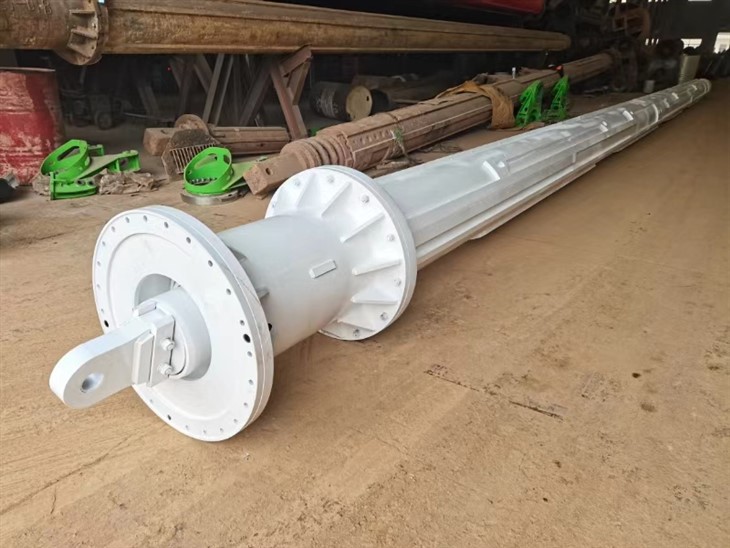
The Kelly bar is a long, multi - sectioned bar that is used in rotary drilling rigs. It is named after the inventor, Hugh J. Kelly. These bars are typically made of high - strength steel and are designed to transfer torque and axial force from the drilling rig to the drill bit. The design of the Kelly bar allows it to extend and retract as the drilling progresses, making it suitable for different drilling depths.
Role in Torque Transmission
One of the primary roles of the Kelly bar in the drilling of cast - in - place piles is torque transmission. The rotary drilling rig generates a large amount of torque, which needs to be transferred to the drill bit to break through the soil or rock layers. The Kelly bar acts as a medium for this torque transfer. Its robust construction and interlocking sections ensure that the torque generated by the rig is efficiently transmitted to the drill bit without significant loss.
For example, in a project where the soil has a high density or contains hard rock formations, a large amount of torque is required to penetrate the ground. A well - designed Kelly bar can handle this high - torque demand, enabling the drill bit to effectively break through the tough layers. Our 60M Depth Kelly Bar for Rotary Drilling Rig is specifically engineered to transmit high torque over long distances, making it ideal for deep - drilling projects where substantial torque is needed.
Axial Force Application
In addition to torque transmission, the Kelly bar also plays a crucial role in applying axial force. Axial force is the downward force that is applied to the drill bit to push it into the ground. The weight of the Kelly bar itself contributes to this axial force, and the drilling rig can also apply additional force through the Kelly bar.
When drilling in soft soil, a relatively small axial force may be sufficient. However, in hard rock or compacted soil, a higher axial force is required to ensure that the drill bit can penetrate the ground. The interlocking sections of the Kelly bar allow it to withstand the high axial forces without buckling or deforming. Our IMT AF Interlocking Kelly Bar is designed with a special interlocking mechanism that provides excellent axial force resistance, ensuring stable drilling operations even under high - pressure conditions.

Depth Control
The multi - sectioned design of the Kelly bar enables precise depth control during the drilling process. As the drilling progresses, the sections of the Kelly bar can be extended or retracted. This feature allows the operator to accurately control the depth of the drilled hole.
For cast - in - place piles, the depth of the pile is a critical factor as it determines the load - bearing capacity of the pile. By using a Kelly bar, the operator can ensure that the pile is drilled to the exact depth required by the engineering design. For instance, in a project where the design specifies a pile depth of 30 meters, the Kelly bar can be adjusted to achieve this precise depth. Our 4 Section Interlocking Kelly Bar offers flexibility in depth control, allowing for efficient drilling to the desired pile depth.
Adaptability to Different Soil Conditions
The Kelly bar is highly adaptable to different soil and rock conditions. Different types of Kelly bars can be used depending on the nature of the ground. For example, in cohesive soils, a smooth - surfaced Kelly bar may be sufficient. However, in non - cohesive or sandy soils, a Kelly bar with a special coating or a different surface texture may be required to prevent soil from sticking to the bar.
In rocky terrains, a more robust and heavy - duty Kelly bar is needed to withstand the high impact forces generated during drilling. Our range of Kelly bars is designed to be adaptable to various soil and rock conditions, ensuring optimal performance in different construction environments.
Impact on Drilling Efficiency
The efficiency of the drilling process is significantly influenced by the performance of the Kelly bar. A high - quality Kelly bar can reduce the drilling time and increase the overall productivity of the project. By efficiently transmitting torque and axial force, the drill bit can penetrate the ground more quickly.
Moreover, the ability to control the depth accurately and adapt to different soil conditions means that the drilling process can be carried out smoothly without unnecessary delays. This efficiency translates into cost savings for the construction project, as less time spent on drilling means lower labor and equipment costs.
Maintenance and Longevity
As a Kelly bar supplier, we understand the importance of maintenance and longevity. Regular maintenance of the Kelly bar is essential to ensure its optimal performance. This includes inspecting the interlocking sections for wear and tear, lubricating the moving parts, and checking the integrity of the steel structure.
A well - maintained Kelly bar can have a long service life, which is beneficial for the construction companies. It reduces the need for frequent replacements, thereby saving costs in the long run. Our Kelly bars are designed with durability in mind, using high - quality materials and advanced manufacturing processes to ensure a long and reliable service life.
Conclusion
In conclusion, the Kelly bar plays a vital role in the drilling of cast - in - place piles. From torque and axial force transmission to depth control and adaptability to different soil conditions, its functions are essential for the success of the pile - drilling process. The efficiency and productivity of the construction project are significantly influenced by the performance of the Kelly bar.
If you are involved in a construction project that requires cast - in - place piles, choosing the right Kelly bar is crucial. Our company offers a wide range of high - quality Kelly bars that are designed to meet the diverse needs of different construction projects. Whether you need a bar for shallow or deep drilling, in soft soil or rocky terrain, we have the solution for you.
We invite you to contact us to discuss your specific requirements and explore how our Kelly bars can enhance the efficiency and success of your pile - drilling operations. Let's work together to achieve your construction goals.
References
- Foundation Design and Construction, Third Edition by Donald P. Coduto, et al.
- Principles of Geotechnical Engineering, Eighth Edition by Braja M. Das.
- Construction Equipment Handbook, Fifth Edition by Randall Reece.